Kyle Schroeder and his family are adjusting to a new way of delivering and receiving education as Minnesota schools have closed their doors in response to COVID-19. Schroeder, a teacher, is delivering lessons and answering questions from a brand new work space while his kids tackle their own distance learning nearby.
Life is a bit different these days in the rural Hutchinson Schroeder household.
Kyle Schroeder is a math teacher at Hutchinson High School, and two of his children are kindergartners, meaning that over the past week and a half of distance learning throughout the state, things have changed at home.
"My wife always works out of our home, so she gets up at 5 a.m. to get her stuff done in her office," Schroeder said. "I try to get the kids up and going for the day. I check for email/classroom messages around breakfast ... to see if my students have any questions. The kids work on their homework and I start the video sessions with any of my students that may need help."
Schroeder's 4-year-old wants to be like her brother and sister, so he makes a few extra copies of their worksheets.
"We all sit around the kitchen table," he said, "reading, coloring, writing, laughing, arguing and most of the time having fun."
Scenes such as this are playing out across Hutchinson and Minnesota as, at the order of Gov. Tim Walz, schools have ceased regular operations. They're still providing meals at drop sites for families, and offering day care for critical workers, but all education is carried out remotely using a combination of digital tools and physical materials.
"It's going surprisingly smoothly," said Brian Tillmann, a fifth-grade teacher at Park Elementary. "Parents have been a huge help and are incredible partners in this process. The students are eager and we consistently have over half of our 208 students logged in by 8:30 a.m. and about 90 percent logged in by 10:30 a.m. each morning."
Chris Bick of Hutchinson, an English teacher at Glencoe-Silver Lake High School, said many teachers were using Google Classrooms.
"That's what (students) already knew and have been working with," he said. "It's one central system. They can turn in documents, make a comment and we can go back and forth."
Students who have a question or who are confused can reach out to teachers by leaving comments related to an assignment on Google Classrooms, or through email or other digital means teachers have established.
"I've gotten messages from 7:30 in the morning to 11 at night," Bick said. "Kids are doing work all times of day."
Plans for how to best serve students without access to technology are evolving in local school districts. Educators are using material drop sites and pickup times to reach students at home. In some instances, schools are finding ways to deliver digital devices to students.
"We are fortunate for the level of electronic access for the students in Hutchinson, but not all students are covered," Schroeder said. "We appreciate the efforts of the administrators in the district to attempt to get all of our students 'connected.' It has not been perfect, and we will continue to improve daily and at times hourly. There have been many things that have needed to be put in place in a short amount of time."
Schools were given two weeks to prepare for distance learning, and the lessons kicked off March 30.
"I'm very grateful for the two weeks Gov. Walz gave us to prepare," said Katie Olberg, a second-grade teacher at Park Elementary. "Without those two weeks it would have been really hard to put together something as meaningful as we feel we were able to do."
She said the planning took a team effort among teachers, and though it started with wheel spinning, a direction was soon found. The two weeks were spent making lesson plans for all subjects taught daily, creating lesson packets to send home and slides for lessons on Google Classrooms.
"On those slides were directions and links to teaching videos that we prepared," Olberg said.
Tillmann said fifth grade has been hitting language arts and math the hardest, and teachers carried that initiative into their preparations.
"We are continuing our side-by-side reading instruction with audio clips of their teachers reading daily segments of our last novel with the kids," Tillmann said. "Then, we have them work through a Google slideshow and answer a few questions in Google Forms. This gives us immediate feedback about their comprehension."
Schroeder said his department has been using a flipped classroom model — more instruction at home and more "homework" done in the classroom — for eight years, which means the basics of their lessons are pre-recorded for the students to watch and take notes on.
"However, our classes rely on more than just these pre-recorded lessons," he said. "During the school year, we do daily discussions with the students on topics that are not covered in the video lessons. ... These concepts are what challenged us the most in the distance learning environment. We did not want to just give them a bunch of work to sit in front of their computers to complete.
The high school math department decided to divide up the work and develop physical materials for the students to work on at home, as there are classes taught by multiple teachers. They decided to have one teacher take the lead on each class and consult with the others.
"We are on day four and we have not stopped 'preparing,'" Schroeder said Thursday. "We discuss what is working, what is not working, and how to engage more of our students. We are a lifeline for each other."
“You can feel the excitement in the air!” said Chris Bick, as his son, Gunnar, a Hutchinson eighth-grader, prepared for his first day of distance learning last week. Despite his unenthusiastic demeanor, Gunnar reported that the first week of online school went well.
Gunnar Bick, an eighth-grader at Hutchinson, has spent his school hours in a digital classroom.
"It's pretty easy to learn from there," he said.
Gunnar said he hadn't had many questions, but when he did, it has been easy to reach out to friends for help. For math, he has been taking online math tests and is required to reach a certain score to finish. For reading he has been assigned a book and has been told future assignments will be in relation to it.
"In gym we have an app on our phone," Gunnar said. "We start a workout and do 30 minutes of something."
Not attending school means not seeing his friends, but digital tools help him stay in touch.
"I have a gaming system, so I can talk to them," he said. "But it's not as social as school."
Teachers noted the distance as well.
"The biggest challenge is the feeling of being disconnected," Schroeder said. "I love to come to work and have the energy of 30 kids in my room. But now when I come to school it's just me and my camera. It's hard to know how my students are doing. Are they struggling with the math? Are they struggling with the isolation? Are they lonely? Are they actually working? So many questions."
"The biggest challenge is not having the time that we want and need with our students and not having the all-day, face-to-face interaction with them," Olberg said. "We continue to interact with them through technology and can help them through technology, but technology can never replace our time together in our classrooms. Building strong relationships is our primary goal."
At home, Schroeder is teaming up with his wife to give their children the best education they can. They break up the morning of work and class at home with snacks, living room acrobatics and music. His scheduled video sessions end at 11 a.m.
"The kids go outside to play for awhile or maybe a game or two on the Wii we just blew the dust off of," Schroeder said. "I answer emails and take care of whatever else I can around the house or for school. At (noon) my wife takes over and the fun begins for the kids. I head off to school to work in my classroom and she does all the amazing things I did not think of. She gets out the sidewalk chalk and does math on the driveway. Brilliant."
Tillmann said teachers are continuing to search for ways to meet the social and interactive needs of students, but the unknown of how long school will be changed looms. The order to maintain distance learning extends to early May, but on Thursday, Walz said it was unlikely school buildings would reopen this year. He called the situation "heartbreaking."
"There really wasn't any closure," Tillmann said. "When we sent the kids off to spring break, the world was still fairly normal. Now we are just hoping and praying to be able to see them again before summer hits."

COVID-19 is changing everyone's lives, whether it's working from home or contacting loved ones more frequently. Change can create anxiety.
Anxiety increases when a person's sense of control decreases, said Eileen Dummer, clinical director at Lighthouse Counseling in Hutchinson and Litchfield.
The Centers for Disease Control and Prevention asked for social distancing, with residents now told to stay home if possible thanks to Gov. Tim Walz’ executive order. Being isolated can be challenging. For some, isolation means staying in with the family. But constant contact with a spouse, children or other family members and friends can be its own struggle, as a recently reported uptick of divorces in China suggests.
So, how can people maintain healthy relationships with those with whom they are quarantined? Tina Carr, co-owner of Aspire Counseling in Hutchinson and a mental health therapist, believes isolation will be unique for each person.
“It's going to affect people differently. Some people are going to fare better than others,” Carr said. “Some people are okay with staying at home and doing things at home. … Some people might feel trapped. Some people might get anxious or worried or stressed, depressed.”
Dummer echoed that sentiment.
“Acknowledging we're all lost and ... grief reactions is really important,” she said.
Mary Anderson, clinical director of SteppingStone Therapeutic in Hutchinson, said the most important thing during the pandemic is to be healthy ourselves. This includes understanding our anxiety and not making everything a catastrophe that could spiral into dread and panic.
Anxiety is already being seen. Anderson said former clients she hadn't seen in years were calling in for therapy. She said those in isolation may become traumatized or have higher anxiety and depression, or a feeling of hopelessness that overwhelms the ability to cope.
To cope, one of the most important things we can do is take care of ourselves, including hygiene, healthy eating and continuing prescribed medication.
“Self-care,” Carr said. “I think that's important for maintaining relationships too. Making sure you are still taking care of you. Make sure you're handling your stress or worry or whatnot can help your relationships at home.”
Dummer also emphasized self-care, including doing things as minimal as taking a shower, having a warm cup of coffee or going out for a run.
“Everybody has a different way they take care of themselves, or multiple ways,” she said. “And making sure we prioritize self-care individually, and then respecting other people's self-care time within the family, is really important.”
With people more cooped up than ever, Dummer suggested going outside for Vitamin D and getting fresh air can help. She also said exercise is a great way to help with anxiety and mood as it releases endorphins and serotonin. In addition, Anderson said everyone needs time and space to process, and giving people those things will create closer relationships.
“Events become traumatic for people when they are unable to express their feelings about what is going on,” Anderson said, “when they are unable to process those feelings with someone and when people feel misunderstood during or right after a traumatic event. So it is important for everyone to feel heard and understood and that their feelings are validated. Remember that you may have very different feelings than others in your household.”
Dummer agreed, adding that people have their own grief reactions.
To help our relationships, Anderson recommends creating a sense of oneness by doing things together.
“Keep communication open,” she said. “Don't only talk about the virus … get to know one another. Connect as a family to something greater than yourself.”
Routines can also help because they give family members plans.
“Keeping those (routines) in mind helps us get through the day-to-day so that the time doesn't feel so slow and we don't feel so trapped,” Dummer said.
Anderson recommends connecting with neighbors through the internet, the phone or simply the window. She also recommends playing together, cooking together, reading together, praying together, and simply talking, something Carr agreed with.
“We could do board games, card games, things like camping in your backyard, cooking over the fire,” Carr said. “Also providing breaks. Breaks from the children, breaks to be alone and kind of wind down. Engaging in activities as a family. Maybe you planned and prepared meals together, or you can turn almost anything into a competition.”
“Talking openly with each other,” Carr added. “Talking about worries if there's worries. Letting each other know when we're feeling stressed, sad or angry is helpful too.”
“It is vital for individuals to feel seen, safe, soothed and secure,” Anderson said.
That's not to say everything should be done as a family. Having time for oneself is important, even if it's just stepping out of a room for a couple of minutes when possible.
“People need a break from one another,” Dummer added, “and to give each other that time and respect those boundaries is important because people are feeling like they're in close quarters.”
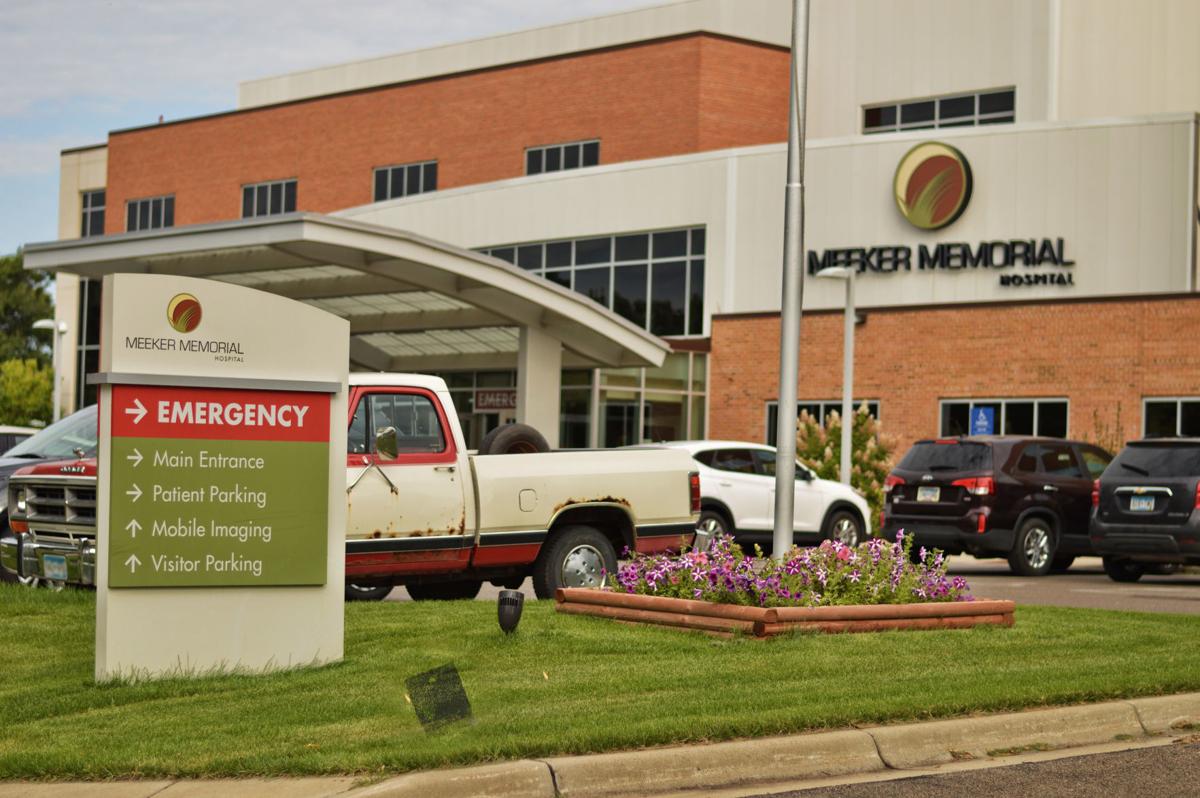
Marc Vaillancourt
The first confirmed case of COVID-19 in Meeker County this past week is bound to bring a heightened sense of awareness and worry for some.
But Meeker Memorial Hospital stands ready to meet the local challenges presented by the coronavirus pandemic, according to members of the administration and emergency preparedness team.
In a sense, the staff and administration have been preparing for it for nearly two decades.
“The past 20 years there has been a lot of work being done that has been supported by the federal government to prepare for emergency … be it chemical (or) infectious disease,” said Ann Lien, chief quality officer at Meeker Memorial.
The emergency planning and training has been in place since the days after the Sept. 11, 2001, terrorist attacks among many agencies, including the South Central Coalition, of which Meeker County is a member, Lien said.
And the threat of a pandemic has been talked about and planned for in some corners even longer than that.
“Mike Osterholm has been talking about this for 30 years,” Lien said of the director of the Center for Infectious Disease Research and Policy at the University of Minnesota. “We were overdue.”
As of Wednesday afternoon, Minnesota had 689 confirmed cases of COVID-19 and 17 deaths, with an estimated 21,191 completed tests by either the Minnesota Department of Health or external laboratories, according to the MDH website. The state also had 342 cases in which the patient no longer needed to be isolated. Worldwide the virus had infected nearly 1 million people and killed more than 46,000.
Those numbers can be frightening, even to health care professionals, acknowledged Marc Vaillancourt, vice president of development and operations at Meeker Memorial Hospital.
“Like everyone in the community, our staff are experiencing all of the emotion all of us are having,” Vaillancourt said. “Key staff are getting ready to address this on the front line, while at the same time thinking about preparations they have to make at home. Like everyone else, we’re concerned about how this will affect our families.
“Through all of that, our staff remains committed to the mission of the organization,” he added. “At the end of the day, all of our staff have chosen to be in this profession and are here to care for and serve in our community. We do that to a ‘T.’ Everyone is ready for this.”
Meeker’s first confirmed case of COVID-19 set in motion additional action steps for the hospital.
“We are in incident command all day long,” Vaillancourt said. “Up to (March 30, it has been planning), when COVID-19 appears in our county, what will happen next? We are going to be ready for the surge. (The confirmed case) clearly allows us to move forward and continue more intentionally to finalize details around the surge plan.”
Meeker Memorial Hospital’s preparation has been based on data from the South Central Healthcare Coalition, which serves Meeker, McLeod, Blue Earth, Brown, Faribault, LeSueur, Martin, Nicollet, Sibley, Waseca and Watonwan counties. The coalition’s members include hospitals and clinics, public health, emergency management, emergency medical services, as well as long-term care facilities, fire, police and non-governmental agencies and business.
The South Central model is based on 20 percent of the population having or being affected by COVID-19, Vaillancourt said. With Meeker County’s population of about 23,000, that would mean 4,000 cases of COVID-19. Most of those cases (3,000-3,200) would be mild, 560 severe, and 200 would be “critical,” requiring some sort of hospitalization, potentially intensive care.
“We planned based on that (scenario),” Vaillancourt said. “The reality is, our facility is a 35-bed hospital … 25-bed critical access.”
Part of the preparation was to look at “all the space in the facility and look at how we could care for the maximum number,” Vaillancourt added. “If the surge hits and all models come to fruition … (it) would require us to leverage the resources we have in the region, in the state, in order to care for people in our county.”
Alternate care sites have been investigated, including other hospitals in the region.
In addition to hospital beds, the planning has included attempting to ensure enough personal protective equipment, or PPE, for doctors and nurses.
“As part of daily operations, we are constantly managing PPE,” said Nicole Siegner, MMH chief financial officer. “As part of our mandate, we are required to have certain things in place (and) actually ramped up purchasing on a number of PPE items we consider most critical.”
Still, Vaillancourt said, “We are like every hospital in the state, every hospital in the country. As the surge comes, PPE will become an issue. It is a nationwide issue … not enough PPE, not enough beds, ventilators.”
But hospital staff and administrators feel that businesses, organizations and individuals in the community have their back, Vaillancourt said.
“I will say that our community, countywide, has been exceptionally gracious to us,” he said. “We have had offers to sew cloth masks. We put out a call a week ago for people with scrubs (and) people were willing to donate. And organizations, companies emailing, calling, saying, ‘Hey, we’ve got 10 N95 masks.’ That happens on a daily basis.
“It’s the beauty of living in the community we live in. We have generous people who keep us in top of mind.”

Illustrated is an image showing the ultrastructural morphology of the novel coronavirus (COVID-19), which was identified as the cause of an outbreak of respiratory illness first detected late December in Wuhan, China.
McLeod County has its first confirmed case of COVID-19.
The case was confirmed by the Minnesota Department of Health Friday evening. MDH staff are investigating the case, and identifying close contacts. Unless hospitalized, positive cases are isolated at home to prevent the spread of the disease.
“Our thoughts and prayers go out to this individual and their family,” said McLeod County Board Chair Joe Nagel. “While it was inevitable that McLeod County would receive confirmation of a COVID-19 diagnosis within our community, it still is difficult to see one of our own suffering. Please, do what you can to minimize your exposure to this dangerous virus. The county will continue to communicate with our citizens and be an accurate information point as this crisis continues to evolve”.
McLeod County Public Health will coordinate essential services — food, water, health care and so on — for those in isolation.
Hutchinson Health president Jim Lyons said Friday evening that he wishes the best for the person who contracted COVID-19 and his or her family, and for a speedy recovery.
“That’s the piece we need to focus on,” he said. “I have faith in Public Health’s ability to help the individual.”
He said Hutchinson Health is working under the assumption that COVID-19 is more widespread than testing shows, as there are limited resources.
Public Health urges the community to continue mitigation strategies to slow transmission of the disease and follow the stay at home order Gov. Tim Walz issued through 5 p.m., Friday, April 10. Lyons said it is important to continue practicing social distancing and good hygiene by washing hands and covering coughs and sneezes.
“Those things really make a difference,” he said. “These are good strategies not just for COVID-19, but all infectious diseases.”
Last week, health officials expected it would only be a matter of time until a case was confirmed in McLeod County. All surrounding counties had already seen a confirmed case.
On Friday evening, Meghan Mohs, interim director for McLeod County Health and Human Services, said there were likely other cases in the county, they just had not been confirmed. She said MDH had not indicated in its report if the individual was believed to have contracted COVID-19 locally or from travel.
The Health Insurance Portability and Accountability Act limits how much information hospitals and state agencies can provide on patients. The patient’s location in McLeod County has not been released.