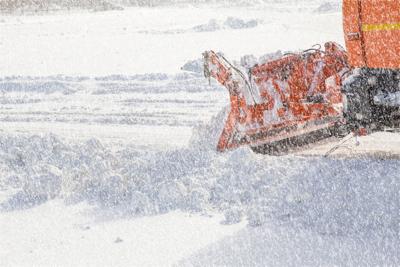
Crashes between vehicles and state-owned snowplows are piling up this winter with more inches of snow to come.
As of Feb. 5, the Minnesota Department of Transportation reported more than two dozen crashes have occurred. In 2017, there were 84 crashes involving the public and snowplows, 58 of which occurred in the Twin Cities area.
A Jan. 21 two-vehicle accident involving a snowplow and a vehicle in St. Lawrence Township resulted in serious injuries. The State Highway Patrol crash report indicated that the snowplow, traveling at slow speeds, was rear-ended by an SUV. The 52-year-old man driving the SUV was transported to the hospital with serious injuries. The snowplow driver was not injured. That same day, MnDOT reported that three other vehicle-snowplow crashes occurred.
Todd Stevens, MnDOT Acting State Maintenance Engineer, said that the main causes of these crashes are motorists driving too fast for conditions, driving too close to the plow and not paying attention.
“Our snowplow drivers are well-trained to operate their plows, which often travel much slower than the posted speeds because it is most effective for clearing roads,” Stevens said. “For safety’s sake, motorists need to be patient and stay back from the plow.”
Stevens said that operators have a restricted view from the plow cab, so they must rely on mirrors to see to the rear and side of the truck. Their vision is also hampered by the snow clouds they create while they plow.
“The safest place you can be is well behind the snowplow and away from the snow cloud it creates,” he said. “The road is clear behind the plow but not necessarily in front of it, so in most cases, it makes sense to travel behind the plow.”
Snowplow safety tips
Motorists must turn on their headlights when it’s snowing or when current conditions impair visibility as mandated by Minnesota state law. MnDOT recommends that drivers stay alert for snowplows, which turn or exit frequently and often with little warning. Snowplows also may travel over centerlines or partially in traffic to further improve road conditions. MnDOT advises drivers to stay back at least 10 car lengths behind a plow and to avoid driving into snow clouds created by the plows.
MnDOT recommends that drivers slow down to a safe speed for current road and weather conditions and to turn on headlights and wear a seat belt. Turning off cruise control in these types of conditions and near snowplows can help avoid crashes. Snowplows drive slower to better clear the roads, and MnDOT asks drivers to remain patient. Distracted driving can also be a source of crashes if a driver is not paying attention to a snowplow nearby.
Motorists can check current Minnesota road conditions at 511mn.org
In 2017, MnDOT installed more than 200 cameras on the state’s 838 snowplows to show real-time road conditions to drivers. The public can to access these “plowcams” via 511.mn.org. The plowcams help provide real-time conditions to MnDOT field managers and supervisors throughout the state.
The plowcams give a snapshot of current conditions and provide the plow’s number, time and date, and current location of the snowplow. Each snapshot is displayed for two hours and refreshed afterwards. If the snapshot does not update within 15 minutes, the plow is not active at the time.