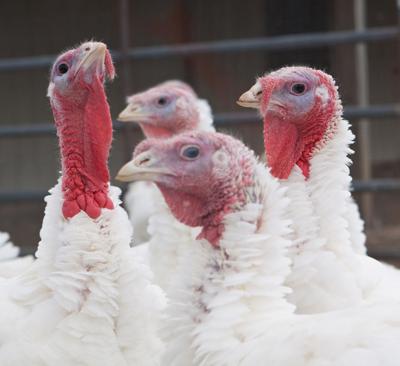
The Minnesota Board of Animal Health confirmed Wednesday an outbreak of bird flu in a Meeker County turkey flock.
Bird flu, or highly pathogenic avian influenza, was found in samples taken from a commercial turkey flock and tested at the U.S. Department of Agriculture’s National Veterinary Services Laboratories in Ames, Iowa. The Meeker County site is quarantined, and the 140,000 birds on the premises were depopulated to prevent the spread of the disease.
The U.S. Department of Agriculture describes highly pathogenic avian influenza as a strain of H5N1, which can spread rapidly and is frequently fatal to commercially farmed birds.
In September 2022, more than 650,000 birds, including two Meeker County flocks of nearly 180,000 turkeys, were depopulated in Minnesota due to a surge in bird flu.
“Unfortunately, HPAI seems to keep popping up during the seasonal migrations in Minnesota,” state veterinarian Dr. Brian Hoefs said in a news release. “Before today’s detection our most recent cases were in the spring of this year. Anyone who has poultry should take this detection as a clear sign to keep a close eye on their flock and initiate your strongest biosecurity practices.”
This most recent case in Meeker County is the third confirmed in Minnesota this year.
The Board of Animal Health recommended that poultry producers and backyard flock owners contact their veterinarian immediately if they see any signs or symptoms in their flock including:
• Decrease in feed or water intake.
• Swelling or purple discoloration of head, eyelids, comb, wattle, and hocks.
• Decrease in egg production.
• Sudden, unexplained death.
Biosecurity is paramount to stopping the spread of this and other viruses and disease, the board said. Flock owners large and small should review their biosecurity measures to maintain the health of their birds. The University of Minnesota Extension maintains biosecurity resources for commercial and backyard flocks.
Poultry is safe to eat, and proper handling and cooking of poultry and eggs to an internal temperature of 165 degrees is always advised. The Centers for Disease Control has said that infections from wild birds and poultry pose a low risk to the public.
Veterinarians who receive reports of clinical signs of avian influenza, should call the Minnesota Avian Influenza Hotline at 833-454-0156 or submit a sick bird report online. If it is after hours or on the weekend, call the Minnesota Duty Officer at 1-800-422-0798. Subsequent HPAI cases will be posted on the Board’s website.