


Three years ago, Mark Lease took on quite a buzz-worthy project.
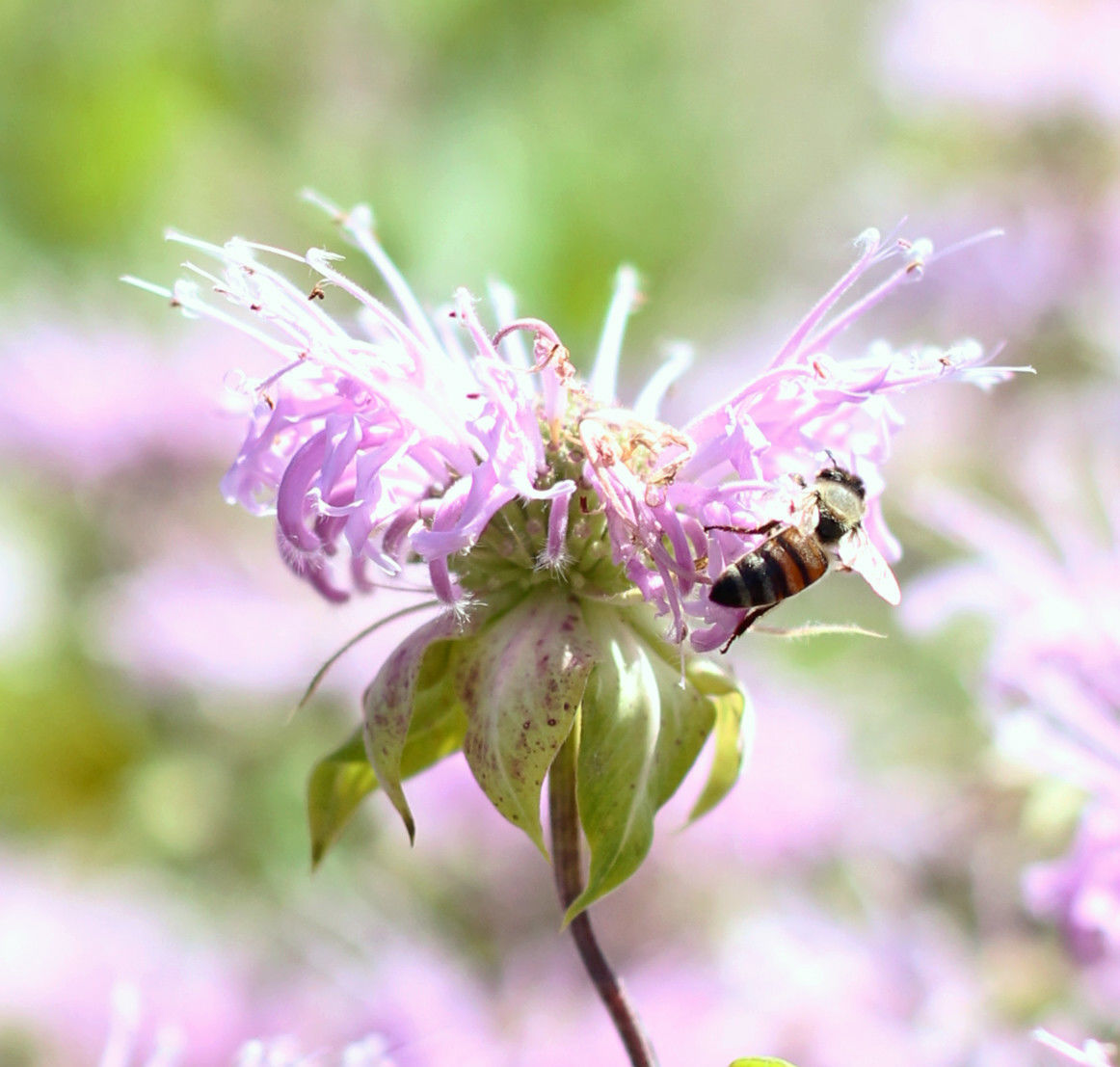
South of the train tracks that run through Litchfield and west of First District Association, 3.5 acres of Lease’s private property have been transformed into a field of yellow, purple and green flowers and grasses. It’s a pollinator plot, made distinct by the consistent buzzing heard upon approaching the field, as bees venture from one flower to the next while Monarch butterflies flutter overhead.
“It’s unique to have this in the city limits,” Lease said. “It did OK last year, but this year it just bloomed like crazy.”
The pollinator plot, now in the downward swing as colors begin to fade in the August heat, was a collective effort through Name-less Creek Prairie Farm and U.S. Fish and Wildlife Services. The project, which cost around $3,000, has come a long way since its inception, and even longer from the time Lease purchased the property in 1992.
The property, which is an old farm site, has undergone a Cinderella-esque transformation. What used to be full of buckthorn and other invasive plants now brings all types of wildlife to the stretch of Litchfield land. Once the land was cleared, members of the community came forward in the latter part of 2015 to assist in planting the seeds. Now that everything has exploded in color this year, Lease said he not only sees pollinators, but pheasants and deer as well.
“It’s a fantastic project,” he said. “I believe that if you build it, they will come.”
WHY POLLINATORS?
Lease’s project took off right around the same time as the “pollinator craze.”
According to Jon Fredrickson of Name-less Creek Prairie Farm of Kimball, assisting Lease in the provision of pollinator plants came at the peak of a noticeable population decline in pollinators. Especially the decline of Monarchs.
“It’s about public education,” Fredrickson said regarding those who are curious about getting into pollination.
According to an article in “Science Magazine” written by Jason Tylianakis on the subject of loss in pollinator populations, three-quarters of all food crops, which satisfies a majority of food demand across the world, somewhat depend on pollination by insects. A widespread decline in pollinator populations have led to a global “pollination crisis.”
Specifically, concerns for a decline in honeybees and Monarch butterflies has led to an increased conservation effort across the world.
Lease’s project hasn’t seen the end of this effort either. Lease hopes to plant fruit trees — specifically American plums, which Fredrickson described as a lost resource for pollinators — in the hopes of continuing to be a “collecting point for pollinators.”
Lease said someday he may invest his time in procuring honey boxes, but the time consumption on that will have to wait until retirement.
BURNING FOR THE CAUSE
The next chapter in Lease’s pollinator plot story involves a controlled burn, which he and Fredrickson said is just another step in the maintenance phase.
“We’re aiming for spring or fall to germinate the seeds,” Lease said. “It’ll give it a clean slate.”
That clean slate will come in due time, when proper precautions are taken and everything is planned and organized to a tee. With the plot in the center of a residential area, it will take time to find participants to assist in the burn and what route to take with it.
Lease mentioned that there’s been talk about breaking the plot up into four quadrants to add control over the burning process, but nothing has been finalized.
The burn, Fredrickson said, is one method of maintenance off of which prairies thrive. Another is movement.
“For this, you need disturbance,” Fredrickson said. Constant disturbance acts as a natural method of spreading seeds and recycling nutrients. Fredrickson said the main tools used nowadays in maintaining this degree of planting is by using a brush hog — which cuts down the plants — and prescribed fire.
But the controlled burn is just another topic in the public education discussion. Lease and Fredrickson both agreed that the burn will bring back a revitalized pollinator plot, and the project will carry on for as long as maintenance is provided.
“It really is a special project,” Lease said.


