This time of year, the public is reminded to "Start Seeing Motorcyclists." The slogan is part of a motorcycle safety campaign by The Minnesota Motorcycle Safety Center.
It's an important message. Drivers should always look twice for motorcyclists. Motorcycles are smaller, making speed and distance difficult to judge. Motorists should always safely share the road with motorcyclists and not follow too closely.
But they should also be watchful for another type of cycle: pedal bikes.
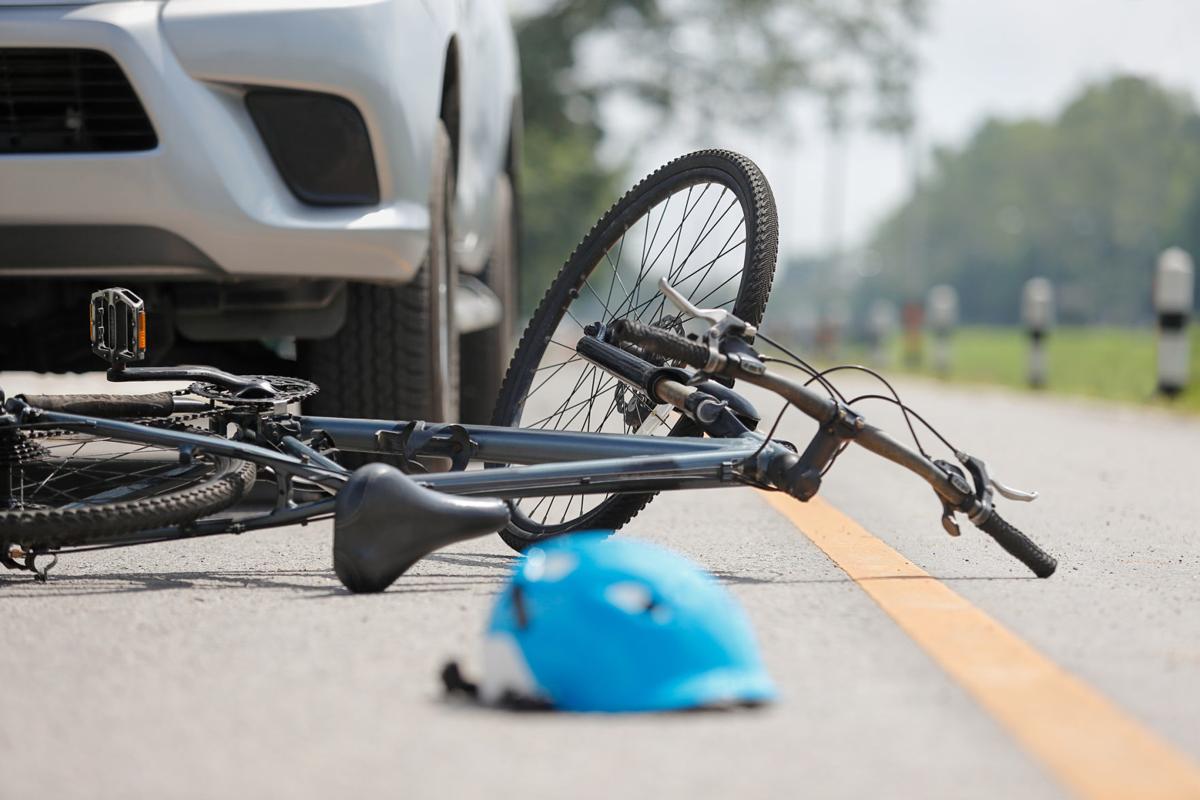
This month, a boy on a bicycle was hit by a motorist on U.S. Highway 12 in Litchfield. Unfortunately, it was a hit-and-run accident. Fortunately, the boy was not injured, and police later found the driver and issued a citation.
But it could have resulted in an undoable tragedy. In 2015, 818 bicyclists and 5,376 pedestrians were killed in crashes with motor vehicles, according to traffic safety facts from the National Highway Traffic Safety Administration. That's nearly 15 people every day of the year. These two modes accounted for 17.7 percent of the 35,092 total U.S. fatalities that year.
The 818 people lost their lives in bicycle/motor vehicle crashes, more than two people every day of the year, represents a 6 percent increase in bicyclist fatalities since 2006 and a 12.2 percent increase from 2014. These numbers represent slightly more than two percent of the total number of people killed and injured in traffic crashes in 2015.
School is out for the summer, and that means more youth will be biking around town. Watch closely for them, especially near parks and residential areas, and at intersections.
The number of estimated bicyclist injuries dropped to 45,000 in 2015, down from 50,000 in 2014. However, like pedestrian injury estimates, research into hospital records shows that only a fraction of bicycle crashes causing injury are ever recorded by the police, possibly as low as 10 percent.
Local law enforcement recently gave green helmets to students at Litchfield schools to wear while biking. The helmets are bright in color, making young bicyclists more visible to motorists. While they may not be considered "fashionable," we hope parents and guardians will encourage their use.
Bicyclists also should be watchful for motorists. According to the Minnesota Safety Council, bicyclists should obey all traffic signs and signals; ride in the same direction as traffic, not against it; stay as far right on the pavement as possible; signal turns; and yield to cars and people on foot.
Although riding single-file is often safest, bicyclists are allowed to ride two-abreast on roads. Because bikes are narrow it is sometimes possible for bikes and vehicles to share the same lane, according to Minnesota bicycle laws. Where this is possible, the bicyclist must keep as far to the right as is safe.
When lanes are narrow (less than 14 feet), it is often best to ride two-abreast for visibility and to shorten passing distance as a courtesy to other traffic. It is unsafe to ride the edge of the road when doing so will invite motorist to try to share the lane with a bicycle.
Faster traffic can overtake provided it can safely pass the cyclist (three-foot minimum), according to state law. When overtaking is not safe for either the faster motor vehicle or the bicyclist (less than 3 feet clearance), the bicyclist is legally entitled to use as much of the lane as reasonable for safety (generally in lanes 14 feet wide or less. The motor vehicle should either wait to pass or change lanes to overtake the bicyclist.
This month's bicycle accident in Litchfield occurred on a street with heavy traffic. The Minnesota Safety Council says "find another way to go." If you must travel near a busy intersection, walk your bike across it.
Here are some noteworthy bicycle-crash trends and numbers from the National Highway Traffic Safety Administration:
- The average age of bicyclists killed in crashes with motor vehicles continues to increase, climbing to 45 years old in 2014, up from 39 in 2004, 32 in 1998, and 24 in 1988.
- 88 percent of those killed were male.
- 71 percent of bicyclist fatalities occurred in urban areas.
- 20 percent of bicyclist fatalities occurred between 6 and 8:59 p.m.
- 19 percent of bicyclists killed had blood alcohol concentrations of 0.08 or higher.
- In 35 percent of the crashes, either the driver or the bicyclist had blood alcohol concentrations of 0.08 g/dL or higher.
Bicycling is one of the healthiest forms of outdoor recreation. And it's most enjoyable this time of year, especially strolls around Lake Ripley. Don't let statistics stop you, but pedal safely to avoid becoming one.