
With more than 70 bills passed, including the largest budget in state history and a $2.6 billion bonding package — a rare session completed on time — DFLers have called the Minnesota Legislature’s work this year a success.
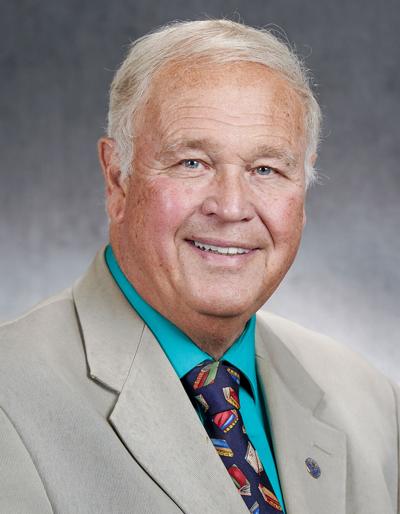
Rep. Dean Urdahl, R-Acton Township, disagrees.
“Overall, it’s a ‘D,’” the former middle school teacher said when asked how he might grade the session. “That’s only because I’m looking at some of the bright spots in some of these bills. Unfortunately, the state, I think, has some real problems created by this session.”
All of the omnibus bills passed this session “had some bad things for the state,” from Urdahl’s perspective. Even where one might find positives — like the education bill which raises the state funding formula for local school districts 4% over the next biennium — there are negatives — like the 65 new mandates on school districts, Urdahl said.
“We’re giving them money on one hand, but we’re taking it away from them on the other,” Urdahl said.
The two-year state budget comes in at $71.5 billion. That’s nearly $20 billion more than the current budget of $51.6 billion.
The state’s historic $19 billion budget surplus played a big role in that jump. The trouble, Urdahl said, is that surplus will be gone, but the financial commitments set forth in legislation this session will not.
“Taxes are going to have to go up more,” he said. “We’ve put into effect a lot of programs that have tails far into the future.”
Disappointed as he was in the overall outcome of the legislative session, which wrapped up May 22, Urdahl termed the session one of his best personally.
The two achievements of which he was most proud were the bonding bill and inclusion of a civics requirement for high school juniors and seniors that was included in the education omnibus bill.
As lead Republican on the bonding committee, Urdahl said, he was pleased with his ability to work with his caucus and deliver the votes needed to pass the bonding bill in the House. To achieve the supermajority needed to pass a bonding bill, the DFL majority needed at least 11 Republican votes. The bill received 21 Republican votes.
That might have gone for naught, however, because Senate Republicans refused to support the bonding bill without some DFL concessions on spending.
When that happened, DFLers floated a “cash only” plan for $1.3 billion that would have left many projects included in the original bonding plan unfunded.
Days before adjournment, however, the two sides struck a compromise, with the inclusion of funding for greater Minnesota nursing homes and the addition of $200 million for Republican-supported projects.
In the end, 27 House Republicans and 22 Senate Republicans supported the final plan.
“We did a lot of funding for rural Minnesota,” Urdahl said of his colleagues’ votes. “We did $380 million in water projects – wastewater, water towers… a lot of things that are beneficial to greater Minnesota were in the bill.”
Three of those projects were right in Urdahl’s backyard. Included in the bonding bill were:
- $1 million for the Litchfield Area Recreation Center, which is in addition to the $5 million grant Urdahl maneuvered from the state two years ago.
- $5 million for wastewater plant upgrades in Litchfield to handle increased load from the city’s industrial users including First District Association, and to manage ever-more-stringent discharge limits from the Minnesota Pollution Control Agency.
- $2.024 million in grants for building façade improvements in Litchfield’s downtown historic district.
“It was maybe one of my better sessions personally,” Urdahl said, deflecting a reporter’s invitation to grade his own work. “I was largely involved in the bonding bill that happened. My civics bill passed. The things I was trying to do, I had a good session. I owe a lot of that success to the experience and contacts that I’ve built up.”