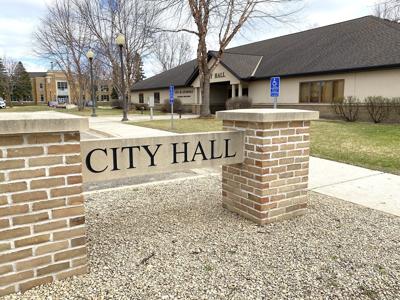
Litchfield voters have spoken. They are willing to pay a small sales tax to fund a city recreation center, but they don’t want the facility to include a swimming pool funded by property taxes.
The state of Minnesota approved the council’s request for a half-cent local sales tax, and will start being collected on July 1. Retail business owners have already been contacted by the state about this sales tax increase, City Administrator Dave Cziok told the council.
The Litchfield City Council got the message and will be moving forward with its plans to build a field house, new tennis courts and other recreational facilities on school property next year.
At a short meeting Monday, the council acknowledged that, since the facilities will be on school property, it will be forming a joint powers entity with the Litchfield School District to construct and manage the facility.
“Voters sent a message last Tuesday and we have to respect it,” said Mayor Ron Dingmann, leading his fellow council members in reiterating their pledge not to use new property tax dollars to build the Litchfield Area Recreation Center. (It had been previously determined that the city will use reserve funds, grants, donations and sales tax proceeds to construct its share of the facility.)
The council also took its first look at a proposed storm water management ordinance that would set up a storm sewer fund. Initial drainage work is being funded using existing city reserves, but would be funded in the future through monthly fees on city property. It is estimated that the fund would require about $250,000 a year to properly manage the city’s snow and rainwater runoff. The proposed ordinance would collect $3.96/month per house, $40/month per gas station, and $5.76/month for a typical downtown business building. Other commercial properties and churches would be charged fees based upon their square feet of impervious surface, such as roofs and paved parking lots. It has been noted in previous discussions on this matter that commercial and church properties that install rain gardens, settling ponds and other runoff management structures could earn reductions in their monthly fees.
Cziok said most of the runoff in the city (more than 50 percent) is caused by commercial properties, with about 45 percent coming from residential property. (Residential ground typically has more lawn and garden space, where rainwater soaks into the ground instead of running off into storm sewers.)
The council set a public hearing on this proposed ordinance for July 17.
- The council approved allowing Jose Lopez to operate a small auto repair business from a large garage on his residential property on North Holcombe Avenue. As part of the conditions for this home-operated business, Lopez agreed to work on only one automobile at a time and to not store business-related items outdoors. He will erect a small sign that complies with residential zoning regulations, The planning commission had previously evaluated this request in detail and recommended it on a 6-1 vote.
- The council approved paying $91,618 for work recently completed on improvements at the city’s water treatment plant.
- One of two council work sessions related to needed wastewater treatment improvements will be conducted at 5 p.m. May30, with a second workshop to be conducted later this summer.