Holly Lagergren led the Dragons to an 11th-place finish in the breaststroke Friday at the section meet.

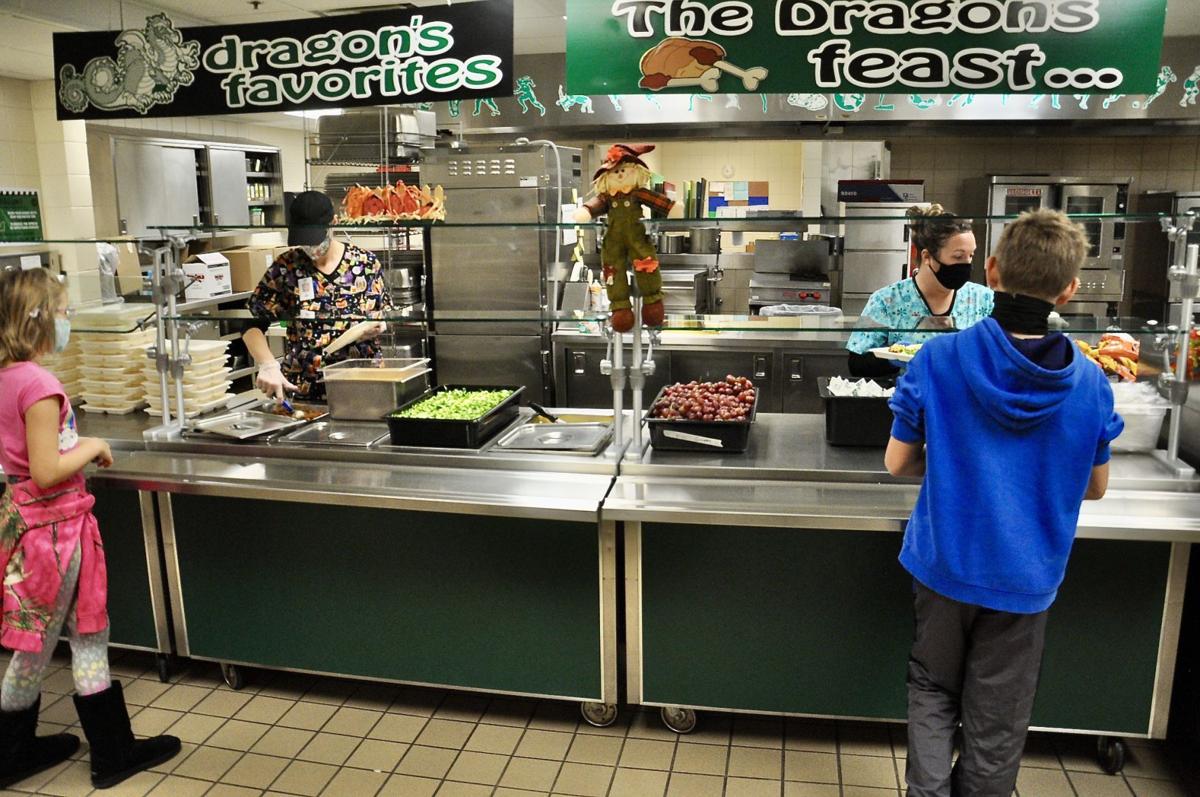
Litchfield Middle School students make their way through the lunch line. School lunches have included to a wider variety of produce this school year, thanks to a farm-to-school initiative driven by child nutrition director Lesli Mueller.
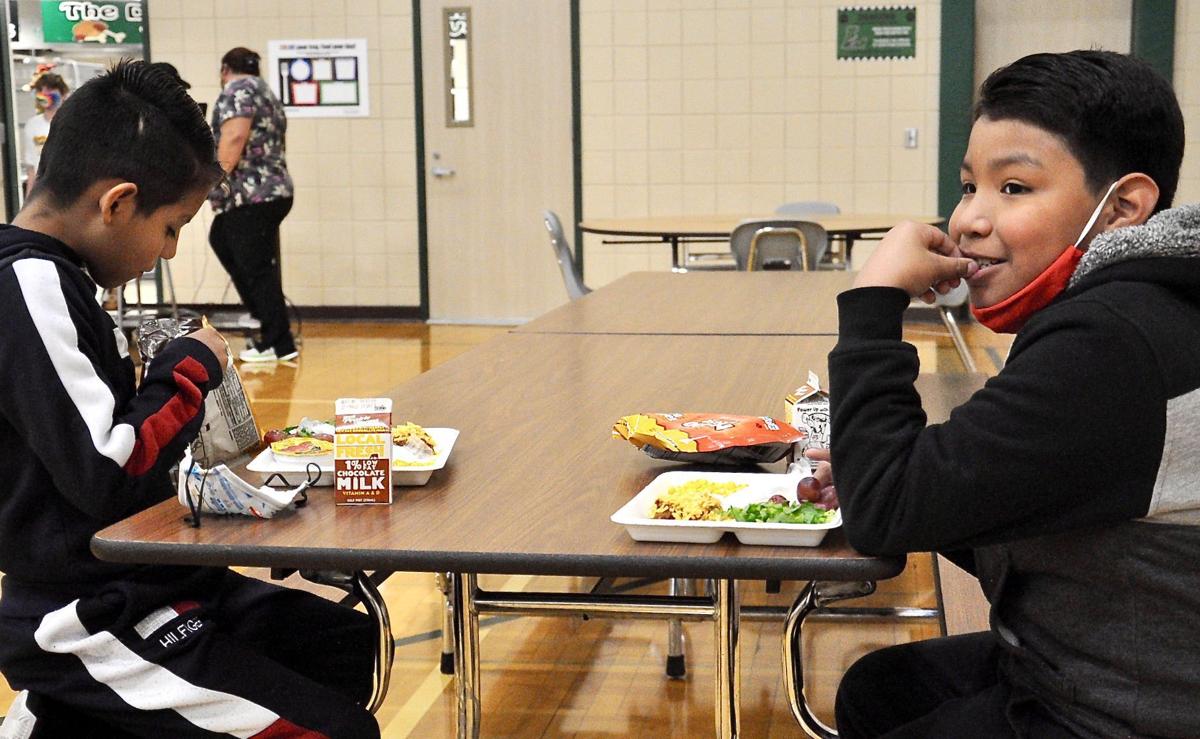
Fifth-graders Cristian Alberto and Jesse Zacharias enjoy lunch in the Litchfield Middle School cafeteria.
Tomatoes from local farms were roasted and transformed into tomato sauce.
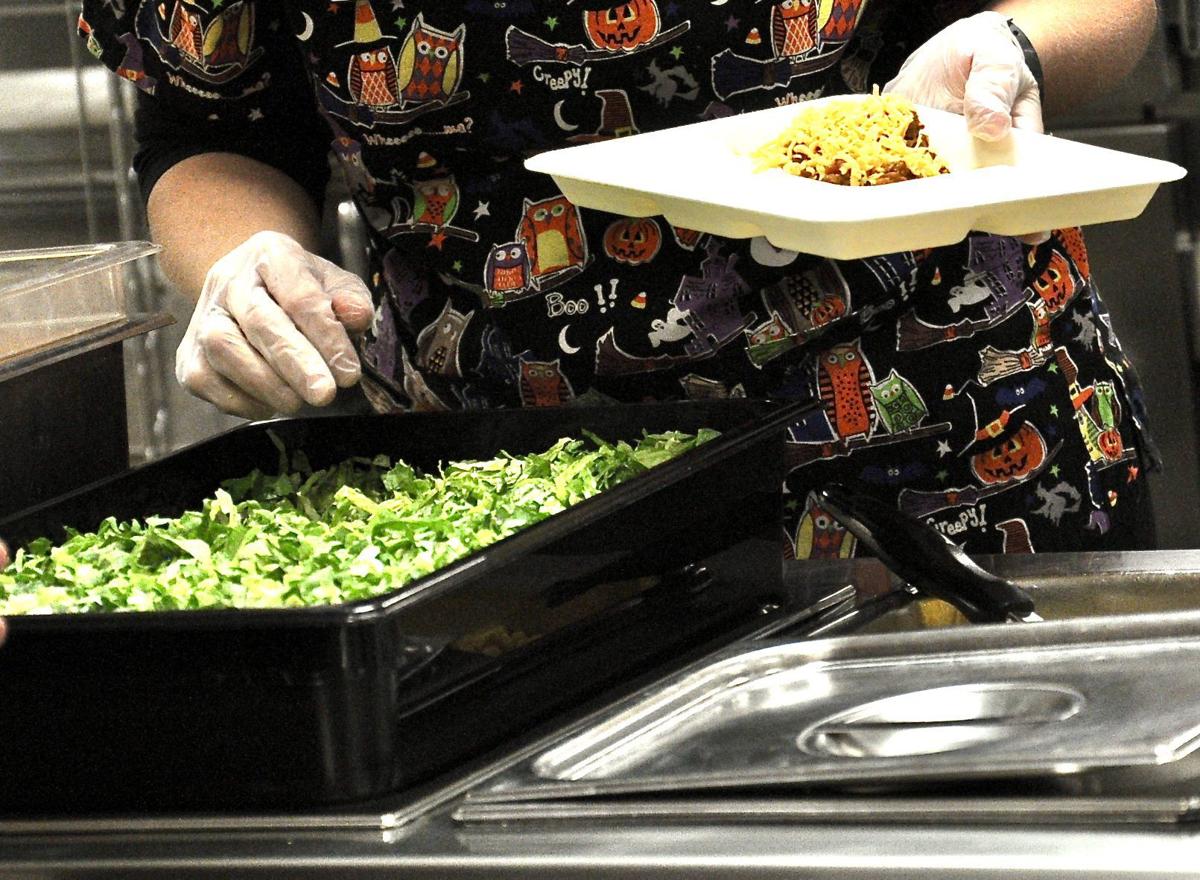
This pasta salad served to students used a wide variety of vegetables from area farms. Lesli Mueller, Hutchinson School District’s child nutrition director, hopes to expand students’ tastes with creative ideas such as this.
Area school lunch programs got a little fresher this year.
In an age of prepackaged, precooked, fast meals from mega-producers, kitchen staff at schools in Litchfield, Hutchinson and Dassel-Cokato districts went a little more local, and a little slower as they incorporated food from local farms into the daily menus served to students from kindergarten through 12th grade.
“This is something I’ve been wanting to do since I started this position, but I could never, you know, get it going or know where to start or have someone that could supply us with enough of the produce for our school lunches,” said Lesli Mueller, who’s in her sixth year as child nutrition director for the three school districts.
That changed when Mueller was introduced to Aimee Haag, co-owner of rebelSoil, a rural Litchfield produce farm, and a member of the Hutchinson Farmer’s Market board of directors.
Haag, a Hutchinson High School graduate, pitched the idea of having area farms supply produce for local school lunch programs.
While none of the community supported agriculture, or CSA, farms in the area might be big enough to supply all of the produce needs, Haag said, a cooperative effort might provide a workable solution.
Using her connections, Haag established a pool of local farms, including Prairie Drifter Farm, a CSA south of Litchfield, Loon Organics, a rural Hutchinson CSA, and Boor’s Garden Patch, a family-run market garden in Hutchinson, to freshen up school lunch menus, with weekly deliveries of produce to the schools.
The local initiative is among many throughout Minnesota, a trend recognized by Gov. Tim Walz's proclamation of October as Farm to School Month.
“When our schools serve Minnesota kids locally grown food, it’s a win for everybody,” Minnesota Department of Agriculture Commissioner Thom Petersen said in a news release. “Kids eat healthier, small farms have local buyers and our agricultural economy benefits.”
While providing fresh-from-the-farm produce to students, farm-to-school programs also broaden the customer base of local farmers.
According to the National Farm to School Network, each dollar invested in farm-to-school programs stimulates an additional 60 cents to $2.16 of local economic activity. Case studies also have shown a 1.3 percent to 16 percent increase in student and teacher meal participation, which generates additional revenue for school meal programs.
The local farm-to-school effort hasn’t been perfect, Haag and Mueller said, but this year's pilot program has gone well enough for them to pursue the farm-to-school effort further. Much of the challenge, as Mueller suspected, is ensuring enough locally grown produce for the approximately 6,500 students in the three districts.
“We’ve been able to at least hit a building with almost everything that the farms have been able to grow this year,” Haag said. “You know, very quickly it became (apparent) we’re never going to meet the demand that the school has, or that they could have.
“So, I’m just like, we need more farmers,” Haag added. “But we did, we have done, green beans, cucumbers, summer squash and zucchini, carrots, all that and cherry tomatoes — a lot of tomatoes for the summer (lunch) program.”
With the growing season over, most schools in the three area districts received their last delivery of fresh-from-the-farm produce last week — a shipment that included a fair amount of squash.
Isaac Knott, cook in the Litchfield Middle School kitchen, said the squash likely would become an ingredient in the macaroni and cheese main dish planned for an upcoming menu. That’s a change from most of the produce that arrived from area farms this year, which was sliced and chopped for use in salad bars.
While salad bars are a simple way to incorporate fresh vegetables into a young person’s diet, Haag and Mueller both said being more creative with the use of produce — like a squash-laced macaroni and cheese, or a pasta salad — might expand students’ palate.
Haag hopes to do more culinary exploration during the next several months as she looks forward to the second year of the burgeoning regional farm-to-school program. She and Mueller also plan to work with kitchen staff to develop a kind of produce calendar.
The uncertainty of produce availability, as well as timing of that supply, were among Mueller’s primary concerns as she thought about expanding the farm-to-school initiative. But in the end, with Haag’s enthusiastic endorsement, she decided it was worth forging ahead this year.
“Farmer logistics and farm planning is so much different than commodity food and truck deliveries and warehouse planning, you know?” Mueller said. “It’s really easy to postpone a really beautiful project like this until you have all the pieces in place and everything makes sense. But then we would never get started. As much as I would love to wait until it’s perfect, it’s just, the growing pains are going to be half the fun, I think.”
Those growing pains have been minimal, at least from Mueller’s point of view. She said kitchen staff at the schools accepted the use of local farm produce — even when it was hard to predict exactly what produce might arrive on a given week.
“They learned they have to be flexible,” Mueller said.
During the pandemic, some of the federal government’s more rigid guidelines have been loosened, making it easier to fit various vegetables into the menu.
“Moving forward, if we could communicate to the farmers, you know, ‘We're going to want this this week and this this week,’ next year for menu planning, and farmers can grow based on that, it would be easier for the kitchens to know, ‘I'm getting these sweet peppers and these carrots and these potatoes,’ or whatever it would be, so that they can be more creative and thoughtful and controlled about it, it would grow,” Haag said. “I’m going to work on that this winter.”
After a season of giving farm-to-school programming a try, there seems to be an entire menu of initiatives under consideration by Mueller and Haag.
They talk about highlighting a vegetable of the day or the week, serving up nutritional information and farm background, along with the produce itself, to students in the lunch line. They also think there could be value in farm-to-school classroom curriculum. Perhaps even a school garden in which students could plant, care for and harvest produce that would end up on the school lunch menu.
Most important, though, is the collaboration between local farms and school food services.
“I just want more people here to have access to really good food,” Haag said. “It seems like a perfect partnership. “
“I think most schools in the state have (farm-to-school) to some degree,” Mueller said. “Even the little thing of providing a locally grown apple every October is huge for the kids, and then sometimes it can grow into something bigger the next year, with an apple and squash. And that’s kind of how it started with me. I could manage the apples every year, and then sometimes squash, so I think most schools, to some capacity, do something. It’s just how big do you want to go with it?”
- Updated

Don and Joanne Shequen and their great-grandchildren, Jacob Loch, Haylee Sanden and Taylor Sanden volunteered earlier this month at the Free Bikes 4 Kidz event at Allina St. Michael Clinic.
In Bob Tanner's way of thinking, there's nothing like the image of a kid on a bicycle.
"Every kid should have a bike, right?" Tanner said recently. "It's important."
That's more than just a quaint sales slogan for the man who owns Bikes by Bob, a bicycle sales and repair shop on U.S. Highway 12 East in Litchfield. It's a philosophy Tanner lives, and one he validated earlier this month by donating 41 bikes to the Allina Health collection for the Free Bikes 4 Kidz program.
It's the second year Tanner has participated in the program by donating bikes through Allina Clinic St. Michael. And it's a local effort that all started with a conversation between Tanner and Litchfield resident Don Shequen.
Allina Health has partnered with Free Bikes 4 Kids, or FB4K, a nonprofit program founded in 2008, for about a decade, with many of its 42 clinics throughout the metro area doing a bike collection on the first Saturday of October each year. The collection takes bicycles of all models and state of repair, with volunteers refurbishing each bike to like-new condition before donating it back to a child.
Cindy Welker, a Litchfield resident and Shequen's daughter, is the clinic manager at the Allina Health St. Michael Clinic. After learning about the Free Bikes 4 Kidz program from his daughter, Shequen talked to Tanner about possibly donating some bikes for the cause.
"My dad gets the credit," Welker said. "He's retired, he likes to help out. He connected with Bob a couple years ago, and Bob said, 'I've got some bikes I could donate.'"
Shequen used a pickup and trailer to collect the bikes from Bikes by Bob, which were then stored at the Welker home for a while before being loaded again and transported to St. Michael for the collection day.
This year's Allina collection effort — which included about 650 volunteers — brought in just over 7,000 bicycles. The St. Michael clinic saw 176 collected, with 41 of those coming from Bikes by Bob.
"What's really kind of cool about this program is that Allina can collect all these bikes and help make it possible that kids that are in need have an opportunity to have a bike," Welker said. "When times are tough, like now, that's not always a possibility for every kid."
Most of the bikes collected require some sort of refurbishing, Welker said, although some new bikes are donated. Some bikes can't be restored to safe, usable condition, so they become "parts bikes" for repairs, or their components are recycled.
Tanner said he donates only bicycles in usable condition, bikes that he's saved throughout the year as he takes them in trade or receives as donations.
"This is not the only place I give bikes to," Tanner said. "But we send quite a few in for them. No matter where they go, I try not to send any that need repairs. I don't want to send in stuff that's going to cost them money to repair and give away."
Along with the 41 bicycles donated this year — which brings his two-year total to nearly 80 for Free Bikes 4 Kidz — Tanner went a step further, donating three dozen bike helmets.
The helmets were part of a purchase this summer of 150 helmets from a liquidator, Tanner said. When he saw them come available, he thought they would be good to donate to a worthy cause.
"It was a lot of nice helmets; that worked out well," Tanner said."And they're good quality. If you're going to give something away, don't give the cheapest, give good quality."
He and Shequen already are looking forward to next year.
"I just encourage people to (donate) if they can, if they have a bike they're not using," Tanner said. "If we could fill up five trailers next year, that would be great, instead of just one.
"There's more kids in the Cities than we have bikes for them," Tanner added. "So we'll just keep giving to them."
- Updated


EDITOR'S NOTE: This story has been updated with new information following a federal appeals court ruling Tuesday, Oct. 22, that ballots must be received by Election Day to be counted.
It's been a crazy year of campaigning, but the calendar hasn't changed. Election Day is right around the corner on Nov. 3.
This year more than ever it seems Americans are trying alternative ways to cast their ballots, but the polls will still be open for in-person voting. Whether you're planning to vote in person on Election Day, vote early in person, or even if you've already voted by mail, here are six things you may want to know:
YOU CAN STUDY YOUR BALLOT AHEAD OF TIME
Meeker County voters will have numerous races to consider.
In addition to the race for president of the United States, voters will decide on a U.S. senator, a U.S. representative, state senator, state representatives and judicial seats. Local races include county board seats, city council seats, school board seats and soil and water supervisor positions.
Voters who want to see exactly what will be on their ballot ahead of time can review a sample ballot on the Minnesota Secretary of State website at myballotmn.sos.state.mn.us. Prompts on the website guide visitors to input information such as ZIP code, county of residence, township and street address to narrow down all the correct races.
WHERE TO VOTE ELECTION DAY
To vote on Election Day, Tuesday, Nov. 3, county residents will need to visit their polling place between 7 a.m. and 8 p.m. The following is a list of county precincts with an in-person polling location:
- Acton Township: Grove City Community Center, 210 Atlantic Ave. W., Grove City;
- Collinwood Township: Collinwood Town Hall, 21904 746th Ave., Dassel
- City of Darwin: City Hall, 305 Curran St., Darwin
- City of Dassel: City Hall Community Room, 460 Third St., Dassel
- Dassel Township: Dassel Hisotrical Building, 901 First St. N., Dassel
- City of Eden Valley: Eden Valley Civic Center, 171 Cossairt Ave. W., Eden Valley
- Forest Prairie Township: Watkins City Hall, 110 Central Ave. S., Watkins
- Greenleaf Township: Beckville Church/Greenleaf Town Hall, 20521 600th Ave., Litchfield
- City of Grove City: Grove City Community Center, 210 Atlantic Ave. W., Grove City
- Kingston Township: Kingston Community Center, 30840 722nd Ave., Dassel
- City of Litchfield: Church of St. Philip, 821 Fifth St. E., Litchfield
- Litchfield Township: Litchfield Fire Hall, 227 N. Ramsey Ave., Litchfield
- Manannah Township: Manannah Town Hall social hall, 57211 351st St., Grove City
- Swede Grove Township: Grove City Community Center, 210 Atlantic Ave. W., Grove City
- Union Grove Township: Union Grove Town Hall, 35975 515 Ave., Paynesville
- City of Watkins: Community Hall, 110 Central Ave. S., Watkins
The following precincts use mail-in ballots: Cedar Mills, Cedar Mills Township, Cosmos, Cosmos Township, Danielson Township, Darwin Township, Ellsworth Township, Forest City Township, Harvey Township and Kingston.
Mail and absentee voters can return their ballot by mailing it, but they also can deliver the ballot in person to the Auditor’s Office at the Meeker County Courthouse.
The voter can deliver the ballot themselves to 325 Sibley Ave. N., Courthouse Level 4, Litchfield MN 55355, or have it delivered by a “designated agent,” who is limited to delivering three ballots and must present identification at the time of ballot delivery.
Ballots must be delivered to the Auditor’s Office, where a secure ballot box is available. Regular business hours are 8 a.m.-4:30 p.m. Special extended hours for mail ballot voting, in-person drop-off, voter assist terminal, or absentee voting for non-registered voters is 10 a.m.-3 p.m. Saturday, Oct. 31, and 8 a.m.-5 p.m. Monday, Nov. 2.
By statute, a registered voter in a mail-in ballot precinct may not place their ballot into a tabulator.
ABSENTEE VOTING HAS A DEADLINE
Voters hoping to cast an absentee ballot by mail are no longer advised to do so following a court ruling Thursday, Oct. 22, suggesting Minnesota ballots that arrive after Tuesday, Nov. 3, might not be counted.
Voters who have already mailed their ballot can track it at MNVotes.org/track. If your ballot has not yet been received, you can vote in person, either by absentee, or at your polling place on Election Day.
Voters who want to submit their absentee ballot in person must do so at the Auditor-Treasurer's office during its regular and extended hours ahead of Election Day, and by 3 p.m. on Nov. 3. Residents of a mail-in precinct have until 8 p.m. that day to vote at the Auditor's Office.
YOU CAN STILL VOTE EARLY IN PERSON
Meeker County voters can cast their ballot early, in person, at the Meeker County Courthouse in Litchfield. A polling station has been set up outside the Auditor's Office.
MINNESOTA MAKES IT EASY TO REGISTER
Minnesota residents must register to vote if they have never voted before, have not voted in the past four years, have moved since last voting, or if they have changed their name since last voting. Residents can confirm their voting status at mnvotes.sos.state.mn.us/VoterStatus.aspx.
Residents can register to vote in person or by mail at the Treasurer's Office or any city or town hall in the county. Applications can also be picked up at city halls, post offices and school district offices. To have a voter registration application mailed, call the Auditor's Office at 320-693-5212.
VOTERS CAN REGISTER AT THE POLLS
Minnesotans who plan to register at the polls will need one of the following:
- a Minnesota driver's license, learner's permit or Minnesota identification card that includes current name and address, or a receipt for any of those documents
- a notice of late registration mailed by the McLeod County Auditor-Treasurer's Office
- a prior registration at another address in the same precinct
- an oath of a registered voter in the person's precinct who can vouch for their residence in the precinct, or an employee of a nursing home, shelter or similar facility where they reside
College students may use:
- a current student identification card, registration card or fee statement that includes current address
- a current student fee statement containing current address and a photo identification card
- a current student identification card including a student photo, so long as the college has provided a list of students to the Auditor-Treasurer's Office
A tribal identification that includes name, address, photo and signature may also be used.
Additionally, residents may use one document from each of the following groups:
- Group one: A Minnesota driver's license or identification card, U.S. passport, U.S. military identification card, tribal ID or student identification card from a Minnesota college. These documents must contain the voter's name and photo.
- Group two: An original bill for gas, electric, telephone, cable TV, water, sewer or solid waste services. The document must include the voter's name and current address and have a due date within 30 days of the election.