
Flags from large to small fly over watercraft participating in the Lake Washington boat parade on July 4.
EZ Dock & Lift of Dassel hung a large United States flag at the front of its pontoon and joined the parade at Lake Washington Saturday as some lake goers got a front row seat to see the activity from the water.
Many of the participants in Lake Washington’s boat parade flew flags, but at least one also flew a kite.
A pontoon heads across Lake Stella, with a personal watercraft in the background, during the start of the boat parade Saturday.
Flags fly on a pontoon participating in the Lake Washington boat parade.
Meeker County’s abundance of lakes offered the perfect venue for celebrating Independence Day Saturday.
Watercraft gathered at several lakes for boat parades organized by lake associations at Washington, Stella, Minnie Belle, Francis, Belle and Jennie, among others.
On Lake Washington, red-white-and-blue festooned crafts — mostly boats and pontoons — met Saturday at Dassel Rod and Gun Club boat landing in Sportsmen’s Park to begin their parade. Dozens of boats, most occupied by several people, then circled the lake in their finest July 4 spirit.
This year was the first Fourth of July Parade on Lake Washington since 1998, according to association member Sue Schwinghammer.
“There were no prizes, we just wanted this to be fun,” Schwinghammer said of the parade. “I guess others thought so, too, since there were 27 boats in the parade.”
Along with decorating in Independence Day colors, including flags, bunting and signs, at least one of the boats featured live music, the singing of “Proud to be an American,” with the singer’s own guitar accompaniment.
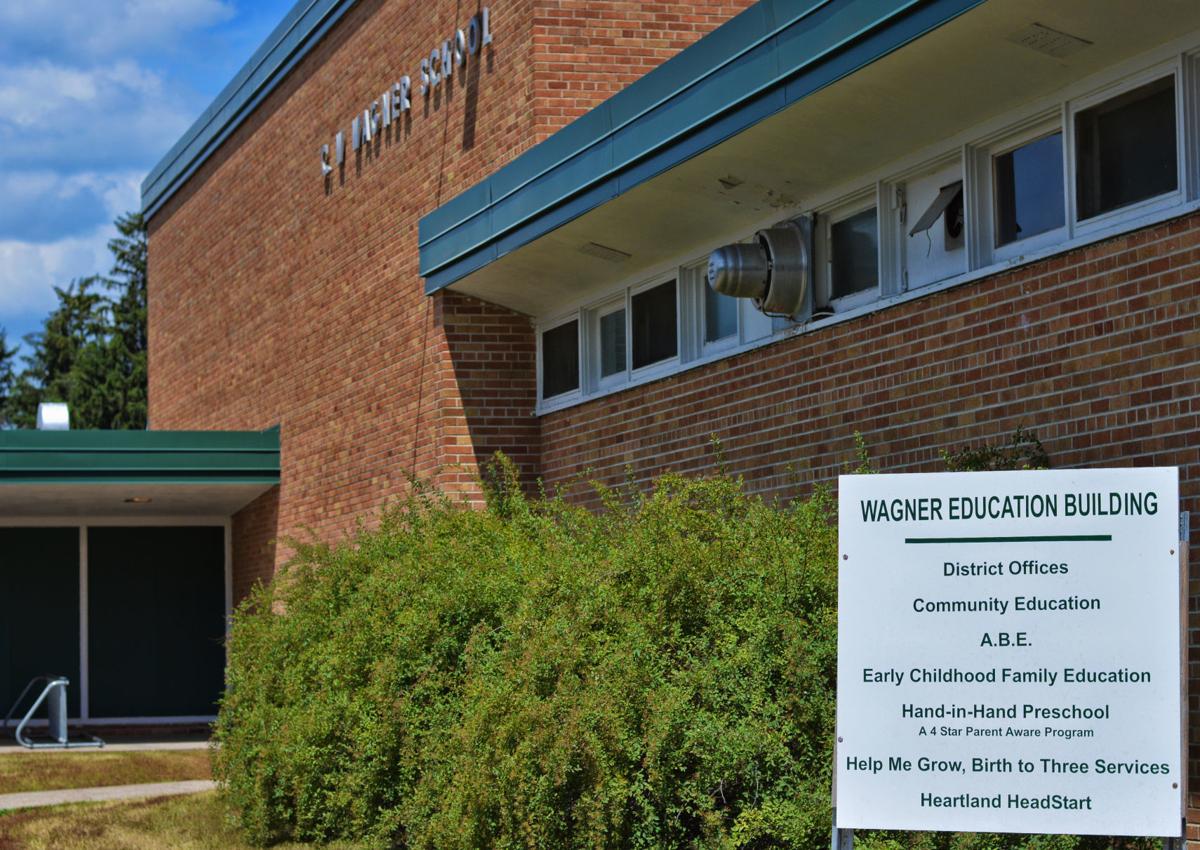
Litchfield School Board approved a 2020-2021 preliminary budget with general fund revenue of $19.2 million during its meeting June 29.
The budget, presented by Business Manager Jesse Johnson, is based on student enrollment of 1,545 in 2021 — a decrease of 11 students from 2020 — and includes expenses of $18.7 million.
The budget also assumes a 2 percent increase, or $129, per pupil unit in the general education funding from the state, which equates to $6,567 per student.
Other key revenue and expense assumptions include:
$973,000 increase in the local operating levy, an increase approved in a November district referendum;
$97,000 increase (3 percent) in special education funding;
$72,000 increase (10 percent) in special education transportation expenses;
a reading curriculum purchase of $150,000.
The 2020-2021 budget also assumes that teacher and other staff wages will be held at 2019-2020 levels, though contracts with the respective unions remain unsettled.
While the increased funding that comes as a result of the operating levy passed last year is good news, the budget remains a bit of a conundrum because of the uncertainty around what the next school year will look like, Johnson said.
The state Department of Education recently issued guidelines that included three possibilities for the start of the 2020-2021 school year: all students back in the classroom, all students distance learning, or a hybrid with half of the students in class each day and half distance learning.
“This budget is based on the in-school model,” Johnson said. “A revision is probably going to be very important this year, depending on where we’re at.”
The hybrid option would be the most expensive for the district, Johnson explained, because of social distancing necessary for student transportation, meaning fewer students per bus, as well as technology upgrades and likely staffing changes.
“If we go hybrid, this budget would be very, very wrong,” Johnson said.
Construction house sale approved
While the coronavirus pandemic and distance learning made the usual education approach a challenge this past school year, the end result was pretty impressive in at least one case at Litchfield High School.
The board approved June 29 the sale of the construction technology house for a record $105,000. The sale was accomplished via an online auction on June 25.
The previous high sale amount was $87,500, with sales recorded back to 2014, according to Business Manager Jesse Johnson.
“It is a really nice house,” board Chairman Darrin Anderson said. “I can’t stress enough how proud we are of the work they did.”
“I really hand it to him,” board member Greg Mathews said of instructor John Spanos. “(They) didn’t have class for eight weeks and still managed to pull this off.”
Meal prices going up slightly
The 2020-2021 preliminary budget includes a 5-cent increase in the price of school meals, as well as a 5-cent increase in the federal lunch/breakfast reimbursement rate. The cost of a student meal at Lake Ripley Elementary will be $2.50 and will be $2.60 at the middle and high school.
Food service revenue is expected to rise by about $9,000, to $968,488 based on these rate increases, Business Manager Jesse Johnson said.

Litchfield Public Schools will continue with the Pledge of Allegiance policy teachers and administrators have followed for years following affirmation by the Litchfield School Board.
The board voted 4-2 during its meeting June 29 to continue with the district policy of reciting the pledge at least once every week.
Under that policy, administrators at each of the district’s three schools — Lake Ripley, Litchfield Middle School and Litchfield High School — determine the frequency of the pledge recitation, with policy requiring at least once per week.
Currently, according to Superintendent Beckie Simensen, students at Lake Ripley say the Pledge of Allegiance every day, with middle and high school students saying it at least once per week, usually as part of the daily announcements.
During the board’s routine reviewal of district policies, board member Chase Groskreutz suggested that the weekly minimum be changed to a daily requirement. The issue quickly became a debate about more than the Pledge of Allegiance.
“I honestly think, growing up, history has shown, it would be best if it was done daily across all schools in the morning,” Groskreutz said. “I know what MSBA (Minnesota School Board Association) says, but why can’t we have our own rule? I think this is a huge thing for our country.”
Board member Julie Pennertz questioned why Groskreutz believed that mandating a daily pledge was appropriate, yet opposed a requirement that all those who attend a school board meeting wear a mask as prevention against the spread of disease in the age of the coronavirus pandemic.
“Back to masks,” said Groskreutz, who during a previous virtual meeting implied that he would refuse to wear a mask for an in-person meeting. “There is nothing out there whatsoever that says I or anyone has to wear a mask. If you want to talk about dictating … if the CDC (Centers for Disease Control) says we have to wear a mask, that is dictating.
“I’m not putting my foot down, dictating this,” he continued. “I think it’s good practice. I’ve also had plenty of parents say … maybe prayer in school. If you want to bring up masks, it’s because I believe I don’t need to.”
Board member Greg Mathews said he agreed “100 percent” with Pennertz. A former history teacher in the district, Mathews then launched into a review of the history of the pledge.
Saying he thought it wrong for anyone to “judge one’s love for country” by their recital of the Pledge of Allegiance, Mathews added that, “patriotism comes from the heart, not from words.”
But board member Dave Huhner, who later joined Groskreutz as the two votes opposing the current pledge policy, said a daily recital of the Pledge of Allegiance was teaching students respect.
“What’s lost in the world is the term ‘respect, in particular, for each other,” Huhner said, later adding that “I don’t think it’s a bad thing that we try to teach respect, because almost every way of teaching respect in the classroom has been taken away. At what point do we start teaching respect again?”
Mathews replied that he didn’t think “reciting this (pledge) 170 times a year is going to get us respect.”
Board member Marcia Provencher said “we could digress quite a bit on this whole topic,” but she thought the best action would be to “take it to an administrative decision.”
When the issue came to a vote later in the meeting, Pennertz moved to leave the policy the same as it’s been, with the required minimum of students reciting the Pledge of Allegiance once per week. Provencher seconded, and the final vote was 4-2.

Dean Stenberg of Grove City is a third-generation farmer on the land his grandparents bought in 1920. He’s farmed the land since 1982, and the farm was recently recognized as a Century Farm by the Minnesota Farm Bureau and State Fair.
The original Stenberg farm was 120 acres when it was purchased in 1920. Since then it has doubled and is 240 acres. Several additions have been made throughout the years as well.
Dean Stenberg is a third-generation farmer with a 240-acre farm just south of Grove City. This year, the Minnesota Farm Bureau and State Fair officially recognized the farm as a Century Farm, one that has been in the family for 100 years.
To earn the recognition, the farm must be under continuous family ownership for at least 100 years, and have at least 50 acres or more. Recipients also receive a commemorative sign, as well as a certificate signed by Gov. Tim Walz and presidents of the Minnesota Farm Bureau and State Fair.
Dean’s grandparents bought the farm from the Krogstad family in 1920. They operated it until his parents took over in 1937.
“It was tough in the ’30s when my grandparents hung on to the farm, and that’s all about they could do,” Dean said.
Stenberg’s father graduated from the University of Minnesota College of Food, Agricultural and Natural Resource Sciences in 1934 in preparation for taking over the farm, and he did just that three years later. After 48 years, Dean took over from his parents and has been farming the land his grandparents bought since 1982.
“I got a four-year degree from the U of M because I knew I wanted to come back to the farm,” Dean said.
Although the original farm was just 120 acres, it has since doubled. His parents bought an additional 70 acres not far from the original plot in 1970, and 15 years later Stenberg bought another 50 acres about a half-mile away, bringing the total to 240 acres.
Dean’s farm is mostly crops these days, but it included livestock for the better part of the past century. His parents began farming dairy cows in the 1950s.
“We had dairy cattle up until a year ago,” Dean said. “I milked cows until 2004, then I raised young calves, heifers mostly. Now it’s mostly corn and soybeans, still have some alfalfa.”
Not much from the original property remains. The first barn burned down in 1938, then a new one was built. In 1949, his parents wanted to modernize the old home but opted instead to build a new one. Over the next 70 years, several more additions were made throughout the farm.
Although the farm has remained in the family for 100 years, Dean is not sure how much longer that will continue. There is no one next to take over the farm after him, and right now it would be left to his nieces and nephews, who he believes would most likely sell the property.
But as long as Dean can keep farming, that’s what he’s going to do.
“I’m 71, keeping on farming,” he said. “I’m not sure how many more years are left.”