

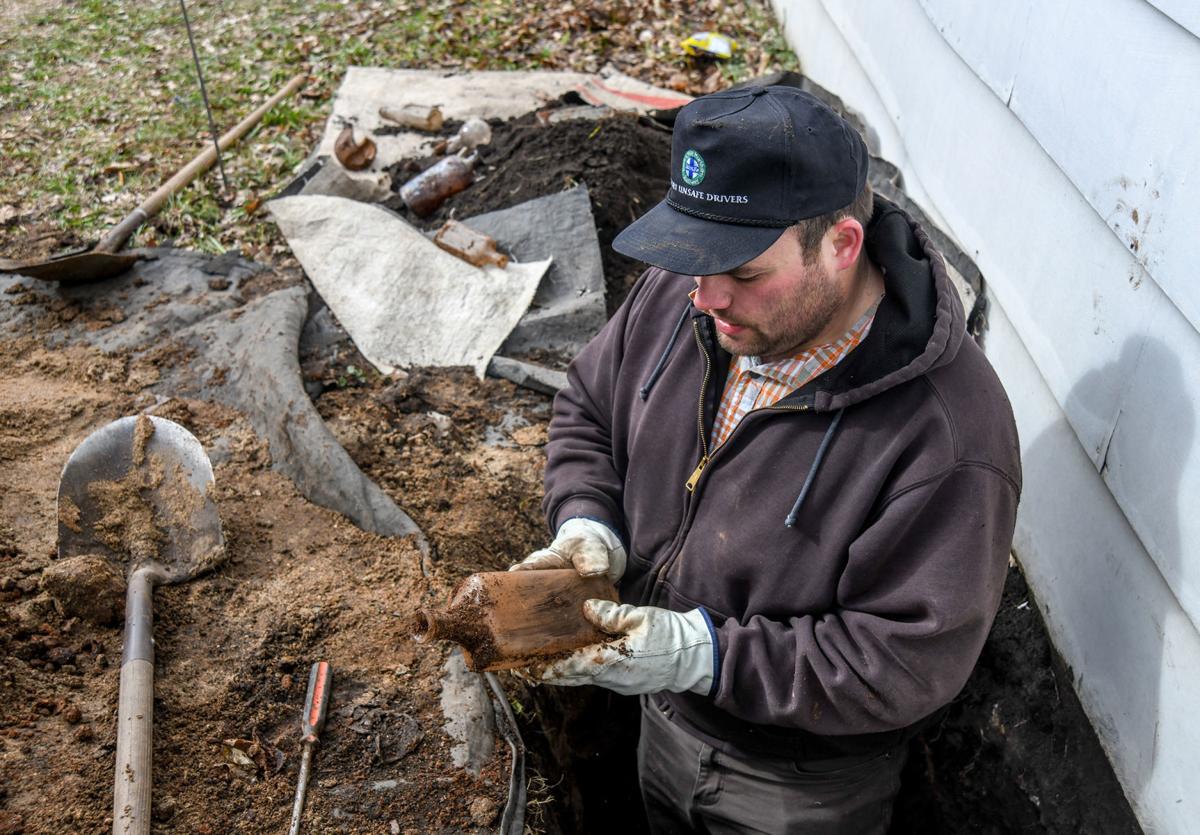
Old towns such as Litchfield attract collectors and purveyors of history, but the treasure one club seeks is found in an unlikely place.
“We’re looking for the old toilets where people go poo,” said Mark Youngblood, a member of the North Star Historical Bottle Club. “People didn’t have indoor plumbing back then, and it was the best way to dispose of trash and a good way to hide a habit you didn’t want others knowing about.”
These 19th-century treasure hunters seek one item in particular — old bottles, whether they’re liquor, medicine or soda bottles. The most prized bottles are handmade from the late 1870s to 1890s with engravings of the bottler’s name and location. The best way to find them is digging up old privies, and with Litchfield’s history and former breweries, the city makes for a perfect place to hunt.
Youngblood, a White Bear Lake resident, accompanied by Brian Mann and Lawrence Nyberg, began an early dig on May 2 at 215 S. Sibley Ave. in Litchfield. The lot’s history dates back to 1892 when Tipton Fester McClure purchased it and built a 6,000-square-foot home for his family. Nyberg asked the owner of the lot, Litchfield resident Logan Pautzke, if they could dig on the property.
“I had never heard of anything like it when Lawrence asked if they could dig,” Pautzke said.
Not many people participate in this hobby. About 15 to 20 people statewide dig privies. In Minnesota and nationally, the hobby has gained traction with websites detailing how to find privies, showcasing dig finds and YouTube videos documenting bottle diggers’ excavations.
Members of the North Star Historical Bottle Club in Minnesota collect bottles, trade them and set up digs together to find more. All of the crew involved at the Litchfield dig site are active members of the club, which meets once a month and hosts an annual trade show. Members of the club try to organize a dig at least once a weekend during the summer.
Youngblood has more than 40 years of experience digging for bottles and other 19th-century items such as plates, jugs, cups and rubbish. To him, digging is a hobby like fishing.
“You could go out and spend thousands of dollars on a boat or spend a couple of bucks on gas to get to different dig sites,” Youngblood said.
Mann, a Zimmerman native, said he started digging in 1992.
“I had always been a collector of stuff, and where I worked at the time was on top of a 19th-century landfill,” Mann said. “I hauled it home and had a bunch of stuff.”
Nyberg, of Belle Plain, said he has enjoyed old things since he was young.
“I liked hunting and metal detecting,” he said.
To find privies, the hunters set out with probes — thin metal rods with handles to push into the ground — and survey an area until they find a patch of soil that’s softer. The softer soil indicates an area that’s previously been dug out. The bottle diggers’ years of experience using the tool helps them identify where to find the privies.
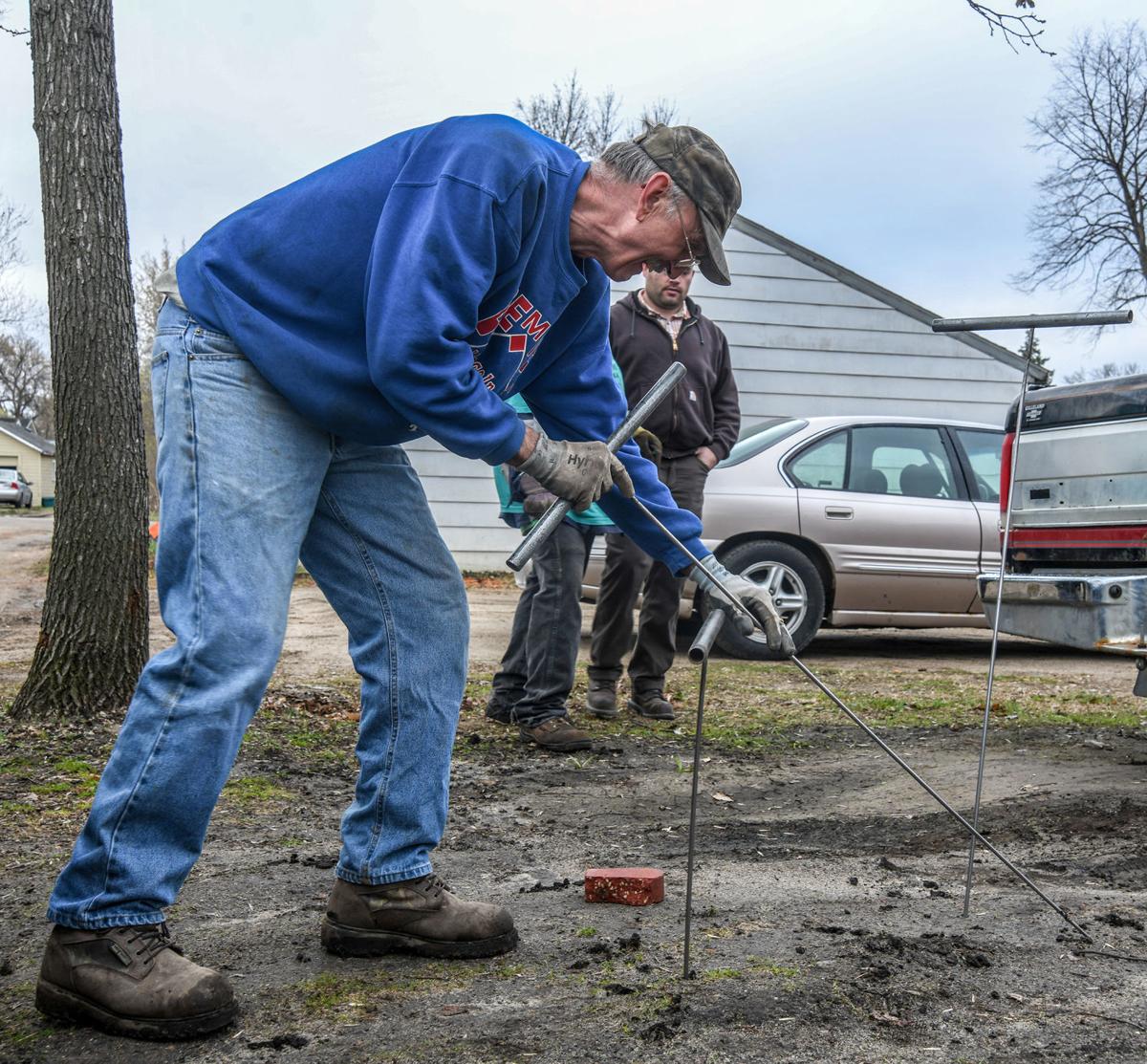
Brian Mann prepares to probe the soil in search of a former privy site to dig.
After finding an area where a privy is believed to have been, the crew sets out tarps and begins the dig. The dirt is thrown onto the tarp so that diggers do not miss any important finds. At Thursday’s dig, the group took about 20 to 30 minutes probing. The privy site ended up halfway underneath a garage.
“Depending on what problems or obstacles we might run into, the digs could take some time,” Youngblood said.
Shortly after the crew began its excavation, evidence appeared that they were on the right track. The crew found some soft, yellowing bricks, indicating that they were older, and eventually uncovered the wooden liner of the privy.
Bottles began to appear as the crew dug further into the earth and underneath the garage. As soon as they set eyes on the bottles, the crew members can tell whether they’re machine made or handmade. The bottles they found on this day were newer than they had hoped for.

Mark Youngblood finds a bottle in a hole dug in the lot at 215 S. Sibley Ave.
“Nobody’s home,” Youngblood yelled out as he tossed a bottle to the side, meaning that particular bottle had no engraving.
Mann unearthed a few gold-lined plates as he dug. He retired last December and used to melt down metals and chemicals. He estimated the plates contained about an ounce of gold, close to $1,200 worth. But that doesn’t interest him.
“You don’t do this for the money. I don’t really care about that,” Mann said. “We love doing it. This is basically a time capsule that was never meant to be opened up.”

