

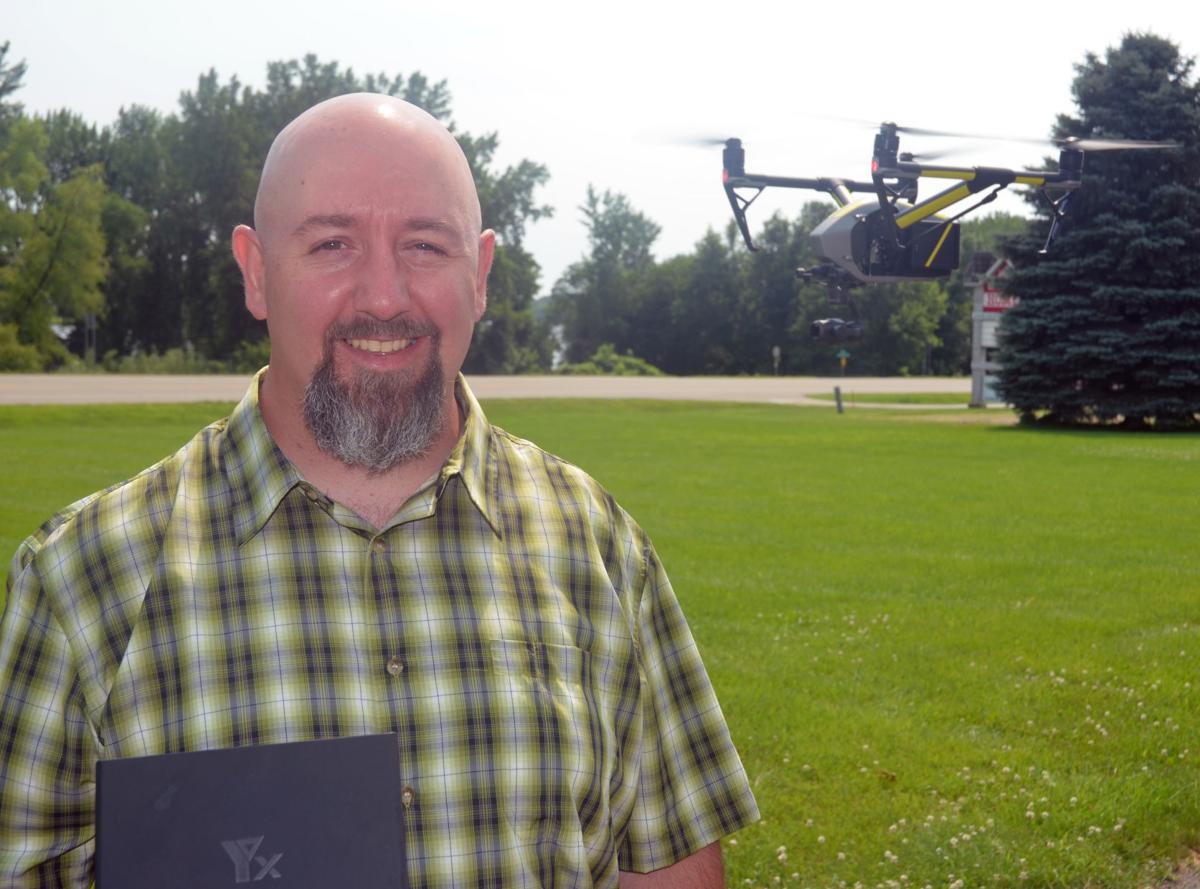
Hutchinson is no stranger to businesses using the latest technology, and the latest example is a new business that has taken to the skies.
“It really started out a number of years ago when I got a $10 RC helicopter from JCPenny to mess around with,” said Shane Kruse of Hutchinson.
His new business, Kruse Altitude, launched out of his home in June, offering aerial photography and video taken for a variety of purposes with remote controlled drones.
Over time, Kruse traded the RC helicopter for a more advanced model, and eventually into drones in the lower price range.
“I was looking at the quadcopters and the film they were getting,” Kruse said. “I wouldn’t say I was a photographer, but I enjoyed vacation photos and trying to do a good job. So I got a $50 — more of a toy — quadcopter. Then I got the Mavic Pro.”
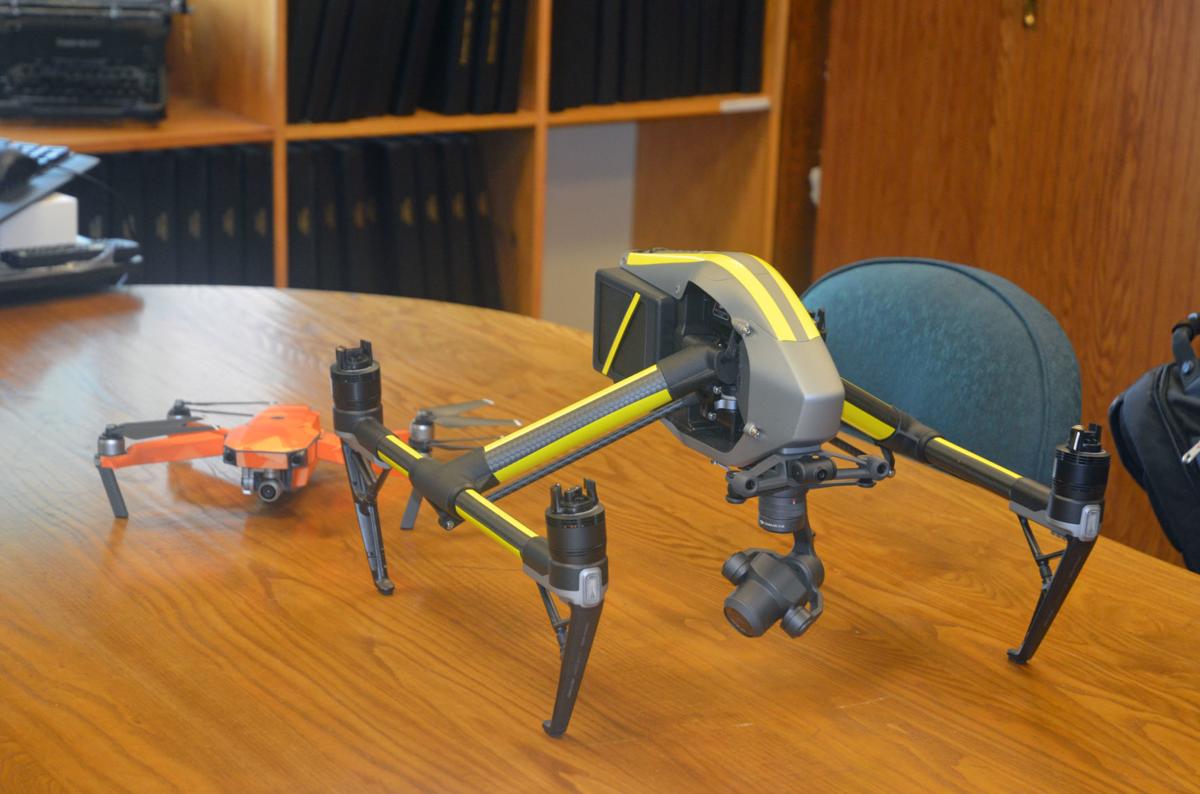
He still has the Mavic, his first larger investment with a price of roughly $1,000 when accounting for equipment.
But the big step came when Kruse, a mechanical engineer, was laid off.
“I have been doing project design for 20 years,” he said. “I had been wanting to do something on my own for awhile, so I decided it was time to give it a shot.”
When Kruse decided to take his interest in flying drones to the professional realm, he had to complete a checklist first. Any drone heavier than a half a pound has to be registered with the Federal Aviation Administration. To work commercially with a drone, it must be registered and given a number. Kruse had to pass a 60-question test about weather, maps and drone laws.
“It’s a pretty serious test,” Kruse said. “I studied for awhile on that one.”
Once he passed, he registered his drone with the Minnesota Department of Transportation, and then registered himself and his drones for insurance required to go into business.
Kruse’s must recent drone is the Inspire 2, a $4,000 piece of equipment when you add in the peripherals necessary for professional work. Its camera can take 20 megapixel stills and 4k resolution video.
“The top speed of this one is 58 (mph). The rotors are bigger, it can take steady footage in higher winds,” Kruse said. “It has battery heaters so I can run it in freezing temperatures.”
It’s also capable of hauling and operating a multispectral camera, which is critical for work in agriculture. With a different loadout, the drone could be equipped to use a camera capable of Hollywood-quality video.
Buying the Inspire 2 was a “serious change,” Kruse said. “I decided if I’m really going to do it, I’m going to buy this one and do it.”
So what does Kruse Altitude get up to? You can get some idea on its Youtube channel, Kruse Altitude, which includes videos of Costa Rica, Lake Ripley, a local farm and more.
“It’s crazy what you can get,” Kruse said. “You don’t think of there being a beautiful spot somewhere, but if you go up 100 feet, it can be pretty awesome.”
A large share of Kruse’s work involves creating promotional or highlight videos, such as of disc golf courses, and a video of the Spirit of Ripley Campground. The work involves editing in addition to compiling video.
“I call it web commercial production,” he said.
Kruse’s website, www.krusealtitude.com, has information on various photo and video packages. More samples can be found at www.facebook.com/krusealtitude.
Other applications of the technology include museum tours, mapping and real estate video.
“I hope to get into agriculture,” Kruse said. “With the multispectral camera you can get the chlorophyll levels of plants and see how healthy they are.”
The camera can detect pests and sugar content as well. Farmers can use that data to save time and money.
The drone can be programmed to fly a specific route, and take photos as it goes. Software can then compile those photos into a high resolution map. In addition to farmers, construction site managers can use that data to get detailed information.
Other possible drone applications include power line and wind turbine inspection. Drones can also take photo and video of events, though care has to be taken not to fly over people.
“I haven’t found my niche yet, but I’m leaning more toward ag, and I’d like more of the industrial work,” Kruse said.

