

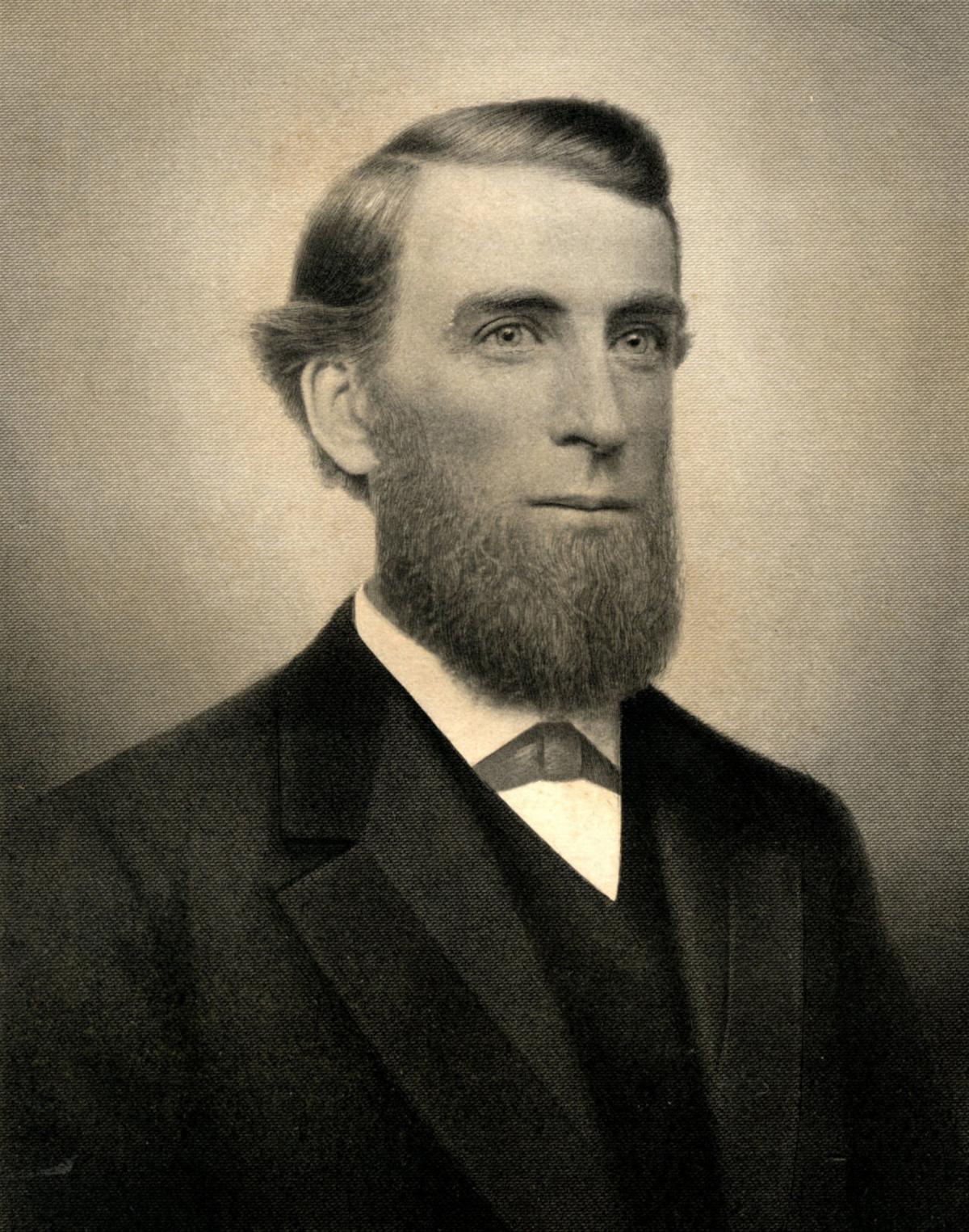
James Chesley was a well-respected man in Hutchinson. A man of means, he was a native of New Hampshire, born the son of a wealthy farmer. In 1855 the urge to move west took hold of Chesley, and he joined the manifest destiny movement and headed to Minnesota, one of the most sought after destinations of westward migrants in 1855. In 1856, he arrived in McLeod County and bought land in the vicinity of Hutchinson.
After securing a foothold in Minnesota, Chesley headed back east. His intention was to go back home to New Hampshire, find a bride and return to Minnesota. This he did, and in 1866 made his way back to his farm in Hutchinson.
While in New Hampshire, Chesley befriended another man named Charles Hayes. Like Chesley, Hayes was the son of a wealthy farmer as well as highly educated. Unlike Chesley, and likely due to his quick temper, he was unsuccessful in many of his endeavors. He eventually squandered his inheritance, developed a mental health issue and could become violent. His shortcomings did not deter Chesley from befriending him, however, and in 1866 Hayes moved to Minnesota at the request of his new friend.
Back in Minnesota, Hayes rented land from Chesley. The landlord-tenant relationship went smoothly at first. Rather than accept cash, Chesley simply took a portion of Hayes’s crop as payment. After some time, however, Hayes began accusing his friend of cheating him, and the relationship turned sour.
On a Saturday in June, 1881, several men that included Hayes and Chesley were dividing up grain. Hayes confronted his one-time friend, accusing him of taking a better share of the grain. An argument ensued that turned to cursing, then turned to threats and then to violence. After being cursed at multiple times, Chesley had enough and charged after Hayes. Since the men were threshing grain, Hayes was holding a pitchfork. The fork became Hayes’s only means of protection, and as Chesley advanced, he used the pitchfork to ward off his attacker. Chesley took two blows to the head from the fork, one of them causing blood to trickle down the side of his face. The wound meant little, however, as the scuffle continued until the two men were pulled apart. With blood streaming down his face, Chesley was set in a carriage and taken to his home.
After receiving a notice to help, Dr. Kee Wakefield made the trip to the Chesley farm. James was upright and coherent. The doctor examined the wounds and found, aside from puncture wounds to the face, that no further medical treatment would be needed. Sometime later, however, Wakefield was summoned to return to the Chesley farm. It seemed that James had become unconscious. After another examination, the doctor declared that Chesley likely suffered a concussion and would come to after a good rest. He did not. Chesley died at suppertime.
On the autopsy table it was determined that a tiny fragment of Chesley’s skull had entered the brain and caused a blood clot. A short time after, a warrant was issued for Hayes.
At the hearing, Hayes testified that he acted in self-defense. Though he was found guilty of murder, he was given a light sentence of one year in the McLeod County Jail. It was the first murder ever recorded in McLeod County, and it was a most irrevocable affair.

