



He may not fully appreciate hot dish, and he may refer to a common children’s game as “duck, duck, goose” instead of “duck, duck, grey duck,” but Christopher Ingraham has become a Minnesotan.
Many Hutchinson residents may be familiar with the story of the former Washington Post data reporter. In 2015 he reported on data from the United States Department of Agriculture’s “natural amenities index,” which placed Red Lake Falls, Minnesota, as the worst place to live in the country, as measured by climate, topography and water.
“Minnesota people were just outraged — politely, I should say, but still outraged,” Ingraham said about the article.
Along with a dose of good-natured ribbing from Minnesotans, Red Lake Falls residents invited him for a visit. With encouragement from his editor he agreed, and today he’s a permanent fixture of the community, having relocated with his wife and children from the East Coast.
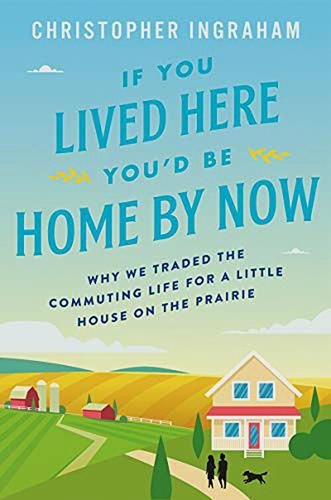
Ingraham’s story is the subject of his 2019 book, “If You Lived Here You’d Be Home By Now: Why We Traded the Commuting Life for a Little House on the Prairie,” which is the 2022 Hutchinson One book, One Community read. Those who are all caught up, or those who might simply like to hear details of such a story first hand, will have an opportunity to meet Ingraham Saturday, April 2 at the Hutchinson Event Center.
It’s been awhile since Ingraham was on the road for an author appearance. He did quite a few, he said, in 2019 when the book came out, but the pandemic made him pump the brakes.
“I’ll talk a little about what it was like experiencing a pandemic in a small, rural town versus what I was hearing about from family on the East Coast,” Ingraham said.
The major life change started from an unexpected place for Ingraham. When he wrote the original story for the Washington Post, it was a standard Friday afternoon task. He often wrote about more controversial topics such as guns and crime, but the response to his story regarding Red Lake Falls was far greater than he could have imagined.
One blind spot in the USDA’s information was easily confirmed upon his visit to Red Lake Falls: rivers account for a lot. The data only considered lakes.
“That was one, by definition, blind spot,” Ingraham said.
Two rivers converge in town, creating what Ingraham described as, “really pretty bluffs, almost badland areas. People up there know it as beautiful.”
On the other hand, there are no lakes or falls in Red Lake Falls.
“The naming conventions are built on a pyramid of lies,” he joked.
Upon visiting Red Lake Falls, and now having lived there for several years, Ingraham has observed all manner of things he wouldn’t have expected. But that data, along with plenty of information about his journey, are the subject of the book and his upcoming talk. He’ll also tackle the idea of small-town decline.
“I try to emphasize to folks in populated cities and suburbs, a lot of them want exactly what small towns have,” Ingraham said.
He’s discovered the personal benefits of small-town life for himself.
“Out here we can afford a normal-sized house with a normal-sized yard, which was completely off the menu in Baltimore and D.C.,” Ingraham said. “We could have another kid, a third. We have another son in our life now and the effect of that you just can’t quantify. It’s huge. What would my life be like without William?”
He still has plenty to learn to love about Minnesota, too. He isn’t a fan of local, traditional foods. Lefsa, at least, is “perfectly adequate,” he said, thanks to all the butter and sugar. He’s a critic of local coffee, but hasn’t tried Minnesota wine just yet. However, Minnesota rye whiskey has his approval, so progress has been made.


