

So, what are your thoughts about the Bible story of Noah’s ark — fact, fiction or somewhere in between?
Stephen Orsatti, a Litchfield filmmaker and chief executive officer/founder of Six Days Studio, hopes to help you make up your mind when he hosts free screenings of his documentary, “The Noah Flood,” 2:30 and 7 p.m. Thursday, Feb. 15, at the State Theatre in downtown Hutchinson.
The 62-year-old filmmaker credited Red McGonagle, owner of the State Theatre, for the public unveiling.
“It was Red’s idea originally,” Orsatti said. “He suggested, ‘Why don’t you do a screening and raise money for it?’ I created Red’s website years ago. It was his suggestion and a lot of credit goes to Red.”
WHAT TO EXPECT
At Thursday’s screenings, Orsatti will give a brief introduction and afterward answer questions about his film, which seeks to address doubts about whether Noah’s flood happened and speaks to the significance of Noah’s flood as it relates to creation science. Ian Juby, founder of the Creation Science Museum of Canada, serves as the film’s writer, producer and host and offers scientific evidence proving the flood isn’t fiction.
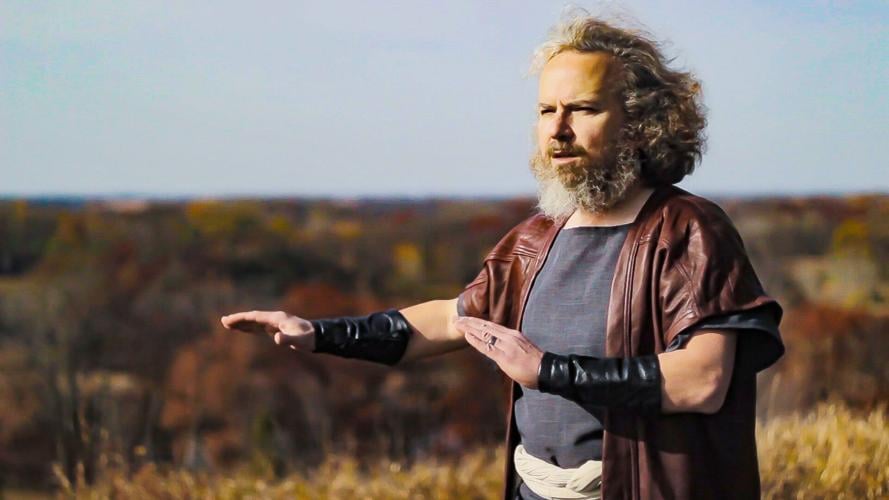
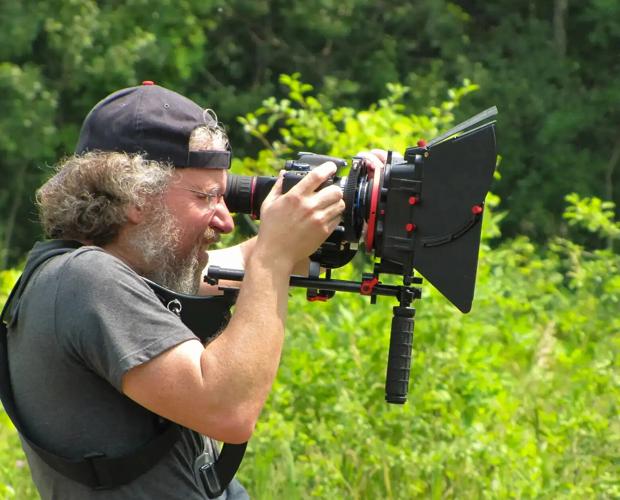
Orsatti is an ordained Baptist minister who conducts church services from his home in Litchfield. He serves as the film’s director, producer and special effects supervisor, as well as stepping up to do anything else that needed to be done, including creating the film’s computer animation and playing the role of Noah.
“It was interesting,” Orsatti said of his turn in front of the camera. “I was looking for someone who could play Noah, John the Baptist and Jesus. I had to find the right person. Someone said, ‘Why don’t you do it?’ I literally grew my hair and beard for a year to be able to look like Noah.”
Why take on so much responsibility? Because Orsatti is making the documentary on a part-time basis and funding is hard to come by. As a result, he’s doing as much of the work himself as he can.
“Roughly, it has taken 10 years to make the movie,” he said. “I have taken on an incredibly (complex) project on a part-time basis.
“The major time-consuming (part) of the project is post production — special effects — the animations that go along with the film,” he said. “It literally took years in post-production. Most motion pictures spend millions and have hundreds of people to do special effects. I was the director of all color grading, color animations, water simulation. There’s so much that goes into it.”
Orsatti went on to describe the documentary as “very content rich.”
“Documentaries (typically feature) talking heads. This isn’t like that,” he said. “This is like something you’d see on TV or a feature-length film. I wanted it to be interesting and (that) no one would get bored.”
What attendees will see Thursday is the first part of the film.
“The first half of the film is complete,” he said. “We need to get this out there. It stands pretty well as Part One. I’m hoping to raise funds for the second part.”
Orsatti described his situation as a project triangle (also known as a triple constraint triangle), which follows the saying: You can have it fast. You can have it good. You can have it cheap, but you can only have two, not all three. For example, this translates into: good and fast, but not cheap or fast and cheap but not good.
“I’ve opted for good and cheap,” he said. “If we raise more money, I can hire more people. One scene would take thousands and thousands of dollars. I’m cheaper than that.”
Many people might remember Russell Crowe’s 2014 fantasy-adventure film, “Noah.” Orsatti said they started working on their film before Crowe’s version ever came out. Their hope was to release “The Noah Flood” in advance of the studio movie, but it wasn’t meant to be.
Ten years after the release of “Noah,” “The Noah Flood” is having its first public screening. Orsatti credited Juby with the idea.
“People are always intrigued,” he said. “I think there’s a belief out there among non-Christians that maybe this happened. I think there’s an interest — when you hear about Noah’s ark, it’s one guy who built a boat, one guy and his family — a weekend project to build a boat to save humanity.
“When people go to college, they get bombarded with evolution,” Orsatti went on to say. “It makes people discount all scripture. We wanted to address that. It’s amazing. There’s so much geologic evidence. There’s no other way to explain this. How did we get here? Where did it start in evolution? The early scientists were all Christians. They believed.”
WHAT’S NEXT?
If this, so far, covers Part One, what is featured in Part Two? According to Orsatti, it will focus on the actual construction of the ark and how it was possible. How people of that time easily had enough technology to be able to build it. They will discuss what “gopher wood” actually is, and the technology and composition of what “pitch” is.
“We also talk about the feasibility of such a large wooden vessel and how it could withstand such enormous forces of the ocean,” he said. “We will see Jesus and John the Baptist and the connection to Noah. And of course, Noah and his sons are shown in the construction of the ark. And, we talk about the actual feasibility of the flood itself and how the evidence of Part One only adds to the inevitable conclusion that it actually happened. It ends with ... what are you going to do with this knowledge now that you have it?”
Looking back, Orsatti has enjoyed the whole process of making “The Noah Flood” — and especially the end result.
“I love making people happy,” he said. “The end product where they say ‘wow.’ I never worked with actors before. I had to find some actual actors. First I was intimidated and then I loved it — the interaction, camaraderie. I couldn’t believe it. It blew me away. It was really fun.”


