One person was found dead inside a mobile home in Lot 105 of Country Club Terrace mobile home park, Hutchinson, following a fire Wednesday afternoon.

One person was found dead following a fire at Country Club Terrace mobile home park Wednesday afternoon.
According to a report, Hutchinson police and Hutchinson firefighters responded to the fire at about 3:45 p.m. at 448 California St. N.W. The owner of the mobile home, Helen Marie Norling, 80, of Hutchinson, was reported to be in the home and unable to evacuate. Smoke and flames were visible upon arrival.
Police officers and firefighters made multiple attempts to enter the home and rescue Norling, but due to heavy smoke and extreme heat, the rescue attempts were unsuccessful. Firefighters later found Norling’s body while conducting an interior search of the home.
One Hutchinson police officer was treated at Hutchinson Health for smoke inhalation and released.
Allina Ambulance and the State Fire Marshall also responded to the fire, and the cause of the blaze is under investigation.

The G.A.R. Hall is located at 308 N. Marshall Ave. in Litchfield.

The G.A.R. Hall’s meeting room — with its original chairs — is used sometimes for programming. The state of this room is at the heart of a current dispute in which some believe an 1885 agreement between the city of Litchfield and members of the Grand Army of the Republic Frank Daggett Post has been violated.

Connie Lies
As their numbers dwindled and members saw the inevitable demise of their organization, Union Army, Navy and Marine veterans sought to ensure the physical monument to their service continued.
That’s when members of the Grand Army of the Republic Frank Daggett Post made a deal with the city of Litchfield, deeding their hall to the city. The donation came with a handful of stipulations, most notably that the hall would remain the same as it was when members gathered there in the late 1800s and early 1900s.
More than 100 years later, that agreement has become a source of conflict between Grand Army of the Republic descendants, city leaders and the Meeker County Historical Society.
Specifically at issue are clauses in the 1885 contract — as reported in the Nov. 28, 1885, edition of the Litchfield Saturday Review — that require the G.A.R. Memorial Hall to remain essentially as it was when actively used by members a century ago.
The city “shall maintain and keep in repair the said premises, and the said Memorial Hall thereon situate, according to the intention and design of the building, as in this instrument expressed; and the said Village of Litchfield shall never permit the same to be used for, or diverted to any other purpose, whatever.”
The agreement also states that the city “shall carefully collect and scrupulously preserve in the room of said Memorial Hall … all the war relics, flags, guns, chairs, pictures, and all other personal property and belongings of said Frank Daggett Post, and arrange the same in and about said room, so that said room may retain the appearance, as nearly as practicable, of still being occupied and used by said Frank Daggett Post … as nearly as practicable, forever.”
When the Ladies of the Grand Army of the Republic — a national organization of descendants — held their annual meeting at the Frank Daggett Post in August, members noticed immediately that terms of the 1885 agreement are being violated.
The Memorial Hall has been overrun, in the opinion of at least some members, by unacceptable items that change the hall’s appearance beyond what is expressed in the deed.
That brought swift rebuke from the Ladies of the Grand Army of the Republic, the oldest hereditary, congressionally sanctioned organization in the United States, whose executive committee drafted a letter to Litchfield Mayor Keith Johnson and City Council members.
The letter asked that the city follow the 1885 agreement and remove items from the Memorial Hall that are “both new and of different time periods” in a timely manner.
So far, the city hasn’t acted, according to Connie Lies, president of the Frank Daggett Circle of the Ladies of the Grand Army Republic. That’s why she asked to address the City Council at its Nov. 1 meeting, including as exhibits for her presentation copies of the 1885 newspaper article detailing the deed, handwritten notes from a Dec. 7, 1885, meeting of the Council of the Village of Litchfield, and the letter from the Ladies of the G.A.R. signed by national president, secretary and Lies as president of the Frank Daggett Circle.
“We don’t want to fight with anyone over this,” Lies told the City Council. “We want an amicable resolution to a problem that has been coming on for decades.”
After brief discussion, City Council members agreed the topic needed further research, which Johnson said he would undertake in the interests of saving the city the legal fees. He agreed with the importance of the G.A.R. Hall to the city.
“I really appreciate the history of the G.A.R. Hall,” Johnson said, adding that he thought the city could comply “so we don’t destroy this sanctuary.”
The topic has not yet come back to the City Council agenda, however, and Lies expressed some frustration during a telephone interview last week.
“Nothing has happened,” she said. “I’m not sure how long I want to keep letting this play out (before she contacts) the attorney and say, ‘Go for it.’”
The city’s Heritage Preservation Commission brought Daniel Hoisington of Hoisington Preservation Consultants to town in late November to talk about he G.A.R. Hall’s historic significance. The building is listed on the National Register of Historic Places, and Hoisington shared research he has done on the hall, including how the Memorial Hall was set up and items that were in the hall at the time of the 1885 agreement.
Lies admitted the issue is personal, as she recalled making frequent visits to the G.A.R. Hall during her childhood with her mother, who pointed out pictures on the walls of the Memorial Hall depicting her uncles and other Union veterans.
“She was very proud to show those off,” Lies said.
For some, the issues in the G.A.R. Memorial Hall might not be evident. In August, they included display cases and a book shelf used to display historical items, but that are not fitting of the time period, Lies said. Those items are just some of the things that have been added to the room over many years, even decades, Lies said.
“I’ve been aware for some time,” Lies said, adding that she tried to work with Meeker County Historical Society’s former museum director, “before national showed up and said what the (heck).”
But she worries that many people, including some on the historical society’s board, simply don’t understand the significance of the G.A.R. Hall, or the strict interpretation of the 1885 agreement that necessitates the Memorial Hall remain as if awaiting the next meeting of the Grand Army of the Republic, right down to the chairs that members sat in during those meetings. She also believes the city, with whom the 1885 agreement was signed, needs to take a greater role in the G.A.R. Hall’s care — in fact, is mandated to do so as part of the agreement.
That’s why, Lies said, she and other members of the Ladies of the Grand Army of the Republic sought a swift change of course in the encroachment of inappropriate items in the Memorial Hall.
“We are charged with keeping the memory and the histories,” she said. “We are charged with that, that’s why we felt we had a mandated legal responsibility to step forward when this began to occur … when it became egregious.”
There have been flare-ups like this in the past, including in the 1940s when “a team of Philadelphia lawyers” hired by the city tried to break the lease to allow the Memorial Hall to be used as a Boy Scouts meeting place. The legal challenge failed as it was determined the lease details were “written in a manner they were impossible to break, Lies added.
She hopes the city will respond positively and have unfitting items removed, returning the Memorial Hall to its honored appearance. An appearance its members intended to remain the same — forever.
“This is the most treasured thing you have in this city,” Lies said. “No one else in the United States has this.”


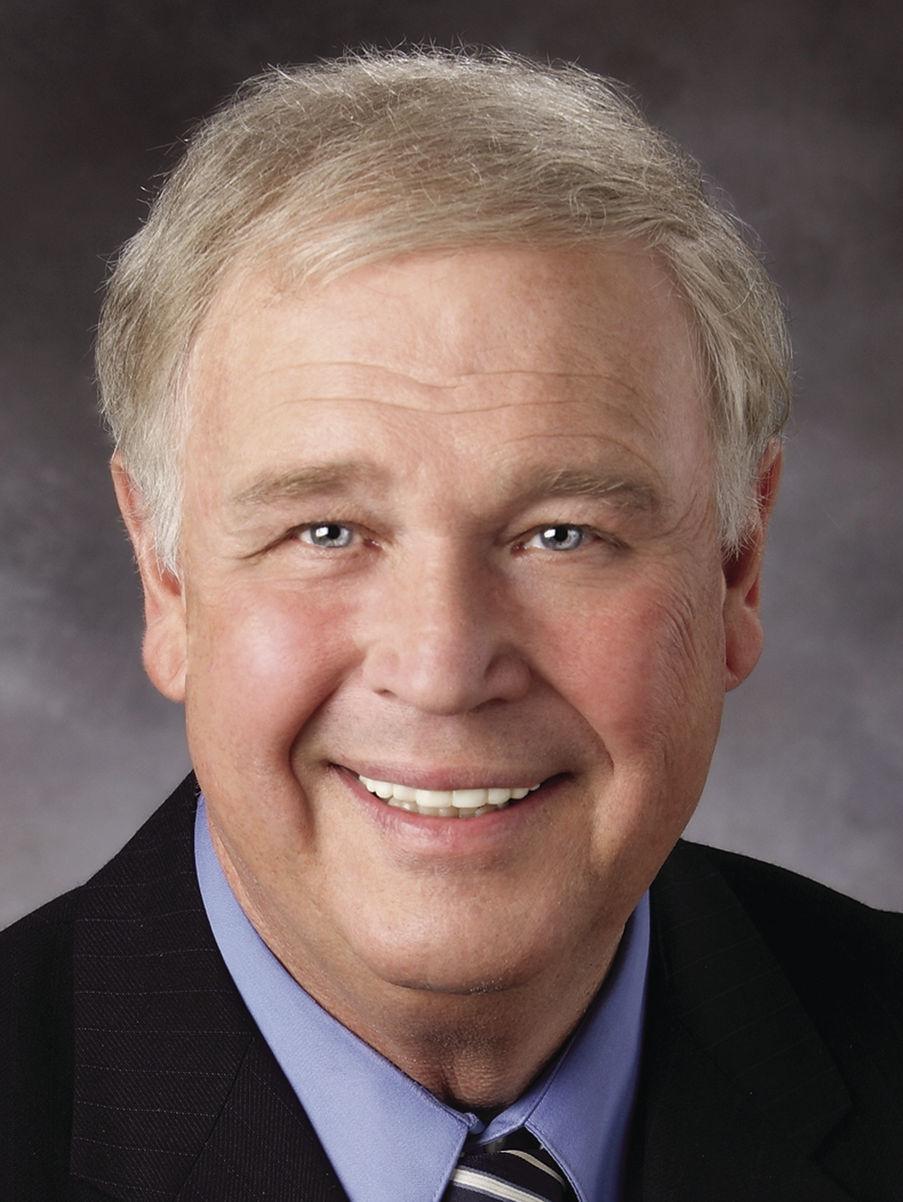
The state of Minnesota will head into 2022 with a record $7.7 billion projected budget surplus for the current two-year budget cycle, state finance officials announced Tuesday.
The eye-popping figure would be enough money to pay more than $1,000 to every Minnesotan, if the projection holds.
But that won’t happen. Some of the money is already spoken for, and leaders of both political parties appear to have other plans for the rest — as do various interest groups that wouldn’t mind a piece.
So how will it be spent, or will it be spent?
Impossible to say at this point.
The projection — and it’s important to remember it is only a projection — set the pieces Tuesday for a chess match that will likely play out through May as the state’s politically divided government grapples with what could shape up to be an unprecedented sea of riches in an election year.
On Tuesday, Gov. Tim Walz and fellow Democrats generally hailed the projected surplus as providing a historic opportunity to pay for programs and policies they’ve supported in recent years, such as creating universal paid sick leave and reducing the cost of child care. Republicans, on the other hand, urged caution, warning of the dangers of inflation and suggesting “tax relief” is in order to counterbalance the state’s largesse.
WHY SO BIG?
The ballooning projected surplus — in February it was projected to be $1.6 billion — is part of a national trend for state and federal government finances that is resulting mainly from an increase in tax revenues amid a pandemic recovery that continues to surprise economists.
Some $5.1 billion of the projected surplus comes from increased collections from personal income, sales, and corporate income taxes, according to the budget forecast, which was produced by the state Management and Budget office in consultation with the state economist and a private economics firm. A relatively small amount, some $364 million, comes from lower-than-expected state spending during the pandemic, mainly from making lower payments to public schools, which saw reduced student enrollment during the pandemic.
Some $870 million of the surplus by law will be siphoned off to restore the state’s budget reserve, also known as its “rainy day fund.”
While massive federal spending programs, including coronavirus relief programs, have sent billions of dollars into state and local government coffers, those funds do not significantly contribute to the surplus, Management and Budget Commissioner Jim Schowalter said. However, the massive federal spending programs that made direct payments to people and businesses have played a major role in the economic recovery that led to the increased spending and income that, in turn, led to increased tax revenues for the state, State Economist Laura Kalambokidis said Tuesday.
The forecast lists a number of variables that make its projections inherently uncertain, including inflation, the problems with the global supply chain and the course of the coronavirus pandemic.
DEMOCRATS CLAIM VICTORY
While cautioning the pandemic isn’t over, leading Democrats on Tuesday claimed the projected surplus was vindication for policies they’ve supported.
Walz, for example, revisited an argument he made in 2020, when Republicans criticized his unprecedented COVID-19 restrictions, which included shuttering schools and many businesses to in-person activities, as lethal to the economy. Walz has frequently maintained there was a “false choice” between the economy and pandemic safety — when properly targeted government spending was used to provide relief for those hurt.
“That’s now been proven to be a fallacy,” Walz said in statements to the media Tuesday. He and other Democrats emphasized that the recovery hasn’t been equal and argued that the excesses from those who have done well — the surplus — should be directed toward those who remain struggling to return to work, find affordable day care, or access health care or housing they can afford.
House Majority Leader Ryan Winkler, DFL-Golden Valley, claimed victory more plainly. “The message from this forecast is that Democratic policies work,” he said.
REPUBLICANS URGE CAUTION
Top Republicans disagreed flatly with Winkler’s assessment. House Minority Leader Kurt Daudt, R-Crown, said inflation, especially rising gasoline and energy prices, is putting the squeeze on Minnesotans, and “all of those things are the result of Democratic policies.”
“There is a pretty stark contrast right now between government’s bank accounts and regular Minnesotans’ bank accounts,” said Sen. Scott Newman, R-Hutchinson. “Government is flush with cash, but inflation is stealing more and more from people’s paychecks. Everything from gasoline to groceries to energy is getting more expensive.”
Republicans hold the majority in the state Senate, so their support is crucial for any state spending plan to succeed.
On Tuesday, Senate Finance Committee Chair Julie Rosen, R-Fairmont, said it’s “too early to tell” what posture Senate Republicans will take.
“We need to be very cautionary,” she said.
Neither Daudt nor Rosen said they planned to push for tax cuts specifically for the wealthy or profitable large corporations, but they did use the words “tax relief,” as did local lawmakers. Newman said his “top priority will be making sure we provide serious, meaningful tax relief to the people who need it most.
In the House, Rep. Dean Urdahl, R-Acton Township representing District 18A, said in a statement that the surplus represented “a significant over-collection of state taxes.”
“Relief needs to be a top priority in the 2020 session,” he said. “These dollars could help offset increased costs people are suffering under inflation and should be put back in taxpayers’ hands.”
Rep. Glenn Gruenhagen, R-Glencoe representing District 18B, echoed Urdahl’s sentiments.
“This record-setting surplus gives us an opportunity to lower taxes and help make Minnesotans’ lives more affordable,” Gruenhagen said in a statement.
Potentially complicating matters politically: Walz is running for re-election, and two prominent Republican senators, Paul Gazelka, R-East Gull Lake, and Michelle Benson, R-Ham Lake, are seeking the Republican nomination, along with former state Sen. Scott Jensen of Chaska. In addition, every seat of the Legislature will be on the ballot next year.
House Republicans have also called for spending some state money to replenish the state’s unemployment insurance trust fund that was drained to pay jobless benefits during the pandemic. The state borrowed more than $1 billion from the federal government and must start paying off that debt this month.
Businesses will face payroll tax increases if the state doesn’t step in and pick up part or the entire tab. It could use some of its unused federal COVID dollars to address that debt.
“Minnesota is one of only 10 states that has not taken care of this issue and our state’s lack of action could cause businesses to face a UI tax increase of 15% or more to replenish the fund,” Urdahl said. “This should not happen any time, much less when the state has an unprecedented surplus.”
Walz and the 2022 Legislature, which convenes Jan. 31, will decide what to do with the surplus. If they can’t agree, nothing much will happen; the money would just sit there. Because the two-year budget to fund government operations was passed last year, there’s no risk of a state government shutdown.