Two business proposals have been named winners in the Hutchinson Economic Development Authority's Jump-Start Downtown business plan contest.
The Jump-Start Downtown review committee heard pitches from four finalists June 7. Two were chosen as first-place winners: Flank Steakhouse, owned by Vincent and Amanda Maertz, and Gold Coin, a proposed Thai restaurant owned by Simon Leung and Choua Kue.
In addition, a third contestant — Sweet Rolls & Boba — owned by Mai Thao was chosen for a partial prize, which will be determined by the EDA Board at its June meeting later this month.

Sweet Rolls & Boba will be serving desserts such as this green apple Thai-rolled ice cream. Mia Thao discovered the popular street food during a visit to Thailand.
"If you think of downtown as an art, entertainment and dining district, this is fantastic," said Miles Seppelt, Hutchinson EDA director. "This is going to draw a lot of people to the downtown area and everyone is going to be a winner."
Seppelt went on to describe downtown's three new eateries as "super exciting."
"I just love we're adding a little bit of ethnic cuisine to the landscape," he said. "That's going to be totally awesome."
Seppelt wasn't the only one excited. The Maertzes said they are thrilled to have won the contest, and sharing it with another business makes it that much sweeter.
“We are absolutely excited, thrilled,” Vincent said. “We walked in there with our business plan and told our story of how we got there, holding back tears the whole time.”

Vincent and Amanda Maertz, owners of Flank Steakhouse, plan to use the money to give themselves a financial cushion. “We spent an incredible amount of money already,” Vincent said. “We didn't know we would have to spend so much. I'm am so grateful we had that money and I'm more grateful to get it back. We'll feel more comfortable. It's a little dance we do. We're actually generating revenue now, but it was scary there for a little while.”
“I cried when they told us,” Amanda said. “We're so happy, over the moon. We're so passionate about what we do.”
Joining Flank Steakhouse in earning first-place honors are Leung and Kue, who will open a Thai restaurant in the updated and modernized former Gold Coin building on Main Street North in downtown Hutchinson.
According to Leung and Kue's business plan, they are re-designing the Gold Coin restaurant to attract families and people of all ages who want authentic Southeast Asian foods at a reasonable cost.
"Thai cuisine is known for its rich, flavorful curry spices," they wrote. "We use fresh herbs in all of our dishes. ... Beside curries, we have a big range of rice noodle dishes to offer as well. The most famous noodle dish is the pad thai. Pad thai consists of al dente rice noodles, stir-fried with fresh green onion, bean sprouts and your choice of protein or vegetables in a sweet and tangy tamarind sauce topped with peanuts and a slice of lemon.
"Beside the pad thai, we offer other stir-fried noodle dishes, such as drunken noodles, pad seew, curry pad thai, peanut curry noodles. With that being said, Thai food has become one of the fastest-growing and most popular of the world cuisines today. We will be featuring vegan, gluten-free and dairy-free options at our restaurant for those who request it."

Co-winners Simon Leung and Choua Kue will open the Gold Coin Thai restaurant in the site of the former Gold Coin along Main Street North in downtown Hutchinson. It is expected to open later this year.
Kue brings experience in restaurant management. For five years, she was the proprietor of Bangkok Taste Cuisine in downtown Grand Rapids, Michigan. The restaurant won the “Best Thai Food” in West Michigan award from ReVue magazine in 2016, 2017, 2018 and 2019.
“Our success was driven by our commitment to both high-quality food and our history of community involvement,” she wrote.
Mai Thao, owner of the second-place winner Sweet Rolls & Boba learned about the business plan contest through her friend, Choua Kue. The two women worked together at the Bangkok Taste Cuisine in Grand Rapids. They reconnected in Minnesota, and it was Kue who encouraged her to apply.
The new sweet shop will offer Thai-rolled ice cream and Taiwanese boba/bubble tea that originated in South Asia. She plans to use the Jump-Start funding to buy equipment and supplies for her business.

Sweet Rolls & Boba will introduce bubble tea to Hutchinson when the new business opens in the Gold Coin later this year.
"We are committed to bringing a quality cross-cultural experience to downtown Hutchinson that is inclusive and very much shareable," she wrote in her business plan. "My roots as a first-generation Asian woman inspires my mission to create products that are both familiar and exotic."
Thao brings to her new business a Bachelor Degree in business administration from Central Michigan University and more than 15 years of experience in the food services industry, including introducing Waan Waan Sweets at Bangkok Taste Cuisine, and operating it as a standalone at festivals throughout Michigan. She'll open her dessert business in the Gold Coin later this year.
“We want to bring Asian-inspired street food to Hutchinson,” she said. “I loved it. I saw it on vacation and wanted to share it with my family and friends.”
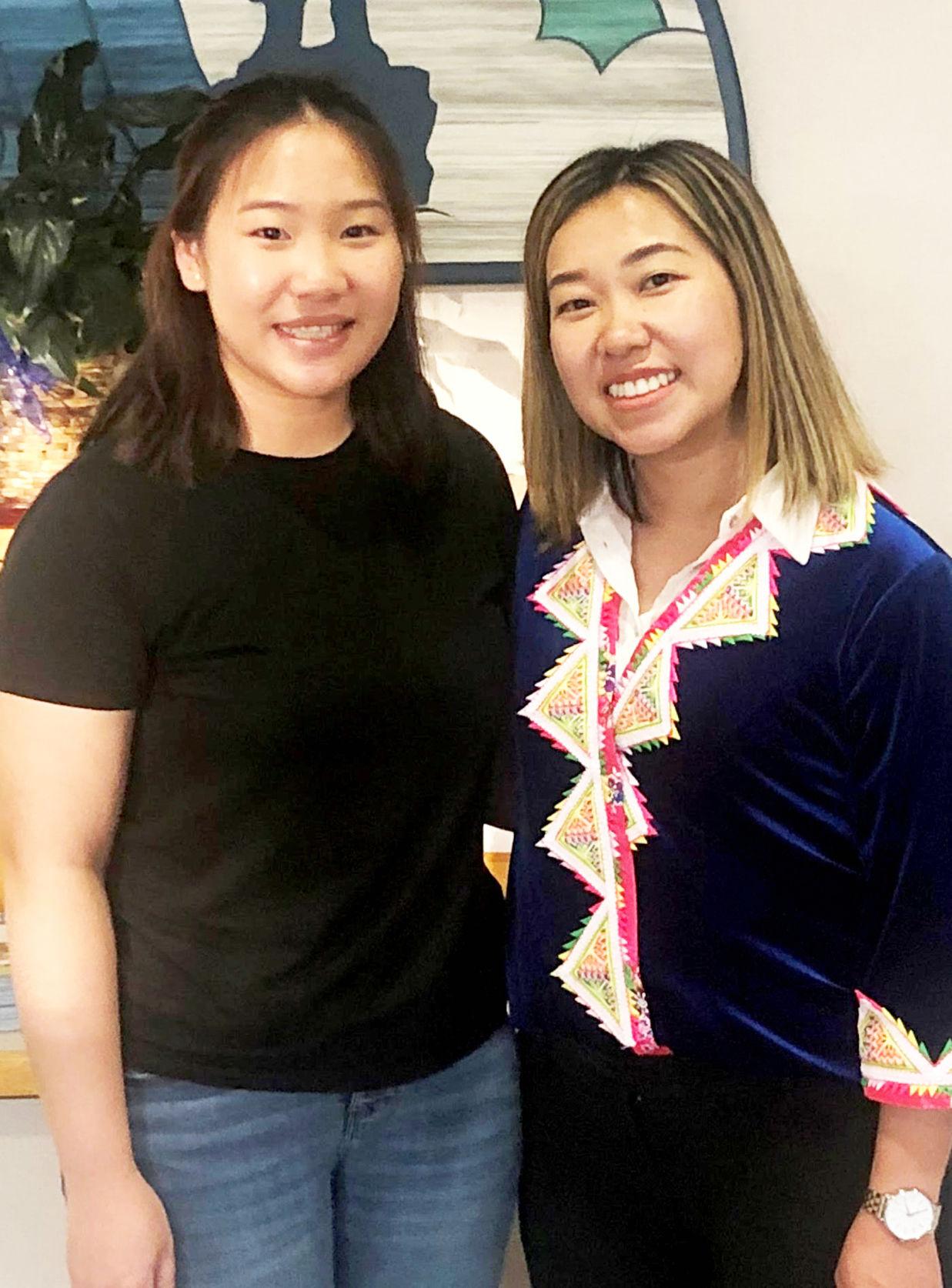
Mai Thao, right, was named the second-place winner. Her plans are to open Sweet Rolls & Boba. She will feature Thai-rolled ice cream and bubble tea. Pictured with Thao is her cousin, Ker Her, who will be her assistant manager.
HELPING START-UP BUSINESSES
The Jump-Start Downtown business plan competition is designed to promote the start-up of a new business on Hutchinson’s Main Street. The $30,000 prize package — which may well be the largest business plan contest in the state — includes $15,000 in start-up capital, $2,000 for a new sign or awning, business coaching and mentoring, a free website with one year of hosting, advertising, logo design, business cards, letterhead and envelopes — in short, pretty much everything one would need to start a business.
“I'm going to be working with them in the capacity that they get connected with the sponsors,” Seppelt said. “I'll be working with them quite a bit. In terms of coaching and mentoring I'll let the Small Business Development Center do that. They're the experts.”
Jump-Start Downtown was offered for the first time in 2013. The winner was Elena Volkov for her Sweet Spot Bakery on Main Street. Also funded was Meshed Designs. The competition was offered again in 2014, but none of the business plans were accepted.
After walking Main Street in January, Seppelt said he counted a “whole bunch of vacancies.” It was for this reason the EDA stepped up with another run of Jump-Start Downtown.
“We said we have to do something to take care of this,” he said. “Our approach at the EDA is that it's a tool we pull out when we need it. When we see a lot of vacancies on Main Street, we'll pull it out. We want people to start their businesses on their own. This is a tool when we have a significant economic downturn. We pull it out to jump-start things on Main Street.”
Some might wonder why it's important to have a thriving Main Street. According to Seppelt, it's one of the pillars of the Hutchinson EDA.

One of Mia Thau's most popular flavors of Thai-rolled ice cream is taro coconut. It is also available as an iced milk tea.
“We have twin areas of emphasis: Downtown is one of the pillars and manufacturing is the other,” he said. “We want to see manufacturing be successful, and that includes job creation.”
When you talk about economic development, Seppelt said the new buzzword is “placemaking.”
“We've got to get involved in making Hutchinson a great place for young people to come to town and raise their families," he said. "That means amenities such as water parks, trails and fun things to do and cool restaurants and things like that.”
It's particularly important in times like now when unemployment is low and people can get a job wherever they want. Then it comes back to what communities have to offer.
“Is Hutchinson being competitive in the amenities it rolls out?” he asked. “People can pick. We have to think about amenities, housing options available for everyone, child care is not a big issue yet, but I can see it moving in that direction and getting tougher.”
- Updated


With no improvement in mental health indicators, a higher rate of obesity than reported statewide, reports of food insecurity, and lower rates of tobacco and alcohol use, data gathered in the Meeker-McLeod-Sibley Community Health Services assessment shows a mixed bag of health factors in the three-county area.
Data in the assessment, which was approved in March, was collected through a survey, along with meetings with experts, researchers, service organizations and focus groups. The process cycles every five years, beginning this time with a meeting between Minnesota Department of Health staff, MMS Community Health Services, hospitals and clinics in May 2018. Those groups built the assessment's survey, which was distributed that fall. The survey was sent to 1,800 residents in each of the three counties. Surveys were returned completed by 1,463 adult residents.
The next step for CHS is to follow up with a Community Health Improvement Plan.
"A community health improvement plan is a long-term, systematic effort to address public health problems in a community," stated a CHS press release. "It is based on the results of community health assessment activities ... and defines a vision for the community’s health. The community health improvement plan is the community’s plan, not the community health board’s plan for the community."
Kiza Olson, Meeker-McLeod-Sibley Community Health Services administrator, said the organization is currently gathering community partners to help build the plan. One key participant will be the Community Leadership Team, a group of residents involved in mental health, schools and hospitals that has helped advise CHS for more than a decade.
"It's a community team interested in public health or the health of their communities," Olson said. "It's three counties wide, and we get a lot of feedback."
CHS wants to include students among those partnering to tackle alcohol, tobacco and drug abuse. With obesity tied to other health concerns, CHS wants to include partners who can provide insight to access to nutritional food options, such as those involved in local food shelves.
Olson said she hopes the action plan can be finished and submitted to county commissioners by the end of the year, but she can't be certain that will happen as CHS shifts gears from responding to the pandemic this past year. Should any additional aid be required, such as with vaccine distribution, CHS will continue to lend a hand.
COVID-19 also looms over the results of the assessment. The pandemic became a critical health concern after data was already collected.
"The potential setback and increased needs from the last year is a concern," Olson said. "I think if it did anything it just exacerbated the problems. ... Communities everywhere just went through some crazy stuff."
Mental health issues trending up

While looking at both youth and adult data, CHS found no improvement in any mental health indicators, but instead found signs of greater mental health concerns in Meeker, McLeod and Sibley counties.
More adults delayed seeking aid for mental health issues from 2014 to 2018, up to 12.3% from 9.6%. The rate of adults reporting a poor mental health day increased from 46.1% to 49.5%, compared to 32.2% across the state.
The survey found 14.4% of adults sought help for mental health, up from 10.6%, and that 27.8% of MMS adults had a diagnosis of depression or anxiety or having had a panic attack or other mental health concerns, up 3% from 2014. Additionally, rates were skewed higher among those with a household income below $35,000 a year (31%) and even higher about Hispanic residents (36.6%).
The assessment also dug into the issue of suicide.
"Suicide in Minnesota is a growing problem," the assessment stated. "From 1999 to 2017, deaths by suicide increased by 53% in Minnesota and it is currently the eighth leading cause of death in the state. (Meeker, McLeod and Sibley counties are) no exception, in fact the rate in the tri-county region is higher than it is in Minnesota."
The age-adjusted suicide mortality rate per 100,000 in the three counties is reported at 14.7%, compared to 12.9% in Minnesota. In the three-county area, 2.8% of adults with a household income more than $35,000 reported having considered suicide in the past year. That same figure is 4.2% for those with a household annual income less than $35,000, and 9% among Hispanic residents.
The assessment includes youth data as well.
"In Meeker and McLeod counties, 12.2% and 12.8%, respectively, of fifth-, seventh-, ninth- and 11th-graders considered attempting suicide during the last year," according to the report. "These numbers were similar in Sibley County where 12.5% of eighth-, ninth- and 11th-graders considered attempting suicide during the last year."
Obesity an issue in three counties
CHS used self-reported height and weight to determine how many adult residents in the three-county area are overweight or obese. It found 79.3% of adults with a household income less than $35,000 were overweight or obese, and 74.3% with a household income more than $35,000 were obese or overweight. That compares to 65.8% statewide.
"Weight is impacted by healthy eating and physical activity, and strategies that improve nutrition and physical activity through policy, systems and environmental change are fundamental to reducing obesity in children and adults," the report said.
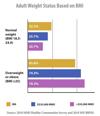
The report also found 58% of residents in Meeker County, 79% of residents in McLeod County, and 62% of residents in Sibley County had sufficient access to opportunities for physical activity. Statewide, 87% have access. Data collected in the survey showed a quarter of residents in the three counties did not participate in any physical activity outside of work in the past 30 days. The lack of activity was more pronounced among those with a lower income.
Binge drinking down, problems remain
Community Health Services defines binge drinking as having four or more drinks in one occasion for women and five or more for men, a concerning practice as excessive drinking is linked to chronic diseases, unhealthy pregnancies, unintended injuries or violent acts. Alcohol is the most widely used drug in the state, which has one of the highest binge drinking rates in the nation at 20.3% of adults reporting binge drinking in 2018. For residents in Meeker, McLeod and Sibley counties, the rate is 28.3%. However, that was a decrease from 30.7% in 2014.
Adults who reported having at least one drink in the past 30 days decreased from 71.8% to 68.8% from 2014 to 2018.
Alcohol-related traffic deaths have trended upwards in the past decade, according to the assessment, which noted there were eight such deaths in 2018.
"Adolescents in the region appear to be drinking at similarly high rates compared to Minnesota adolescents overall," states the assessment, "24.5% of Sibley eighth-, ninth- and 11th-graders used alcohol in the past 30 days versus 13.6% of Minnesota students in the same grades."
Improvements in tobacco use
CHS reported "great improvements" in the percent of adults and youth who are current smokers, but disparities persist.
"Among adults in (Meeker, McLeod and Sibley counties), the percent of current smokers is 16.9% for those with a household income (less than) $35,000 compared to 10% among those with a household income (greater than) $35,000," states the assessment. "Moreover, in a targeted sample of Hispanic residents in (the three counties), 23.6% of survey respondents were smokers."
In 2014, 14.4% reported they were current smokers. In 2018, the figure dipped to 11.2%. Similarly, the number reporting they had any tobacco use dipped from 23.6% to 16.6%, and the number reporting they were exposed to secondhand smoke in apartments or multi-family buildings dipped from 54.1% to 19.8%.
"The study really did show we had some improvement in our (Alcohol, Tobacco and Other Drugs) area," Olson said. "We're still high in the state's eyes, but (the improvement is) good."
The assessment digs into numerous other health factors as well, including food insecurity, employment, access to insurance and access to public transportation. It also provides samples of survey questions and the various entities that contributed to the assessment. To see the assessment in full, visit the Meeker-McLeod-Sibley Community Health Services website at tinyurl.com/banvc3st.
- Updated

Hutchinson City Council discussed Tuesday evening how to proceed following the departure of Council Member Brandon Begnaud. But questions remained.
Begnaud, who was elected to a four-year term in 2020, said in a prepared statement he and his family were moving to South Dakota next month, and that they had accepted an offer on their Hutchinson house. He plans to resign Thursday, July 15, and expressed gratitude to the city staff, council and residents of Hutchinson.
“This decision was made after much prayer and supplication to God,” Begnaud said. “Trusting God’s plan and will in our lives is not always easy, but, as people of faith, we feel it is required of us as Christians (to) follow His calling. ... Although I do not know exactly what my next job will be, I will continue to serve the Lord through a different vocation in time. I want to finish strong what I started here, in Hutchinson, before seeking employment elsewhere.”
City Administrator Matt Jaunich laid out what actions City Council can take with that information, and what other important dates will follow.
A special election will be needed to fill the remainder of Begnaud’s term. Because the state limits when such special elections can be held to specific dates, the earliest possible day may be Nov. 2. But there may be further complications due to rules stated in the city charter.
“If we have more than two people file for that vacancy causes need for us to have a primary election before we can have our special election, which drags out the process a little longer,” Jaunich said.
The state also has uniform special election dates and requirements as to when they can be used. Jaunich has reached out to the Secretary of State’s Office for guidance, but he believes the November date will likely have to be used for the primary election, followed by a special election in February. On the other hand, if only two candidates file, then a primary isn’t necessary. If one candidate files, the council can cancel the election and appoint that candidate.
Until a council member is elected, City Council members may start thinking about how to fill Begnaud’s seat on an interim basis starting as early as July 16. Appointing the new council member is considered the job of the entire council, which votes on the appointment.
“In the case of a tie vote in the council, the mayor shall make the appointment,” states city charter.
Council members can decide what process they use to determine candidates for the interim position, Jaunich said. They could come with suggestions and hash it out during a meeting, for instance, or make available public interest forms similar to the process by which committee positions are filled. Mayor Gary Forcier said he prefers to use interest forms, as it allows residents to come forward and share what they could bring to the role. Council Member Mary Christensen agreed.
“It will give us a good view,” she said.
Also in question is whether to appoint the interim member with the full council, including Begnaud, or to do so with the remaining members once he has left. Jaunich said it is unclear whether statute stipulates which approach to take. He will seek clarification from the Secretary of State on that topic as well, and the discussion will be revisited June 22 during the next council meeting.
If no one files to run in the special election, City Attorney Marc Sebora said the council can appoint the interim City Council member to continue the term.
In his statement, Begnaud weighed in on what kind of candidate should be selected in the interim.
“I believe the proper course of action should be to fill my seat with an individual that mirrors and shares some of the thoughts, beliefs and conservative values that I have,” he said. “After all, I, like the rest of you on this council, was elected to this position for a reason. I feel it would be inappropriate and unfair to the voters who filled this seat to appoint anyone who has a clear history of, or who has clearly demonstrated, opposite standings and representations from my own.”
Begnaud acknowledged some have recently seen him as a controversial figure following his decisions to disregard city policies regarding masks and meeting in the council chamber before a vote do so had been made.
“I, like each of the rest of you on this council, swore an oath to support and uphold the Constitution of the United States of America,” he said. “I have honored that oath, and taken it very seriously. I have never supported, voted for, or participated in anything that directly or indirectly went against the Constitution. My oath to and support of the Constitution of the United States trumps any city policy, state mandate or federal recommendation.”
Begnaud said he would love nothing more than to stay and fulfill his term, but his faith and family must come first.
”I love this community, and I love having had the opportunity to serve it in this capacity,” he said. “I am sorry for having to resign, and wish only the best to everyone,” he said.