

Minnesota high school basketball is on the clock.
By unanimous vote, the Minnesota State High School League’s Board of Directors approved implementation of a 35-second shot clock beginning with the 2023-2024 season at a meeting earlier this month.
Minnesota is the 13th state association to adopt a shot clock. Others include Iowa, North Dakota, South Dakota, California, District of Columbia, Georgia, Maryland, Massachusetts, New York, Rhode Island and Washington.
“We are excited it passed,” said Pat Barrett of the Minnesota Girls Basketball Coaches Association. “The state of basketball is excited to start using it.”
But that excitement is not shared by everyone, among them Litchfield boys basketball coach Matt Draeger, who expressed concerns about the effect on the competitive balance of some games.
“I’d prefer not to have the shot clock, but the addition of it was going to happen regardless,” Draeger said. “The shot clock will make the difference between the good teams and bad teams much greater. We will see more blowouts in the game.”
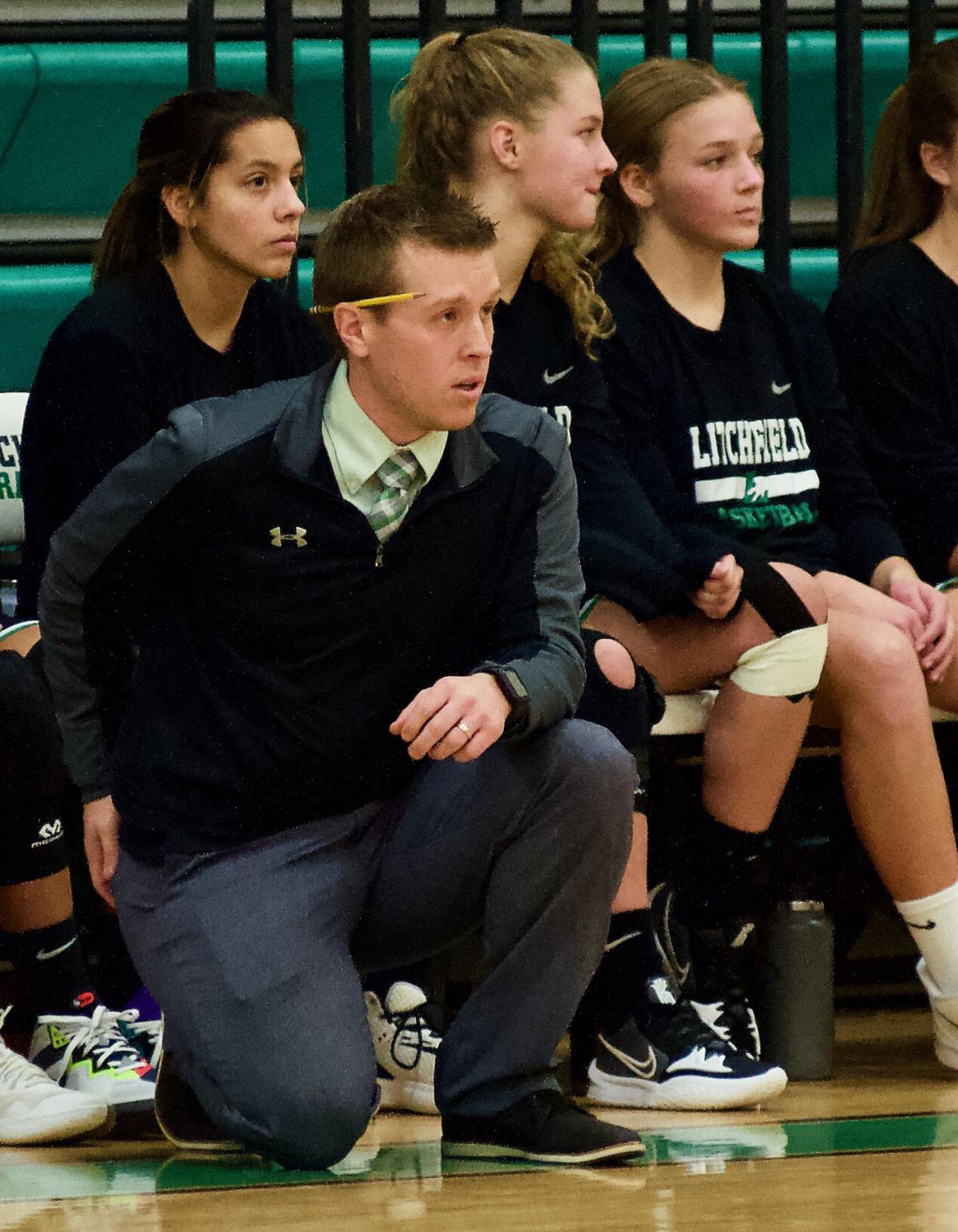
Eric Hulterstrum, who’s in his first season as girls basketball head coach at Litchfield, described himself as “indifferent” to the shot clock decision.
“I think that it has pros and cons,” Hulterstrum said. “I think that they are trying to keep the game moving and not have teams sit and hold the ball if another team is playing zone, or if another team just wants to run out the clock.”
Approval is for the varsity level only, but member schools can use a shot clock at sub-varsity levels if both teams agree to it.
The last time the MSHSL considered the shot clock was at a 2019 Board of Directors meeting, during which it was rejected 13-5. Two other prior proposals failed as well.
MSHSL Board President Tom Jerome of Roseau said about 75% of schools are in favor of the shot clock, while a report done by the Minnesota Basketball Coaches Association showed that 82.7% of coaches in the state were in favor of a shot clock.
In the Wright County Conference, Hutchinson Activities Director Bill Tschida said reactions to the change have been mixed.
“I thought the game was fine as it was,” he said. “But the coaches were in favor of it, so that is why it happened.”
Litchfield Activities Director Justin Brown said he didn’t think the addition of a shot clock was good or bad, and that it seemed likely to happen at some point.
“We have had several conversations in our conference AD and AD advisory meetings (about the shot clock),” Brown said. “We understood it was a matter of time before they became reality, but share the same concerns in regards to cost and finding someone to run the clocks.”
A 35-second shot clock has been used in some Minnesota holiday tournaments over the years. The MSHSL allows the use of it in the regular season, but the following guidelines must be met:
• The facility at which the game is played has the necessary equipment to allow the use of the clock.
• Both participating teams agree to use the clock.
• Teams and officials are notified at least one week prior to the game. If one of the teams does not consent to the use of the clock, it may not be used.
• Coaches and officials must file a report with the MSHSL office after any game in which a shot clock is used, so that the results can be tracked.
Litchfield’s boys basketball team has played a few games with a shot clock, and Draeger said he thought scoring actually decreased in those games “because the quality of shots are decreased.”
Hulterstrum doesn’t expect the addition of the shot clock to change much about the way the girls basketball team plays, at least offensively, because the Dragons typically do not reach 35 seconds with possessions anyway.
On the defensive end of the floor, Litchfield plays zone primarily, with a goal to create turnovers “rather than have to defend for a long time,” Hulterstrum said. “So I think it may force other teams to hurry their shots and maybe not take the best shot for their team, so it could work in our favor.”
This past May, the National Federation of State High School Associations approved a 35-second shot clock for high school basketball for the 2022-23 season, though did not mandate its use. Instead, each member state can determine if they want to implement it. But if a state chooses to, it is required to follow NFHS rules that include “displaying two timepieces that are connected to a horn that is distinctive from the game-clock horn.”
Rules also stipulate there needs to be a stopwatch at the scorer’s table in case the shot clock malfunctions.
Those stipulations caused the greatest concern for MSHSL and its member schools, as the cost and logistics of adding the shot clock could be a challenge for some school districts.
Tom Critchley, executive director of the Minnesota Basketball Coaches Association, told the MSHSL board that the cost of shot clocks to schools that need them was estimated at about $3,700.
Brown, however, said he expected the cost to add the shot clock will be $10,000 to $12,000. Because of that financial impact, he said, the district will wait until the spring or summer of 2023 to install shot clocks at the LHS gym.
Additionally, one more person will have to be added to the scorer’s table to manage the shot clock — at about $40 a game in Litchfield’s case.
“The other concern is finding a worker that has a complete understanding of the game to reset the shot clock when needed,” Brown said.
In the end, Brown said, high school basketball will still be high school basketball after the implementation of the shot clock.
“I believe it will have very little impact on the game,” he said. “The game of high school basketball is already a great game without shot clocks. The biggest impact will happen when a very good team plays a team that is struggling, which can create more blowouts.”