Occasionally opportunities present themselves to local governments to make improvements in the lives of their constituents and their communities. Often these opportunities come about following a lot of effort to get all the pieces in place. However, taking advantage of the opportunities is still a choice, but the choices that are made can have lasting impact.
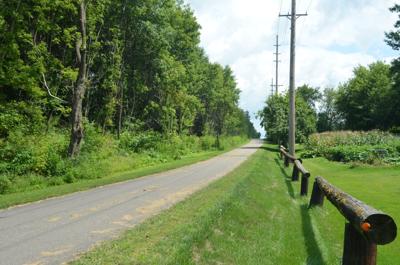
For example, consider how McLeod County responded when an opportunity came about to partner with others to pave the Luce Line State Trail within the county. Previously the gravel trail west of Winsted was in such poor condition as a multi-use trail that statewide trail maps did not even show the trail extending west of Winsted and comments online called the trail a “cart path”, among other things.
The Department of Natural Resources’ 1998 Luce Line Master Plan called for paving the trail in McLeod County and developing a parallel horse trail, but progress was slow in bringing that to fruition. That changed in 2014 when McLeod County joined in a partnership with the state, the DNR, the Hutchinson EDA, and the cities of Hutchinson, Silver Lake and Winsted by investing $500,000 into the trail project. This amounted to 13.5% of the project costs and transformed the trail from an underutilized asset into a truly multi-use trail that is now on statewide trail maps and is used by more people than ever, including residents and visitors alike. The new parallel horse trail, through the diligent efforts of the local DNR, has rounded into shape and is now being enjoyed by horseback riders, along with the 5 miles of gravel trail west of County Road 115 and the 10 miles of turf trail from Cedar Mills to Cosmos.
Contrast that to the response of the current County Board to an opportunity presented to them to develop the next phase of the Dakota Rail Trail from Lester Prairie to South Silver Lake. The Dakota was the number one project identified in the county’s trail plan due to the secured corridor, available funding source (state Legacy funds), the connection to the 26 miles of paved trail through Carver and Hennepin counties, and the unique 88-mile looping opportunity that would be created between the Dakota and the Luce Line Trail. The opportunity presented would bring the county’s Dakota Trail Master Plan one step closer to reality.
Currently this section of trail is only maintained for snowmobiling so other use is pretty much nonexistent. In addition, a bridge and several culverts need to be replaced. The county submitted a Legacy grant application in 2019 to improve this section of trail, but that was unsuccessful because paving was not included and there was no local funding match. Then last week the county was presented with a plan to submit another grant application that would include paving and partnering with others to provide a local match at an estimated county cost of $112,000 (or just 3.4% of total project costs). Surprisingly, the County Board passed on that opportunity. This, despite the fact, no county tax dollars would be used and delaying the project would only increase future costs because of inflation, grant funding constraints and the potential loss of outside/partner funds.
Opportunities come and go. With the Luce Line, that County Board worked with others to invest in an improvement that has benefited county residents. However, with the Dakota, the County Board has worked against the efforts of those who tried to work with them. The most galling was being told at the last second that the board could not agree to the proposed plan because it would bind future boards, even though research has shown that is not a hard and fast rule.
Hopefully, the County Board will reconsider their action while there is still time to take advantage of this extraordinary opportunity before it passes. If not, it is hard to see what the County Board would ever agree to that would have a chance of seeing this trail successfully developed. In the process the Dakota will continue to languish and the opportunity to develop a unique interconnecting trail system that promotes health and recreation, connects people with nature, improves safety, connects communities and destinations, offers economic benefit and one day possibly leads to a one-of-a-kind trail loop that would have statewide and regional significance will be lost.