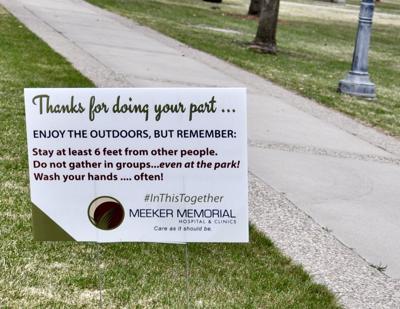

According to a report earlier this month, it seems Minnesotans are beginning to let coronavirus mitigation behaviors slide.
Unacast, a company that provides a national scoreboard for social distancing based primarily on cellphone data, gave Minnesotans a ‘D-‘ in its most recent report. That’s a steep drop from the ‘B’ Minnesotans were graded in the first week of the stay-at-home order.
It seems mitigation strategies such as avoiding nonessential trips, social distancing and wearing masks have become the latest hot topic for our country to argue about. Those who feel we should continue to take the virus seriously worry those who don’t are harmful.
Those who think wearing masks is a form of government tyranny accuse others of “living in fear.” It’s their right to walk wherever they want, and they’ll be damned if they’re going to let a grocery store tell them which directions they can and can’t walk down aisles.
In the end, of course, we are each free to make up our own minds and either heed the recommendations of the Centers for Disease Control and Prevention, or ignore those recommendations and “choose not to live in fear.”
But this got us thinking about other ways we may be “living in fear” without knowing. And then it hit us like a truck — literally.
In 2017, the CDC reports 5,977 pedestrians were killed in traffic crashes in the U.S., and an additional 137,000 were treated in emergency departments for crash-related injuries that were not fatal. Those are paltry numbers compared to the 89,589 people killed by COVID-19 since January.
But while only a tiny fragment of the country’s 328.2 million people are hurt or killed in pedestrian crashes, most of us continue to “live in fear” by looking both ways before crossing streets.
Perhaps we’ve just been trained so well as children that we haven’t even stopped to ask why are we checking for oncoming traffic before stepping onto the road when this is clearly not a statistically significant problem.
Or perhaps people are not living in fear at all, but living smart so as not to become one of the unfortunate few killed in a pedestrian crash.
In the end, of course, just like virus mitigation guidelines, we are each free to make our own choices regarding pedestrian safety. We can listen to recommendations and continue safely crossing streets, or we can ignore those recommendations and hope there isn’t a bus barreling through the crosswalk.
The choice is yours. We just hope nobody becomes a statistic.