

The Meeker County Museum holds historical treasures dating back to the earliest days of the county, even earlier in some cases.
Many of those items were collected and added to the museum years — decades even — after the events for which they became important symbols.
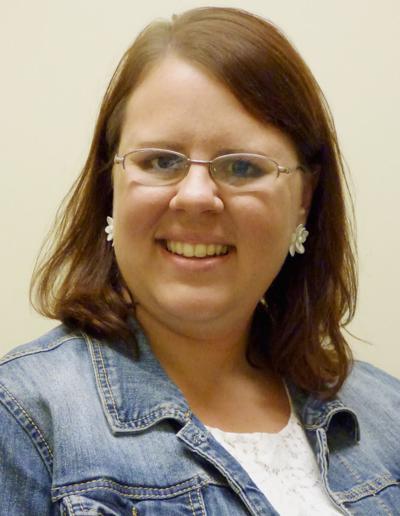
Museum executive director Bayley Schluter thinks that collecting history in the moment — like the coronavirus pandemic — might create an even more extensive catalogue of history. So, she’s soliciting donations of historical items from the pandemic.
“Many museums are trying to collect this history as it’s happening,” Schluter said. “Some (museums) have already started; some are still brainstorming how to do it. Collecting it as it happens is a unique opportunity.”
Schluter’s plan is that Meeker County residents would submit their pieces of history to the Litchfield Independent Review, with the possibility for publication there before being sent on to the museum for cataloguing.
But what kinds of things is Schluter interested in? What exactly would make a historical artifact?
Schluter encourages people to not overthink it.
“The sky’s the limit,” Schluter said. “Photos of a ‘CLOSED’ sign in the window of a business, empty streets, empty schools. If you keep a journal, or even if you don’t, just writing about how you’re feeling, what you’re doing now versus what you were doing a few months ago.
“I’m not looking for anything in particular. Just the theme, I guess, of coronavirus 2020.”
It is those kinds of things that can be found at the Meeker County Museum today. Old newspaper accounts or writings about the Spanish flu epidemic of 1918-1920 are catalogued at the museum, although most of the historic events involve “big weather events,” Schluter said.
Perhaps most noteworthy among those weather events was the Armistice Day Blizzard of 1940, an expected early November blizzard that killed 49 people in Minnesota.
“With those events we have photographs, usually from newspapers (of) people in their homes, or plows in the ditch, or large mounds of snow on sidewalks,” Schluter said. “But those personal stories usually come months or years later. What I’d love to see, what I’m hoping, is we can coax those stories from people as they’re happening.
“It would be interesting to see, ‘how do people write when they’re in the middle of this experience, versus how they write after this major experience.’”
Many people have probably thought by now what a strange time we are living in, Schluter said, and maybe even about the stories that will be told years from now about the Great Coronavirus Pandemic of 2020.
In that context even accounts of everyday life can become historic.
“This is happening to everybody,” Schluter said. “It’s not often that you know that you’re living in this massive moment in history. This is something that we’ll get asked about from the next generation. You know, ‘You were quarantined in your homes for a month. What was that like?’
“We’re living in this moment in history, and I’d much rather this not be happening,” she said. “But it’s kind of exciting in a way, that we can document history.”
So, for all those amateur historians out there — or anyone who has something share about these days — submissions for the Meeker County Museum’s collecting history as it happens project, can be sent to the Independent Review at news@independentreview.net or by mail to Independent Review, 217 N. Sibley Ave., Litchfield, MN 55355.