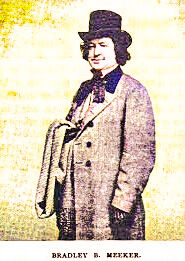
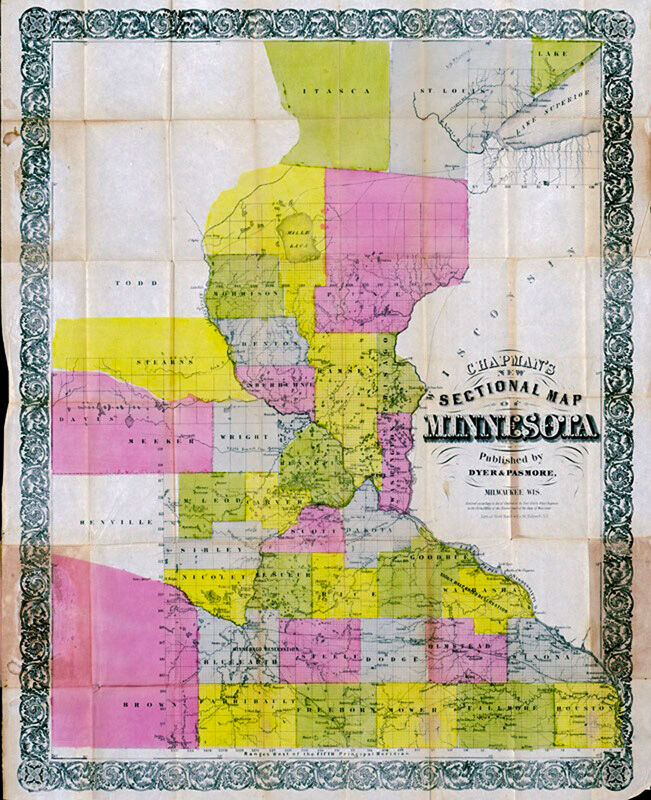
The Minnesota Legislature established Meeker County on Feb. 23, 1856. The county was named in honor of Bradley Burr Meeker of Minneapolis, who was an associate justice of the Minnesota Supreme Court from 1849 to 1853. The first settler in Meeker County was Benjamin F. Dorman, in his mid-20s, who was born on Nov. 29, 1830, in Maine. He broke ground in the Kingston Township area around 1856 so that he could make a land claim, which he legally acquired on Feb. 24, 1863, after the Homestead Act of 1863 became law. The township of Litchfield was chartered as a village on Feb. 29, 1872.
Litchfield’s famous “resident black man”, Van Spence, was drafted into the Confederate Army when the Civil War broke out. Van deserted and “escaped” to the North where he enlisted in the Union Army on Feb. 24, 1865, at the age of 27. Van became the personal servant of Major General George Henry Thomas until the war ended. At that time, Van had served for 11 months and 29 days and was discharged on Feb. 23, 1865. One thing led to another, and Van ended up in Litchfield. He became the courthouse custodian and town lamplighter. He also opened a laundry out of his house in Litchfield in February of 1897 and he used Clarence Allen Perry’s confectionery store downtown, at 242 N. Sibley, as a drop off and pickup place for his customers’ laundry.
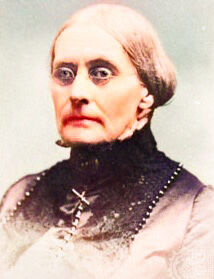
On Feb. 1, 1878, women’s rights leader Susan B. Anthony spoke at the old wooden city hall for the benefit of the library association. They made a whopping $10 that night from audience donations. Susan was touring the country campaigning for the National Woman Suffrage Association’s promotion of a federal woman’s suffrage amendment. After much urging from the local newspapers in the late 1890s, the city finally decided to get rid of the old building and put up a new brick Opera House.
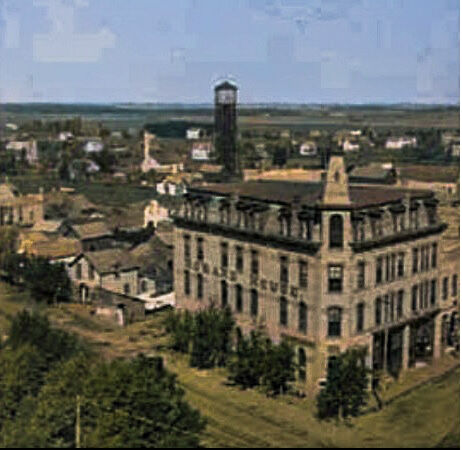
Civil War veteran Colonel Jacob Merritt Howard Jr. built Litchfield’s grand hotel at a cost of $19,000 and called it the Howard House. Construction on the hotel was started in February of 1881 and finished in the fall of that year. The original size was 75 by 90 feet and three stories high.
The February of 1890 Litchfield newspaper told us that the great American game of base ball, (that’s how they spelled it), was growing so rapidly in England, that A. G. Spaulding proposed sending a group of base ball “experts” over there to teach the game to the Brits. (I don’t suppose the effort had anything to do with expanding the baseball equipment buying territory?) Who did Spaulding pick to send to England? Included in his group were Burt E. Harris, Hiram S. Angell, and R. Chinnock from none other than Litchfield, Minnesota.
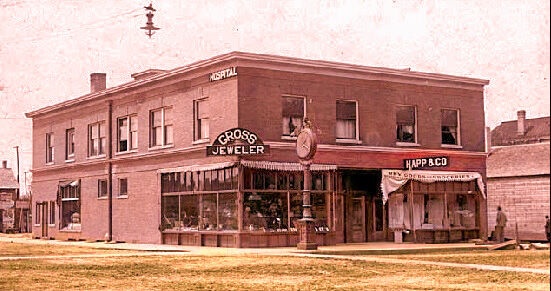
The Robertson Hospital, a privately owned hospital and Litchfield’s first, opened in December of 1908 at the northwest corner of North Sibley and Third Street West. It closed in February of 1915. The hospital rooms upstairs were made into apartments. My classmate, Mike Miller, lived up there with his mother.
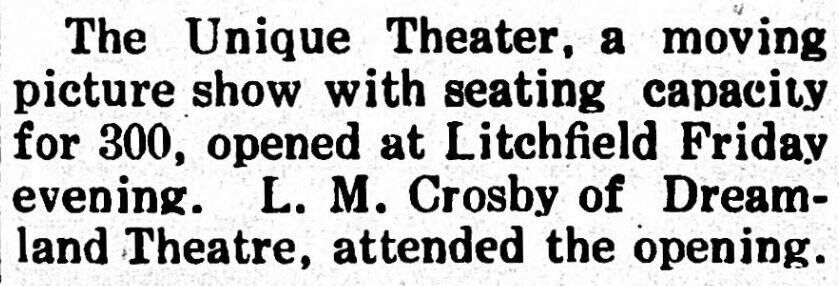
The American Amusement Company leased the building at 104-106 North Sibley in December of 1910 and by February of 1911, they had started the famous Unique Theater there.
Olaf L. “Ole” Langren owned the Langren Furniture and Undertaking. Langren, mayor in 1917, bought Litchfield’s first automobile hearse in February of 1917, but it wasn’t delivered until August.
The Wells Bros. department store closed in February of 1917 after 22 years at the corner where Sibley Antiques is today. Michael Philip “Mike” Mihlbauer ran the antiques store until his death on Feb. 23, 2006.
On Feb. 5, 1929, Nancy Angell, the wife of Litchfield’s pioneer photographer, Clark L. Angell Sr., tried to beat a freight train on foot at this crossing. She lost the race and got a ride on the engine for a long way before her crushed body dropped off onto the railroad tracks. Her daughter was Litchfield’s first librarian, Alice A. Lamb.
A gas station went up at 217 Ramsey Ave. N. in February of 1931. It was to the south of the present VFW. Joseph Francis “Joe” Baden owned it and he sold “Lightning” brand gasoline for 16 cents a gallon. In February of 1932, the Baden Oil Station was sold to Andy T. Johnson and his son Vernon. Baden had moved to the Kopplin garage at the corner.
P. J. Casey opened his law office above the Northwestern National Bank in February of 1933.
Albert Herman “Al” DeLong died on Feb. 10, 1936. He was the last Meeker County veteran of the Civil War, and was also an Indian scout during the Sioux Uprising of 1862.
J. C. Jacks’ son Paul Enberg Jacks took over the Ben Franklin store when J. C. died in February of 1936.
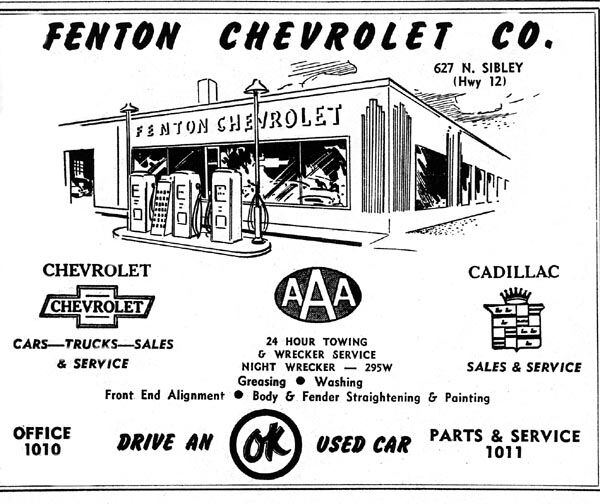
Ben H. Carpenter sold his Chevy dealership to Hugh Douglas Fenton in February of 1939. Hugh Allen “Al” Fenton took over the business in 1950.
Schwartzwald’s Motors, owned by Oscar Schwartzwald, began in February of 1947 out on East Highway 12. He sold Nash automobiles and sold International Harvester tractors, in addition to Kelvinator refrigerators and ovens and Whirlpool laundry equipment. A “full service” dealer?
Fifteen-year-old Robert Eugene “Bob” Lindell was uptown one Monday evening in February of 1950, and maybe he had a little too much to drink. Why else would he do what he did? He noticed that the unoccupied and brand-new Pontiac police cruiser had the keys left in the ignition. Obviously, the patrolman was doing his lock checks of the stores down the street. Bob took the car for a little joy ride home. The car was eventually found at his house at 318 Litchfield Ave., and Bob was taken to the jail to sit, sober up and ponder about what he just done. He got off with a $50 fine.
On the eastern corner of Floyd Warta’s block was the Litchfield Clinic (35 Fourth St. E.). It was opened by Dr. Harold Eugene Wilmot in February of 1950. A February of 1950 Independent Review read, “The new Litchfield Clinic, just north of Central Park, opened its doors to patients last week. Doctors Wilmot, Dille, and Chadbourn have offices in the new facility. The interior work is complete and will make for a pleasant place for physicians and patients.” Pleasant?? It was a feared place in town for kids.
Meeker County’s new courthouse, still here today, was moved into in February of 1975.