While the intense athletic competition was the main attraction at Litchfield High School games this year, some fans also received a touch of softness — small, cushy pillows thrown into the crowd during breaks in the action.
The pillows, made by students in LHS special education and alternative learning programs, grew into a popular item.
But more than a gimmicky giveaway, the pillows represent an academic and social collaboration that has paid dividends for students responsible for their creation.
It all started with a conversation between special education teacher Jim Jackman and Terri Orzolek, who is coordinator/teacher for the alternative learning program. Orzolek wanted to establish a unit on volunteering for her students, while Jackman sought continued training in a variety of social and physical skills areas for his students.
The social communications class taught by Jackman typically devotes Wednesdays to vocational skills.
“We’ve been doing it probably for the last 12 to 14 years, since I got here,” Jackman said. “It’s a combination of kids with different abilities and different skills, and it’s working on communication skills, advocacy, connecting with their community, work skills.”
Daily living skills are a focus, so cooking, cleaning, taking care of themselves, and making healthy choices all have been topics for lessons. About eight years ago, Jackman said, the class went to the high school weight room three days a week. The experience provided not only an opportunity for exercise, it also afforded a chance to talk about and work on personal hygiene.
Classes also have made cribbage boards, checker boards and spinners in the past.
When Orzolek contacted him about teaming up with the alternative learning program on a service learning project, she saw a chance to build connections and provide a different perspective for some of her students.
First, it was an opportunity to volunteer — something she says many of her students didn’t really understand before the program.
“When I started, I wanted to do a service project, so they learned how to give back to their community, where they did not have to be paid,” Orzolek said. “I started noticing, even inside (the high school), when I would talk to kids about volunteering … I heard, ‘I’m not volunteering. If I don’t get paid for it, I’m not doing it.’”
She believes she’s seen an attitude change among her students since implementing the service project.
During her first year as ALP coordinator, students made tie blankets for Meeker County Social Services. Last year, students helped at Lake Ripley Elementary School.
“I think Terri hit on something there,” Jackman said. “That was a big one, that volunteer piece and doing something for others — being givers. You know, a lot of times as kids, we’re takers, we’re taking the time or taking the education. To learn to give back and do something for others is important.”
It’s a theme Jackman has carried through with his social communications class. About 10 years ago, he said, his class worked in the high school wood shop creating cornhole boards for use by other students at the school.
“I still have them. With all the kids, we burned their names into the side of (the board),” Jackman said. “We utilized the shop … we used the shop equipment. But again, it was about giving back and doing something for others.”
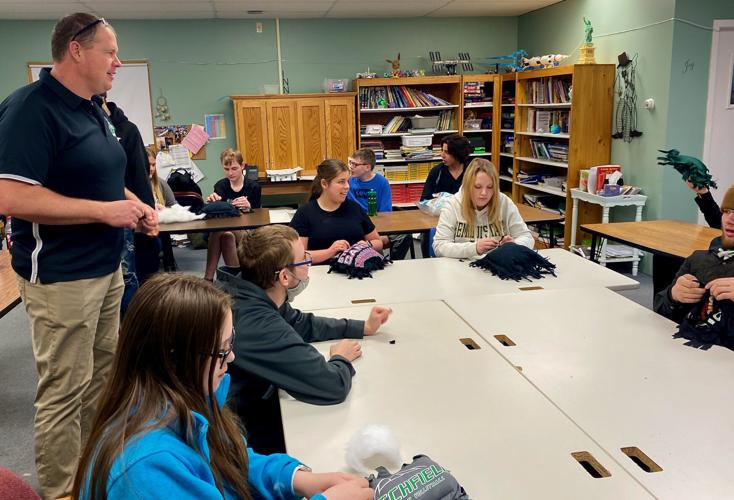
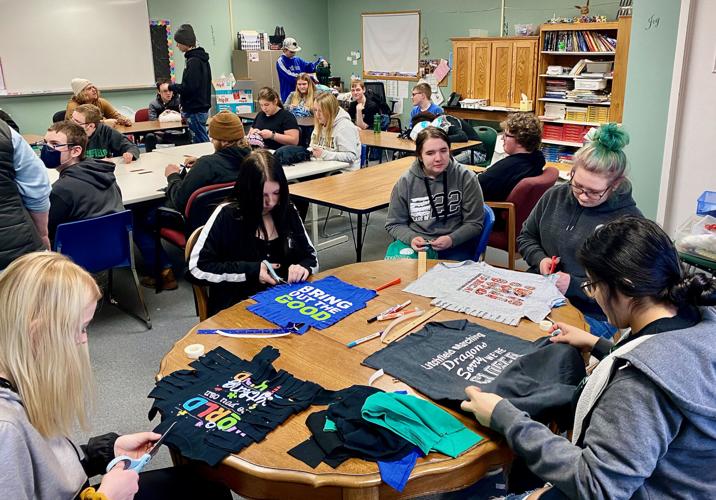
Beyond the emphasis on volunteering there has been a lesson in working together and inclusion. For Jackman, evidence of that lesson comes as he stands in the hallway outside the ALP classroom and listens while students assemble pillows.
“The cool thing with this group, as you can hear, is the chattering in there,” Jackman said on a recent Wednesday morning. “My kids are typically pretty quiet, unless they’re in a small room with the kids that they know (and) they feel comfortable with. But in most classes, they’re not the kids that say too much.”
Collaborating with students in the special education program puts alternative learning program students in a position of leadership, Orzolek said.
“It’s a cool thing for them, because they’ve never had that opportunity,” Orzolek agreed
“It’s awesome that Terry’s kids get to be leaders, classroom leaders,” Jackman said. “And that they’d be the ones to get my kids to talk, because my kids a lot of times are quieter. They’re not initiating, they’re not maintaining conversations, they’re not … that give-back exchange, it’s not there. So the cool thing is to listen to them chatter.”
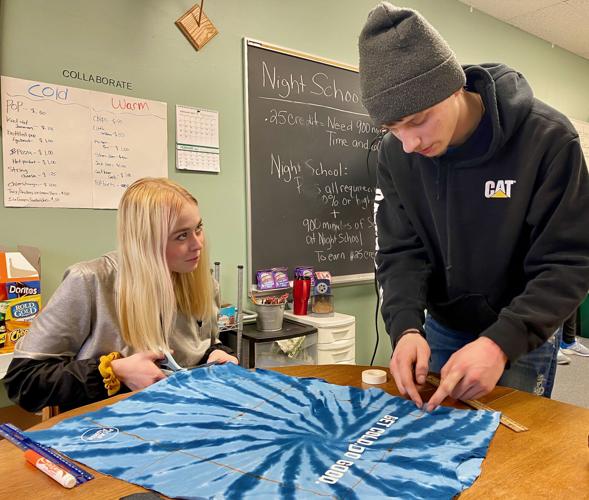
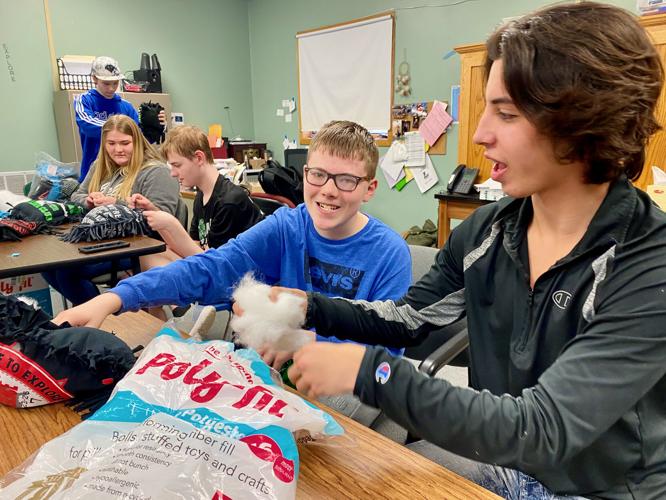
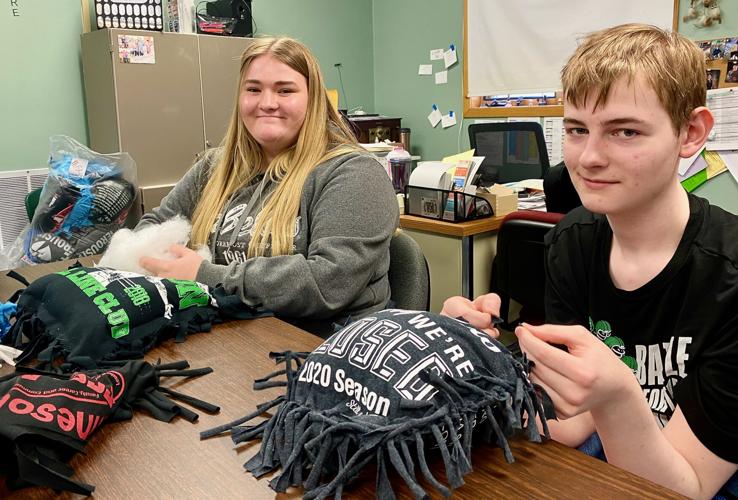
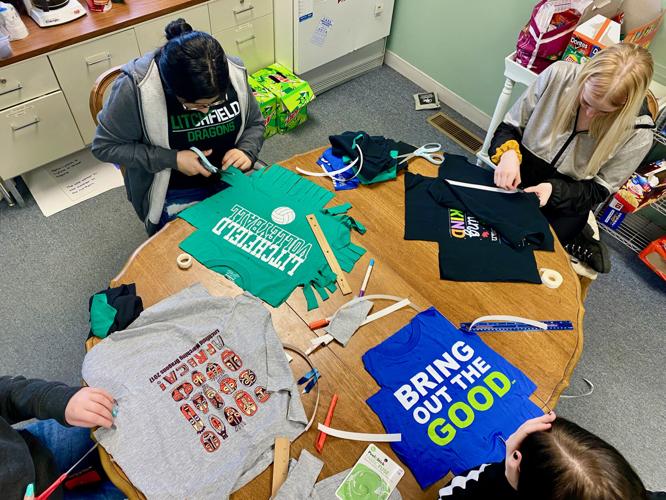
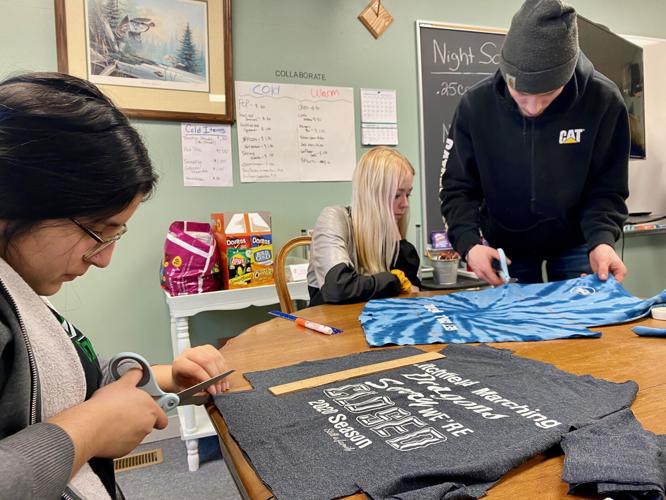
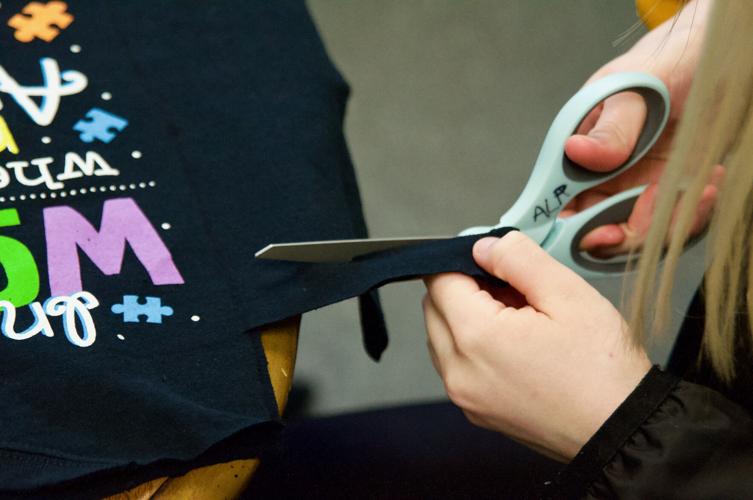
And while there’s chatter, there’s also actual work being done. The students work together to transform donated fabric into pillows. Recently it was T-shirts left over from various high school programs that the students measured and cut, then stuffed with polyester batting and tied the fabric to create pillows.
Rylie Arndt, a senior, was among the students who did the initial planning for the project.
“We didn’t really know how we were going to do it, so I took them home to figure out how to do it,” Arndt said, explaining how he spent time measuring and cutting fabric outside of class to develop the best method for turning T-shirts and other fabrics into pillows.
“Now he’s our trainer,” Orzolek said with a smile.
Though they’ve not tracked the total number, Arndt estimated the students have made between 300 and 400 pillows since they began the project in October. The fruits of their labor have been distributed at a variety of Litchfield High School events, with students tossing them into the crowds at football and basketball games and other events.
And while throwing them into the crowd is how they’ve been distributed, the pillows are no throwaway item.
“In the fall, I had some people come up and ask me, ‘Do you have any of those? We’d really love to have one. You know, we saw them at the game that were thrown, do you have any more,’” said Jackman, who in addition to being a special education instructor is head varsity football coach at LHS.
“And (the students) enjoy that, you know, hearing that those pillows they made, that have been tossed at games or whatever, that people like them,” Orzolek said. “I’ve been told people like to use them on airplanes when they’re traveling, and I’ve shared that with the students.”
That positive feedback, in addition to the connections they’ve made with other students, has been a confidence boost for those involved in the pillow project. Many involved in the alternative learning program struggle in a traditional classroom setting, some are dealing with problems outside of school that make learning a challenge. But through the ALP’s more fluid — yet, accountable — structure, and programs like the pillow project, they find success.
“Some kids need less distractions, some kids just need a different setting … more just focused, or maybe it’s more individual attention,” Jackman said. “They need these connections, they need the relationship part.”
“A lot of them, they come out here, behind in credits, pretty defeated,” Orzolek said. “They don’t think they’re going to graduate. And so it’s that whole piece of buying into the program. And you know, when they do, they can really, really thrive.”