Please purchase a subscription to read our premium content. If you have a subscription, please log in or sign up for an account on our website to continue.
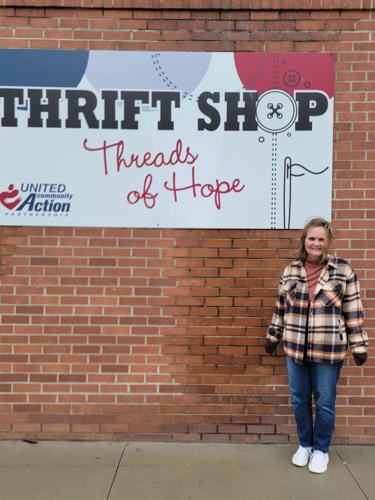
Rochelle Brummond, UCAP outreach worker for Meeker County, stand in front of sign where the office is located, at 120 Sibley Ave. N. She is also the president of Meeker Area Ministries.
Amanda Seehusen, family service manager for Willmar, Litchfield, Olivia, Hutchinson and Glencoe, Justin Opheim, family self-sufficiency casemanager, and Carrie Lewis, McLeod outreach case worker, work with clients through UCAP.
Rochelle Brummond, UCAP outreach worker for Meeker County, stand in front of sign where the office is located, at 120 Sibley Ave. N. She is also the president of Meeker Area Ministries.
HOMES Steering Committee members include, from left, John Hassinger, Barb Jenneke and Nan Crary.
Amanda Seehusen, family service manager for Willmar, Litchfield, Olivia, Hutchinson and Glencoe, Justin Opheim, family self-sufficiency casemanager, and Carrie Lewis, McLeod outreach case worker, work with clients through UCAP.
Jessica Stanley
Beatriz Tovar says she and her daughter Gina’s lives changed for the better through housing assistance they received through UCAP.
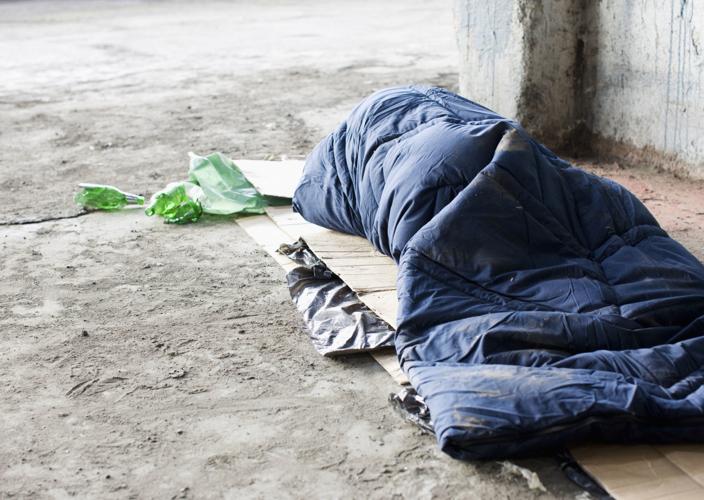
It’s assumed it is a large city problem, associated with images of encampments sprawled around downtown Minneapolis. Depictions include the filth and debris scattered along with the disturbances caused in public places. These are real issues happening, but homelessness is not about garbage and being transient in a large city. It’s about people — individuals or families who have been overwhelmed with many obstacles in their lives that have caused them to be without a home. This is not just a concern for large communities, but is also real in towns like Hutchinson and Litchfield. It’s just not as obvious.
Examples of homelessness in Meeker and McLeod counties are as varied as the people and their reasons for it. It could be a person parked at Walmart who has everything they own in their car. Another could be a family in a camper at a campground. These people may be employed, but their paycheck doesn’t afford them the option of renting an apartment or house — or there may not be one available, as demand is higher than availability. Other examples could be a senior veteran who didn’t understand how to fill out the government paperwork to get his benefits for housing, or the teen who suffered sexual abuse from a family member and so is staying with a friend to escape.
- Advertisement -
The federal government’s definition of homelessness is a person who lives somewhere not habitable, such as on the streets or in a car. In Minnesota, the definition includes living with friends or family due to economic hardship. With this last distinction, the spectrum becomes broader, using terms like “doubled up” or “couch hopping” to reference many extra family members living under one roof or a person who goes from one friend’s place to another in order to survive. To the person or people experiencing either, the situations are not easy and most would like to find solutions to leave the condition they’re in.
Help for the homeless is available. One of the agencies offering assistance is United Community Action Partnership, also known as UCAP. Most counties in the United States have a community action agency. Meeker County’s is in Litchfield and McLeod has offices in Hutchinson and Glencoe. Community Action Partnerships is a nonprofit membership organization that provides technical assistance, training and other resources to Community Action Agencies, nonprofit and public groups. Its purpose is to stay up to date on the latest appropriate practices to empower individuals, families and communities to succeed. As Justin Opheim, self-sufficiency case manager at McLeod County UCAP says, “It only takes a phone call!”
The call can be from the person who is homeless. It can be a family member, and in many cases it can be from places like hospitals, jails, shelters, and other agencies. Once the call is made to UCAP, the person meets with a case worker to asses the needs.
“We look at the situation holistically,” said Amanda Seehusen, family service manager for Willmar, Litchfield, Olivia, Hutchinson and Glencoe. “We look at the barriers they have and what their basic needs (are) we can help them with.”
“Often the person comes to us so overwhelmed,” said Rochelle Brummond, caseworker for Meeker County. “We take a team approach, walk them through their goals and help them make the connections to change their lives.”
Brummond said she’s seeing many more seniors seeking housing assistance as they struggle through challenging economic times.
“Many people we’re seeing now have never been in this situation before and don’t know how or want to ask for help,” said Heather Jeseritz, director of UCAP services for nine counties. “We don’t have shelters to automatically send people to. We want to make sure when these people come to us that they have a safe, warm place and can be fed.”
The other means of determining the level of help is the Multidimensional Poverty Assessment Tool, or MPAT. For those without housing, it helps coordinate entry into assistance programs. For those who will lose housing, it puts them on the emergency housing list in Minnesota or the three counties the individual prefers. In either case, when something opens up, the person/ family are contacted for the temporary opportunity, which allows them time until a more permanent placement can be managed.
Temporary housing in each county is managed differently. In Meeker County, Meeker Area Ministries, or MAM, is a nonprofit organization that was established in 2010 to help the unseen homeless population in the county achieve self-sufficiency. It currently maintains three apartments: two for individuals or couples and one two-bedroom unit for families in transition.
McLeod County has Housing Options in McLeod for Emergency Shelter, or HOMES. It was established in 2017 and modeled after MAM to provide the funding for temporary housing in McLeod County. It is not a nonprofit, with UCAP serving as its fiscal agent, which allows HOMES to receive donations. The organization has three units in Hutchinson at a motel.
During the transition period, the person/family sets up an action plan with a UCAP outreach worker. This plan is coordinated to help them find permanent housing along with solving other issues, such as food for regular meals, transit, enroll children in school, services to help with physical and mental health, pregnancy, addiction, domestic abuse, violence — whatever is necessary to assist so the person/family can move toward sustainability.
The action plan is the strength of working with UCAP.
“The nice thing about UCAP, is that we have so many resources we can tap into to help people,” Opheim said. “For example, if we have someone who is homeless due to sexual assault, we will work with McLeod Alliance, Safe Avenues and area shelters. If it’s pregnancy, we can send them to Birthright and Common Cup for blankets and diapers. For veterans, we’ll find them veteran services. We have a huge list of connections we will make to assure people have their needs taken care of.”
“We can’t do this alone,” asserted Jeseritz. “We need our partnerships. They are the key players in all this.”
“That’s what can make our job harder,” said Carrie Lewis, case worker at McLeod County UCAP. “Our job is doing everything. In McLeod County, we don’t have the access to resources as those in the Cities do. We work as a team and coordinate programs together.”
“The counties often work together,” Jeseritz added. “With our borders in such close proximity, we communicate with each other regularly looking for housing and services for a client. It’s all based on those needs, not what is in our geographical boundary.”
UCAP also works toward prevention. It serves as the “go between” for client and landlord.
“We have a good relationship with landlords and we can help criminals with records or poor credit find housing,” Opheim said. “We can work with the tenant to be a better one and for the landlord to give them another chance. We will do what we can.”
UCAP’s time with families is about 30 to 60 days from temporary housing to sustainability. The average tends to be about 46 days with some people staying longer; some less. Jeseritz has noticed that starting in 2020, the length of stay in a temporary situation has increased due to lack of affordable housing.
Homelessness is as much of a concern in rural Minnesota as in the metro. It is a difficult condition for anyone to be in. It doesn’t have to be permanent, though. There is hope. There are people who can and will do all that they can to assist one toward a more stable and comfortable life. Someone just has to reach out and make that phone call. See accompanying story for a list of local resources.