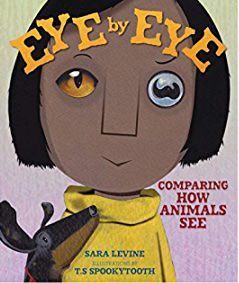


Did you know that birds and butterflies have four cones in their eyes to see color while humans usually have three, and cats and dogs only have two? Neither did I, until last night while going through our usual bedtime routine with our kids.
One part of our routine is to read aloud at least one book with the kids before we tuck them in for the night. We recently checked out several nonfiction picture books which have been newly added to the library collection.
Gone are the days of “boring” wordy encyclopedia-like nonfiction books for children. Recent nonfiction books for children have become beautiful works of art that house a wealth of information expressed at a level of understanding children can easily grasp. The book that I discovered the facts about animal eyes is titled:
- “Eye By Eye: Comparing How Animals See'' by Sara Levine was a fascinating read for both myself and my kids! I learned about the structures of various animals’ eyes and why they are shaped the way that they are. The illustrations show what the various eyes would look like on humans, which got a lot of “oh cool!” or “gross!” remarks as I read the book aloud.
Other nonfiction picture books that we have read recently include:
- “All the Birds in the World” by David Opie. This brightly colored picture book explains the unique features of birds, including the very bizarre birds like the kiwi. Each detailed, photograph like illustration brings the various types and parts of birds to life for the reader. The illustrations each have map guides in the back of the book to help the reader identify the birds on each page of the book. It is a fun and informative read with a cute little kiwi bird that states repeatedly “What about me?”; the kids loved being the voice of this little bird. A great read for bird watchers of all ages, science units or an informative and entertaining book to read for fun.
- “Perkin’s Perfect Purple: How a Boy Created Color with Chemistry'' by Tami Lewis Brown and Debbie Loren Dunn. This book is also full of brightly colored pictures and tells the story of how the color purple was created. The color purple was once a very rare and difficult color to make, which was why it was known for royalty until a boy, William Henry Perkin, accidently discovered a way to create the color purple with his chemistry set. The author also includes a short biography of Perkin and an explanation of what color is and how Perkin’s invention for making colors changed the world. There is also a list of resources for further exploration of this topic for kids. A wonderful historical science read for all ages.
- “History of the World in Comics” by Jean-Baptiste de Panafieu. This nonfiction graphic novel is an awesome explanation of the world from the beginning of time to modern days. It even includes some fun possibilities for the future of our Earth. This book is recommended for ages 10 and up if the child is reading on their own but can be a shared read with younger ages.
One is never too old to learn something new from a book, even a children’s book! You might even be surprised to learn a new fact from reading aloud to a child.
You can browse through our nonfiction collections online or make an appointment for a 15-minute browsing appointment. With this upcoming new year, I challenge myself, my kids, and you to keep exploring new ideas through reading nonfiction, as well as, fiction books. Who knows? Maybe you will stumble upon a little gem of wisdom. Until next time, happy reading!