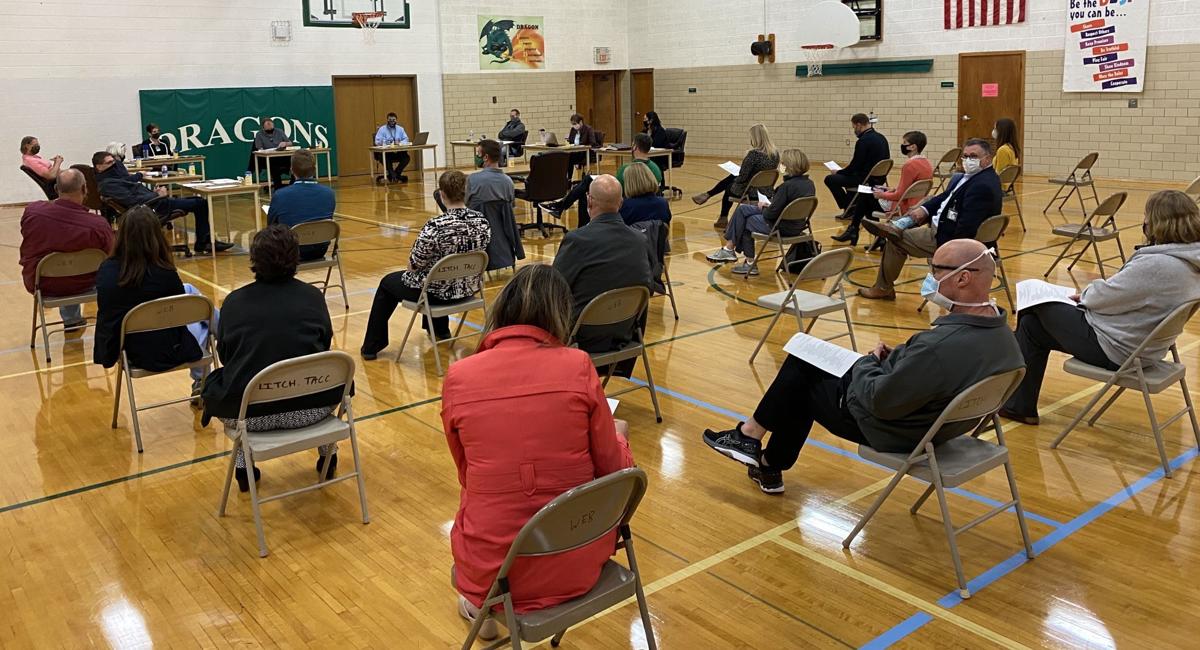

Litchfield School Board members continued to wrestle with the challenges of providing education during a pandemic, as a parent and a leader of the local medical community spoke during a meeting last week at the Wagner Education Building.
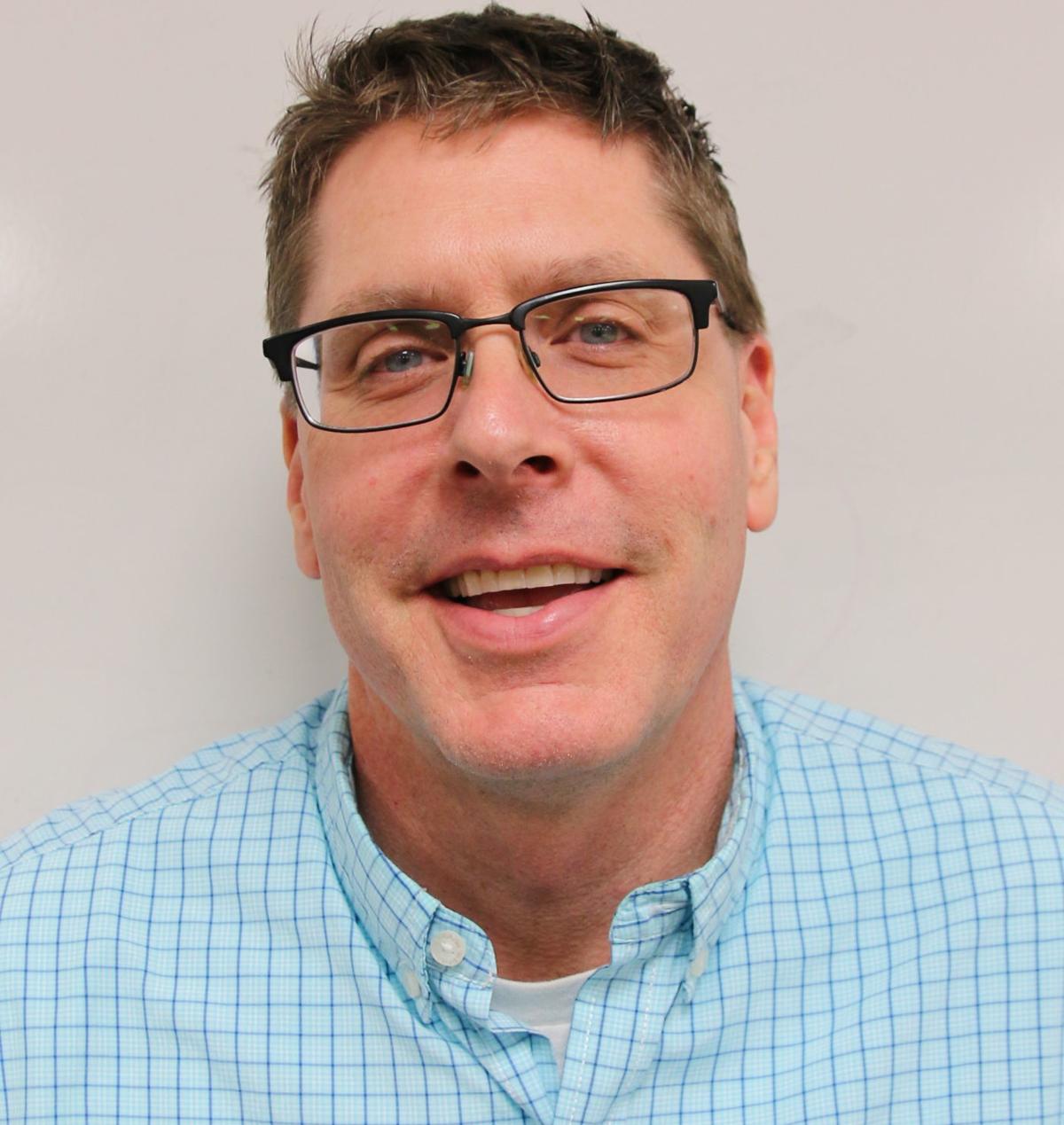
“There’s a large number of families in Litchfield and the surrounding area that are concerned about the hybrid learning model, more specifically, the distance learning portion,” said Scott Marquardt, a parent who said he represented the nearly 200 people who have signed a petition to get students back in school. “There’s certainly health concerns (with COVID-19). The question is, are those concerns worse than the side effects caused by the measures taken to social distance and keep our kids out of school.”
He pointed to a relatively low infection rate among young people, which nevertheless has kept students at home rather than in school.
“They are bored, and they are lonely,” Marquardt said of children under distance learning, and cited studies that indicate the social isolation has caused spikes in depression, domestic abuse, anxiety and online pornography use among youth. “There are a number of families in this community that feel that opening schools in person is the scientifically and morally correct thing to do.”
He encouraged the board and administrators to push back against state guidelines, adding that families were willing “to partner with our school to fight the state in any way we can.”
Superintendent Beckie Simenson said that decisions made about in-school, hybrid and distance learning models are team decisions. That team includes administrators from throughout the district, but it also includes a “regional support team” with representatives of health care facilities, as well as county public health, and even Minnesota Department of Health.
“We want what’s best for our kids,” Simenson said, and Litchfield was one of the few districts in the area to start the year with all students in school.
But infection rates in Meeker County rose dramatically – from 14.3 in early September to 25.5 in mid-September – and state guidance was for all students to move to the hybrid model, she said. However, the local team analyzed the situation and determined that only middle and high school students would move to hybrid, with elementary school students staying in school full-time.
Just before the district made that switch, there were 116 COVID-19-related absences. Since the move to hybrid for middle and high school, those absences dropped to 66, 77, then down into the 20s, Simenson said.
As those cases drop and as the county infection rate falls, Simenson said, the situation is evaluated and the learning model will change.
“We are really trying to make our learning model fit Litchfield,” she said. “As I said earlier, Ripley should be in a hybrid model (but) I don’t think that’s good for our little ones. It’s not a cookie cutter solution, and we need to make it fit for our students, and fit for our community.”
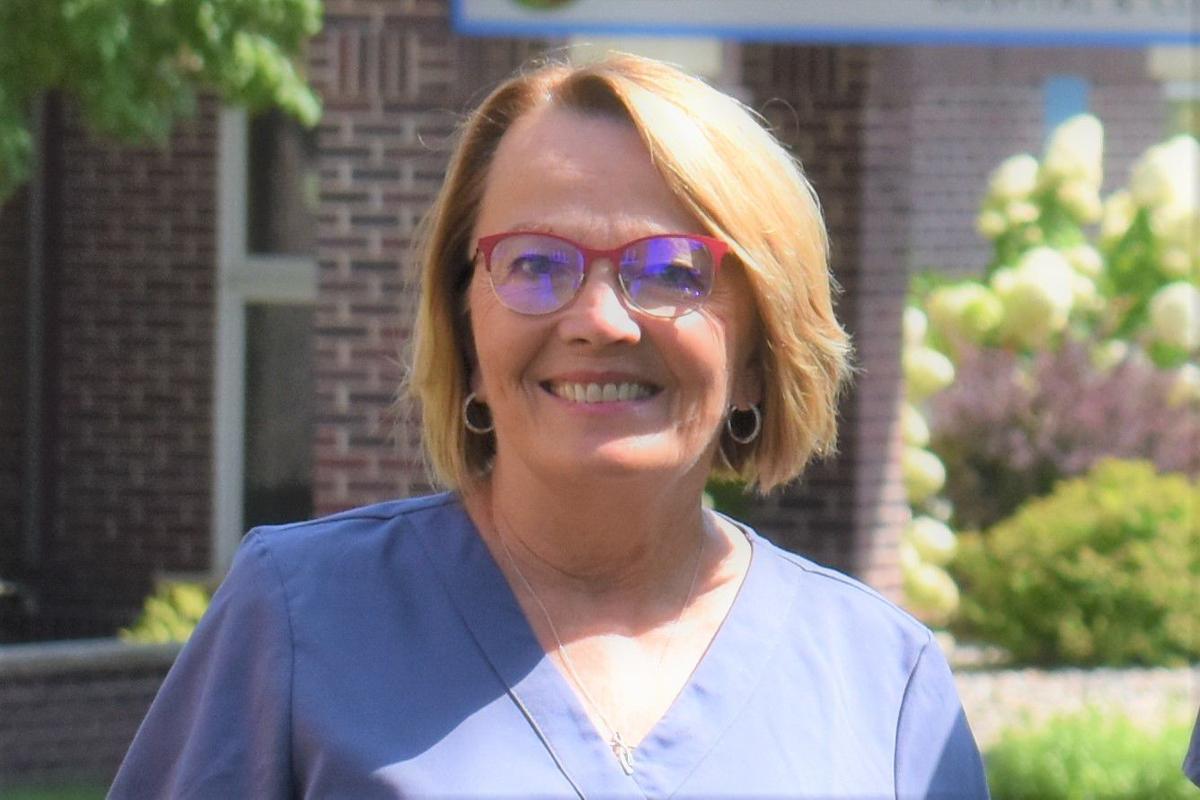
Dr. Deb Peterson, chief medical officer at Meeker Memorial Hospital and Clinics, also spoke to the board, acknowledging the strain that the pandemic has put on the entire community but also encouraging the board to stay the course. Though Peterson was the only one to speak, she was joined at the meeting by about 10 people from the hospital and clinics, as well as county public health officers.
“I thought probably it was important that you learn a little more about COVID-19,” Peterson told the board. “The decisions that the state is having to make change regularly, as they do for the Minnesota Department of Education, and that’s because we are still learning about this disease. COVID-19 has only been in our country since January, and it amazes me the amount that’s been learned. I also feel personally that our current election situation has very much made it difficult for people to separate truth from fiction.”
COVID-19’s unpredictability also has created confusion, she said, as many people become only mildly ill but others develop much more serious symptoms such as severe difficulty breathing, blood clots, strokes and in some cases die. The virus has killed more elderly than young, but it is not always the case.
“The way I’ve described it to people is it’s a bit like playing Russian roulette with a loaded gun,” Peterson said.
While for most children it is often a mild illness and often asymptomatic, their parents, grandparents and others who might be exposed to the virus through children might not be as fortunate, she said.
“The same applies for the teachers, paraprofessionals, custodians, kitchen workers and others at the school that are in the line of fire every day,” Peterson said. “As the medical community, we feel that it is our responsibility to keep people safe. We also believe COVID-19 is not going away anytime soon, and we just have to figure out how to deal with it.”
What’s known about the virus will continue to evolve, Peterson added. Meanwhile, it continues to place tremendous burden on health care providers, with the number of patients hospitalized and in intensive care units in the state recently climbing back to numbers initially seen in May.
St. Cloud Hospital, twice in the previous two weeks, had been at capacity and unable to take any acute stroke or heart attack patients, She said.
“What that means is, if you or a loved one comes into our local hospital and we need to try to transfer you, we might have to call around for a half hour or more to find a hospital that can accept you, and that scares the living daylights out of me,” Peterson said. “What we do locally and individually does matter. We are the first defense (against) the spread of COVID-19. I truly believe we have to stay the course and not be confused about what we should do.
“We all have to wear a mask, we need to distance, we have to wash our hands. And if we’re sick, we need to stay home. I worry that if the school district returns to full, in-school learning before we should because of numbers, we’ll be inundated with cases of COVID-19 …. Please help us to prevent the health care system from being overrun.”
The Oct. 13 discussion was, in a sense, the continuation of one started two weeks earlier when board member Dave Huhner asked the board and school administrators to consider expanding so-called student contact days for some programs.
Under the hybrid learning model currently in place at the middle school and high school — which divides the student body into two cohorts, with one cohort attending in-school classes Monday and Tuesday and the other in school Thursday and Friday, while distance learning on the opposite days — students participate in some academic programs only on their in-school, or “contact days.”
That decision, Huhner said, creates problems because it doesn’t consider the relative safety of some programs like the industrial tech department’s house construction class. It also leaves teachers in the district who have benefited from student classroom assistants through the youth service program without the help they need.
Huhner asked that the School Board give administrators the leeway to allow some high school students to attend certain classes every school day.
The issue deadlocked the board, which voted 2-2 with two abstentions, and Huhner’s request failed.
The topic was no less challenging last week, though no vote was taken.
Julie Pennertz, who along with Marcia Provencher abstained from the Oct. 13 vote, still was torn.
“I don’t disagree with you, Dave,” Pennertz said. “My No. 1 focus is we need the kids in there (the classroom) so they can build a house, they can be going down helping in elementary schools wherever they are needed. (But) We need, to me, some more data to make a decision that is going to be effective. “
Pennertz said she worried about elementary school students who might have COVID-19 but be asymptomatic passing the virus to their high school volunteer assistants, who then carry it back to their school building to be spread more.
“The fluctuation between all the different buildings, to me that could be adding fuel to the fire,” Pennertz said, adding she thought it was important to listen to the medical community and to Superintendent Simenson’s team.
Board chairman Darrin Anderson agreed, and also added that allowing some students to attend class even on distance learning days would create inequity in the educational process.
“How can the board say that the trade house is more important than special ed kids?” Anderson said. “My thought is … we can’t put one program over another.”
Huhner replied to that by saying that COVID-19 did not treat everyone the same either. He said he worried about the child left at home during a distance learning day because their parents had to work, who accidentally starts their home on fire or is injured in some other way.
“I understand your argument,” Huhner said. “It is real. So is the other side.”