
A federal grant will fund a significant portion of Litchfield Public Schools’ next technology upgrade.
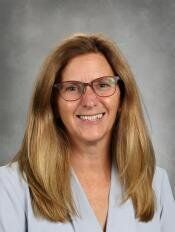
Technology Director Jennifer Ridgeway told Litchfield School Board members during their meeting March 13 that the district was approved for a federal Emergency Connectivity Funds grant earlier this year.
The $629,000 grant will help the district purchase tablet computers for its 1,560 students in kindergarten through 12th grade, a transition that is expected to take place in time for the start of the 2023-2024 school year.
When the issue returned to Monday’s meeting, with an official quote and a resolution to authorize purchase of the Apple iPads, the School Board offered unanimous approval.
During her March 13 appearance before the board, Ridgeway explained that she has worked with a group of teachers throughout the district to test various technology to find the best replacement for the Apple Macbook Air laptops and iPads currently used by students.
She first introduced the current round of technology transition planning to the board in February 2022. The district began its one-to-one technology device program in 2014. Since then, each student in sixth through 12th grade has received a laptop for school use, while pre-kindergarten to fifth grade were provided tablets. The district refreshed its devices in 2018, staying with Apple laptop and tablet computers, though switching from 13-inch to 11-inch laptops as a cost-saving measure.
Ridgeway told the board last year that it “would be a good time to think about it and research options.” She returned in April to let the board know about the ECF grant application.
During the last several months of the 2021-2022 school year, “test drives” of Macbook, Chromebook and iPad devices were conducted with 10 of each device given to students and teachers. Their experiences, along with other discussions guided the eventual decision to go with iPads for the entire student population.
Notification on Feb. 1 that the district was chosen to receive the Emergency Connectivity Funds grant makes that decision even more exciting, Ridgeway said.
“That is really exciting,” Board Chairman Alex Carlson said, joking that it was a “different category” of exciting than the marching band’s cruise plans that came up earlier in the meeting.
A committee settled on the 10th generation iPad, which has a 10.9-inch screen and is Apple’s latest iteration of its base level tablet. Cost of the tablet, which can be paired with a keyboard folio and Apple pencil, is $414 for educational organizations ($449 retail).
With 1,560 student devices needed, the price tag will be $645,840 for the iPads, with the ECF grant covering $400 per tablet. Additional costs will include iPad cases and keyboard, carts to carry the tablets, and training. Anything above the $400-per-unit covered by ECF will be borne by the district.
The school district will receive trade-in value for the laptops and iPads students currently use, Ridgeway said, but she did not have an idea of what the per-unit price might be.
INTERNET SECURITY
Board member Greg Mathews questioned Ridgeway about a malware attack that recently hit the Minneapolis Public School District.
The attack went public when the district sent a letter to parents informing them of a system breach in which hackers stole district data. On Friday, Minneapolis Public Schools sent another letter to parents saying hackers had posted some of the stolen data on the dark web, where users are untraceable.
With news of the Minneapolis district “being held hostage,” Mathews said, “our constituents are probably concerned about the same thing happening here.”
Ridgeway said security threats are a constant concern, and there has been a recent flurry of hacking attacks made on school districts throughout the county.
“It’s happening, and obviously, you know, it’s getting more and more complicated,” she said. “It’s not as simple as the hacking used to be.
“… One thing we can do is keep our hardware up to date,” Ridgeway added. “Most of our (system) backbone, we purchased way back in 2013, 2014, and we’re working on getting those pieces replaced.”
The districts servers have been replaced, but there’s more work to do in that area, she said. But hardware is only part of the issue. Software vulnerabilities are another layer of security concern, and the district is trying to address that through education of staff, Ridgeway said, with part of the education sending test phishing emails to staff.
The district’s internet provider also provides some security oversight, as does the district’s own firewall system.
“I’m in there daily,” Ridgeway said, checking the reports on server activity. “I can literally see, you know, 11 times today, someone from China has tried to get in; 12 times today, someone from Russia, or someone from San Diego, or someone from … I can see that. And I do my best to prevent it or stop that particular event. But it’s a never-ending thing. It’s something you try not to lose sleep about, but it’s always there.”