

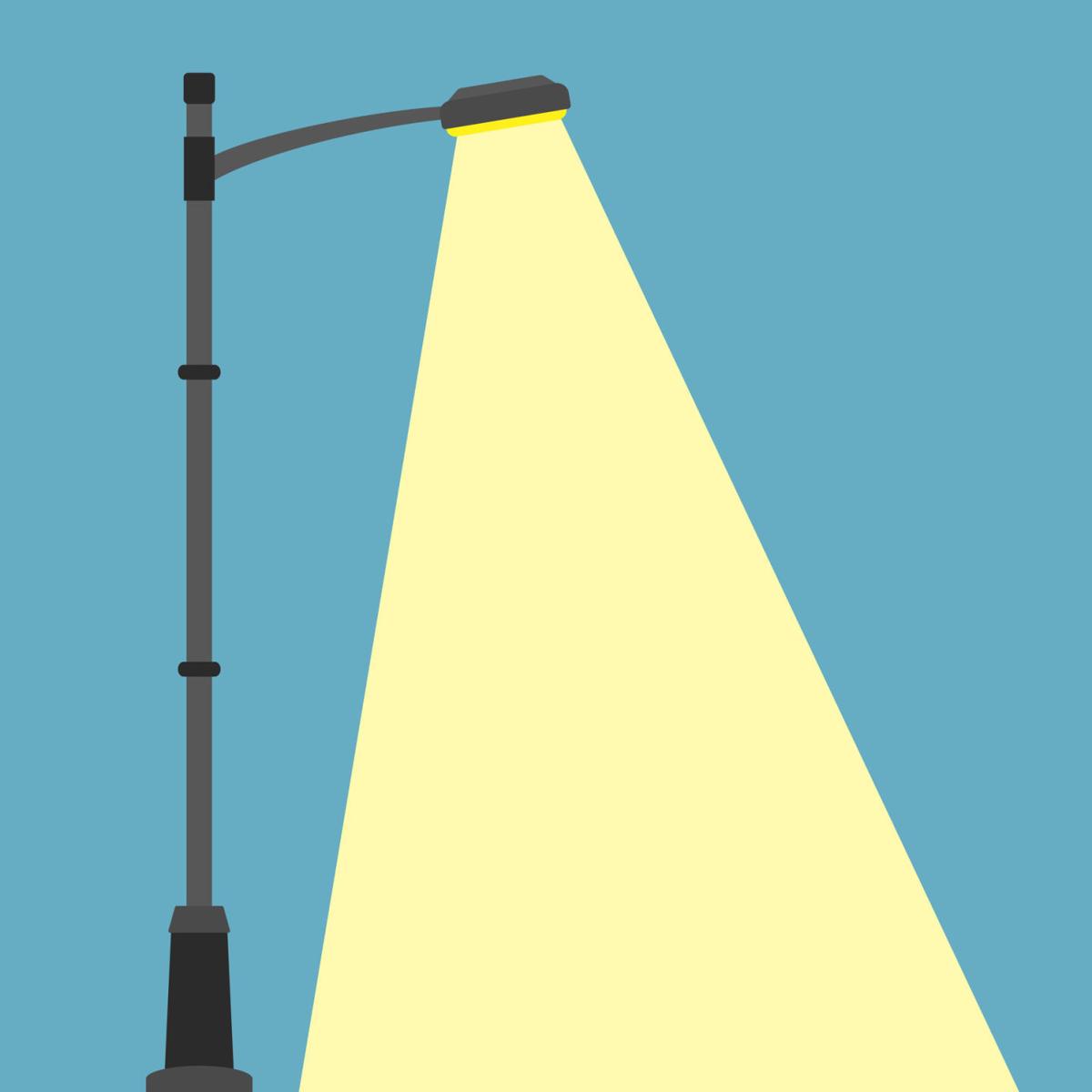
When a four-block section of U.S. Highway 12 is reconstructed through Litchfield in 2020, a new stoplight will be installed at the intersection of Third Street and Sibley Avenue, as well as new cobra-head streetlights.
At its meeting March 5, the Litchfield City Council unanimously approved purchasing a new stoplight, which could cost up to $250,000 due to MnDOT deeming it unnecessary during a recent traffic study. Considering the current stoplight is 44 years old, councilors opted to purchase new rather than to refurbish.
The city will be responsible for the cost of a new stoplight. Although it comes at a considerable cost to taxpayers, for safety reasons, the majority of surveyed residents asked to keep it in lieu of a MnDOT-proposed flashing beacon.
City Administrator Dave Cziok recommended a new traffic light. “Anything new would, I think, have a significantly longer lifespan and is probably worth the investment, considering there isn’t that big of a difference between the rehab and the new,” he said.
“We decided to put the (stop)light back in, and that’s a lot of money,” Councilor Sara Miller said. “I don’t think we should refurbish it. I think that’s a waste of money. I think if we’re going to do it, we should do it right.”
A motion to purchase less-expensive cobra-head streetlights, named for their shape garnered ‘nay’ votes from councilors Betty Allen and Darlene Kotelnicki, who preferred more decorative options, but passed 5-2.
The cobra-style streetlights are expected to cost $40,000 and will be paid using $64,000 in streetscape funding from MnDOT. The council directed city administration to work with MnDOT to determine how the excess allowance, along with $12,500 in allotment funds that would have been applied to the beacon alternative, will be spent. MnDOT needs municipal consent before an agreement can be finalized in May.
The council considered two other design options for new street lighting — five-globe fixtures for $211,000 or acorn-shaped pendants for $138,500. Allen and Kotelnicki felt the decorative options would add appeal and character to the downtown scene, while Miller, fellow councilors Michael Boyle, Ron Dingmann and Vernon Loch, and Mayor Keith Johnson deemed them cost prohibitive.
Kotelnicki said the city of New Prague has two blocks of five-globe lighting. “There is nothing prettier than when you drive through that community at night. It’s very impressive. It made a huge difference.”
Kotelnicki noted that nearly 75 percent of people surveyed about downtown design preferred acorn or five-globe lighting. “The first online survey, a high percentage of our population wanted nicer lighting. To limit downtown development because of that, I’m not quite sure I can support that.”
When asked if decorative fixtures would have provided adequate lighting, Kotelnicki said that while their appearances differ, all three lighting options illuminate the same and meet MnDOT standards.
For the price, more decorative lighting wouldn’t provide “enough of a visual enhancement,” Cziok said. “The council’s going to be back looking at us for other ways to increase the visual attractiveness of downtown,” he added.
The significant price difference between cobra, five-globe and acorn lighting “suddenly starts to hit home pretty quickly if you’re looking at annual cost,” Cziok said, “because you’re trying to figure out another way to increase the visual impact downtown.”
Miller was concerned that, considering the cost for the Third Street stoplight, the significantly higher cost of decorative lights would upset taxpayers.
“The five globe, it’s a lot of money when we’re also putting the (stop)light in,” Miller said. “The looks would be nice, but I don’t think I can support the five-globe. I think it’s tough. It’s a lot of money.”
“We’re spending $250,000 more than I was hoping to spend, myself, for the (stop)lights, but I think the safety issue really stood out,” Dingmann said.
Dingmann noted that about 65 percent of the public asked to keep the stoplight. “If we’re spending $250,000 for safety, I’d be willing to resolve that we go with the cobra lights. Then we can attach the flags to it.”
“Regardless of where this money comes from, it’s all taxpayers’ money,” Boyle said. “I’m on record as in favor of replacing the stoplight and committing the city to a yet-to-be-determined number because I think that’s the right thing to do. I would support the cobra lights.”
Loch noted that there will always be differences in opinion regarding the streetscape. “That’s going to be in the eyes of the beholder when this is all done.”
Cziok noted that cobra lights will make it possible to continue hanging flags on posts in downtown Litchfield. Flags couldn’t be affixed to more decorative lighting options, he said.
Johnson also favored the cobra lights for the purposing of displaying flags. He said cobra lighting will also make it easier to clean the sidewalks. Johnson said he likes the appearance of flags but noted that diesel emissions cause them to change/lose color.
“I noticed our American flags got very dirty very fast,” Kotelnicki said.
Cziok said he hadn’t researched if banner flags could be affixed to cobra lights. “My concern with any of those solutions is that it’s got to get up above the pedestrian walkway without causing either vandalism issues or just obstruction issues.”
Cziok said most of the downtown Christmas lights would continue to be attached to buildings.
Trees will not be added to the downtown area as part of the reconstruction project. Council members agreed that hanging flower baskets would be too costly and risk being damaged by weather and people.
Cziok said hanging baskets in Austin, Minnesota, cost the city about $100,000 annually.


