

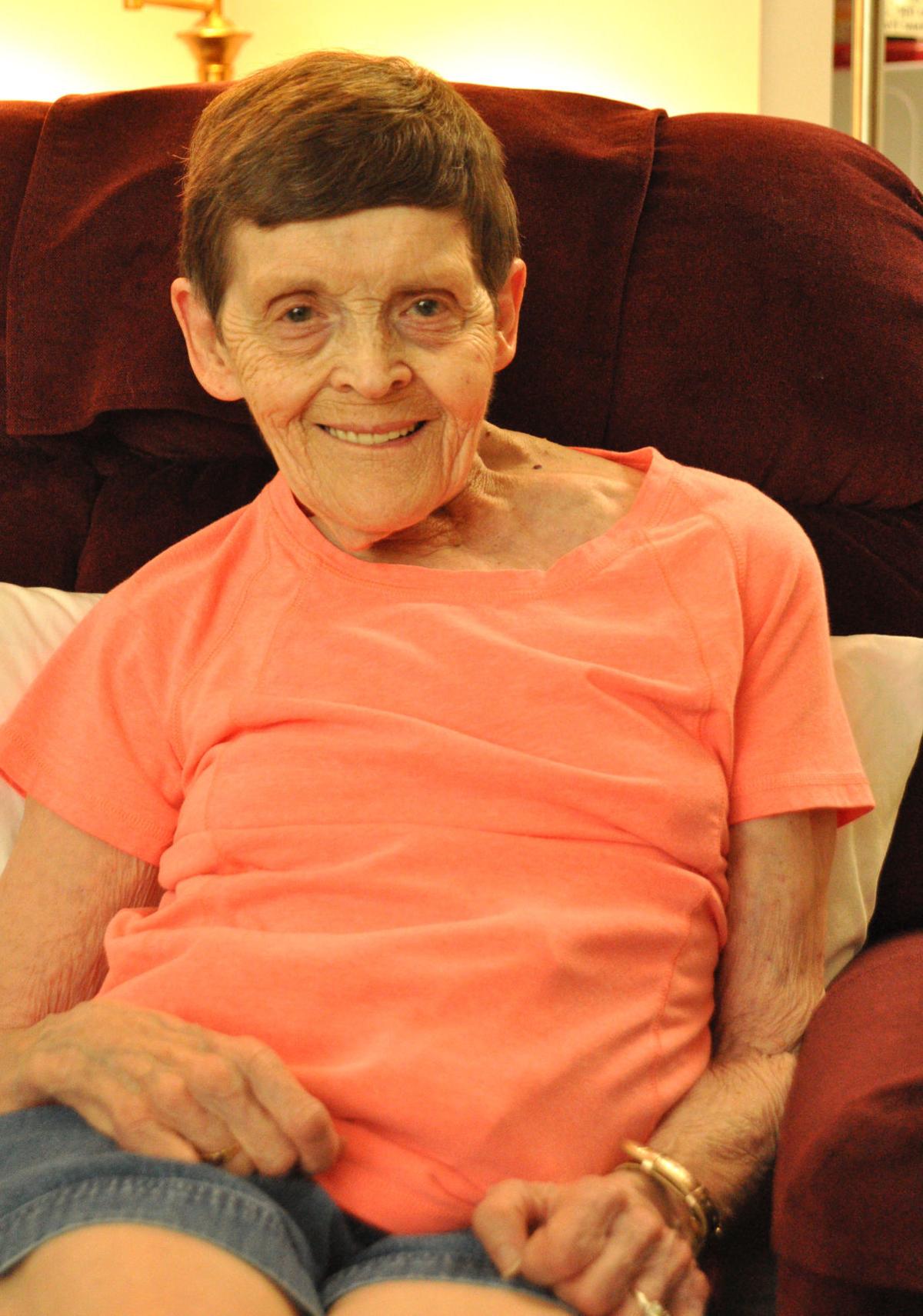
Karen Gorr spent more than a decade fighting two battles: one with life and one with death.
She writes: “I felt like a caged animal because of the bars on the windows. I was often beaten for minor things, and sometimes for things I hadn’t even done. Illness plagued me. I couldn’t walk, or I would have tried to run away.”
Decades after experiencing abuse, isolation, hunger and neglect at the hands of workers in an institution for the “feeble-minded,” Gorr is living a life of fervent faith, hope and determination.
On her journey to overcoming adversity, the 81-year-old Litchfield resident found forgiveness for what, from the outside looking in, once seemed unforgivable, and zest for life despite debilitating physical challenges.
Gorr has Cerebral Palsy, a group of permanent movement disorders that emerged shortly after birth due to prolonged illness. In 2016, she published “A Life of Triumph,” a memoir about how she “beat the odds to achieve success.”
“A Life of Triumph” tells Gorr’s story of how determination, grit, stubbornness and sense of humor — with the help of friends and professionals — enabled her to find a life beyond an institution and to transform from a “limp rag doll” to a scholarship student, special education teacher, wife, mother, public speaker and advocate for people with mental and physical disabilities.
In her book, Gorr relives life in a state institution, where, unable to walk due to Cerebral Palsy, she slid along the floor. Her back, she writes, was “a mess of open wounds” from repeated beatings, often for minor things she was wrongly accused of doing.
Gorr recalls being tied to her bed in the institution and facing constant hunger, as her condition prevented her from eating within a set time limit. “The people in charge thought 15 minutes was plenty of time,” Gorr writes, “no exceptions.”
Her story also recounts the loss of her brother, David, who also lived at the institution after sustaining serious injuries from a fall.
For Gorr, writing is cathartic. “I just love to write. My mother used to write. She published a lot of poems.”
Gorr hopes her journey will remind others “that you can do it — no matter what.”
What made you decide to share your story?
I grew up with many children who had a variety of handicaps. My own brother suffered from a brain tumor. In 2016, Duane Hickler offered to help me write my book, “A Life of Triumph,” and his nephew offered to publish it, as he has his own publishing company. I decided my story needed to be told while I am still alive and able to do it.
What have you done to raise awareness about Cerebral Palsy and to support others living with it?
At 15, I attended the Crippled Children’s Hospital and school in Sioux Falls, South Dakota, where most of us were physically handicapped. They had an excellent education, rehabilitation and nursing program. Fifteen of us lived there; others were outpatients. A wonderful experience.
In junior high school, I joined the Future Nurses Club in Pierre, South Dakota, where I learned a lot about the medical field.
I have been very involved with the Association for the Mentally Challenged, the United Cerebral Palsy Association, the Minnesota State Council for the Developmentally Disabled, Minnesota Special Olympics at the county and state level, plus the Easter Seal Association and Senior Citizen Companion program.
You said you learned to forgive those who caused you suffering. Why is forgiveness something people should seek?
In my case, I feel better about myself and that it is the right thing to do, though often it isn’t easy to do.
What has been the most rewarding aspect of publishing your memoir?
I have been reconnected with many good friends of years ago and have gotten very complimentary reports from them, also from my friends now and from strangers.
What did you gain from this experience?
The fact that I am still able to take on a huge challenge at my age and be successful.


