Marian Pennertz offers a smile and a gingerbread cookie to passersby from the bakery window at the Forest City Stockade.
Gingerbread smile
Seen through the window of the bakery, Betty Hermann rolls out gingerbread dough, which would later turn into cookies samples for visitors to the Forest City Stockade’s Pioneer Christmas Saturday.

The Bakery at the Forest City Stockade was a popular stop for visitors to the Pioneer Christmas Saturday, as they stopped for samples of gingerbread cookies.
Visitors to the Forest City Stockade stop to check out the chapel Saturday afternoon.
The stockade’s sod house provided visitors with a peek of the less-than-glamorous living quarters of early Minnesota settlers.
Sisters Ella Stredelman, 10, and Alyssa Stredelman, 14, of Foley, and Cora Skelton, 14, of Elk River found a table at which to enjoy their fry bread.
Dave Searl of Minneapolis, left, joined his dad, Dr. Rick Searl of Litchfield, in the newspaper office at the Forest City Stockade.
Dave Searl feeds paper onto the press as he demonstrates the old-time printing method.
Andrea Wreede hangs candles to dry after dipping them in bees wax. Wreede, a Litchfield High School graduate who lived in Georgia for 11 years before moving back to the area about a year ago, joined Paul White in the candle shop at the Forest City Stockade.
Paul White hangs candles in the window of the candle-making shop he operates at the Forest City Stockade.
Edward Dollerschell talks with a visitor to the Woodwright Shop, where he was working on a violin he is making by hand.
Siblings William and Catherine Simons of Otsego play a game of checkers in the Woodwright Shop at the Forest City Stockade.
Blacksmith Brenden Stevens of Winsted demonstrates his skills, shaping the end of a piece of heated metal into a leaf.
Julie Schmelzer of Rockville and Kris Haffley of Dassel demonstrate the craft of spinning in the upstairs of the cabin at the Forest City Stockade.
Diane Walter and Marlene Wilder butter lefse hot from the griddle, the sprinkle it with cinnamon and sugar for Pioneer Christmas visitors.
Betty Hermann and Marian Pennertz maintained a fast pace Saturday, smiling all the while, as they served gingerbread cookies from the window of the small Bakery shop at the the Forest City Stockade.
They were among dozens of volunteers back at the stockade grounds after a one-year hiatus due to the COVID-19 pandemic that shut down many community events last year.
Like the bakers and other volunteers, stockade visitors seemed eager to return to their annual reminiscence of life on the Minnesota prairie in the late 1800s and early 1900s at the stockade’s Pioneer Christmas, as large crowds circulated throughout the stockade grounds just off State Highway 24 in Forest City.
Bob Hermann, a longtime member of the stockade committee that organizes the annual Pioneer Christmas and summer Rendezvous, flashed a wide smile also as he talked with visitors and watched them hurry between buildings on the grounds. People stood in long lines for food highlights like fry bread and stew but hardly seemed to notice the wait for their goodies.
Inside the stockade’s centerpiece cabin, some stockade volunteers made and served lefse, while upstairs women demonstrated the craft of spinning wool into yarn. In other buildings, volunteers dipped bees wax candles, served hot apple cider and even printed stationery on a letterpress in the newspaper office.
Though it lacked snow, the Pioneer Christmas had every bit of holiday cheer that was missing a year ago.
See more photos on Page 2.
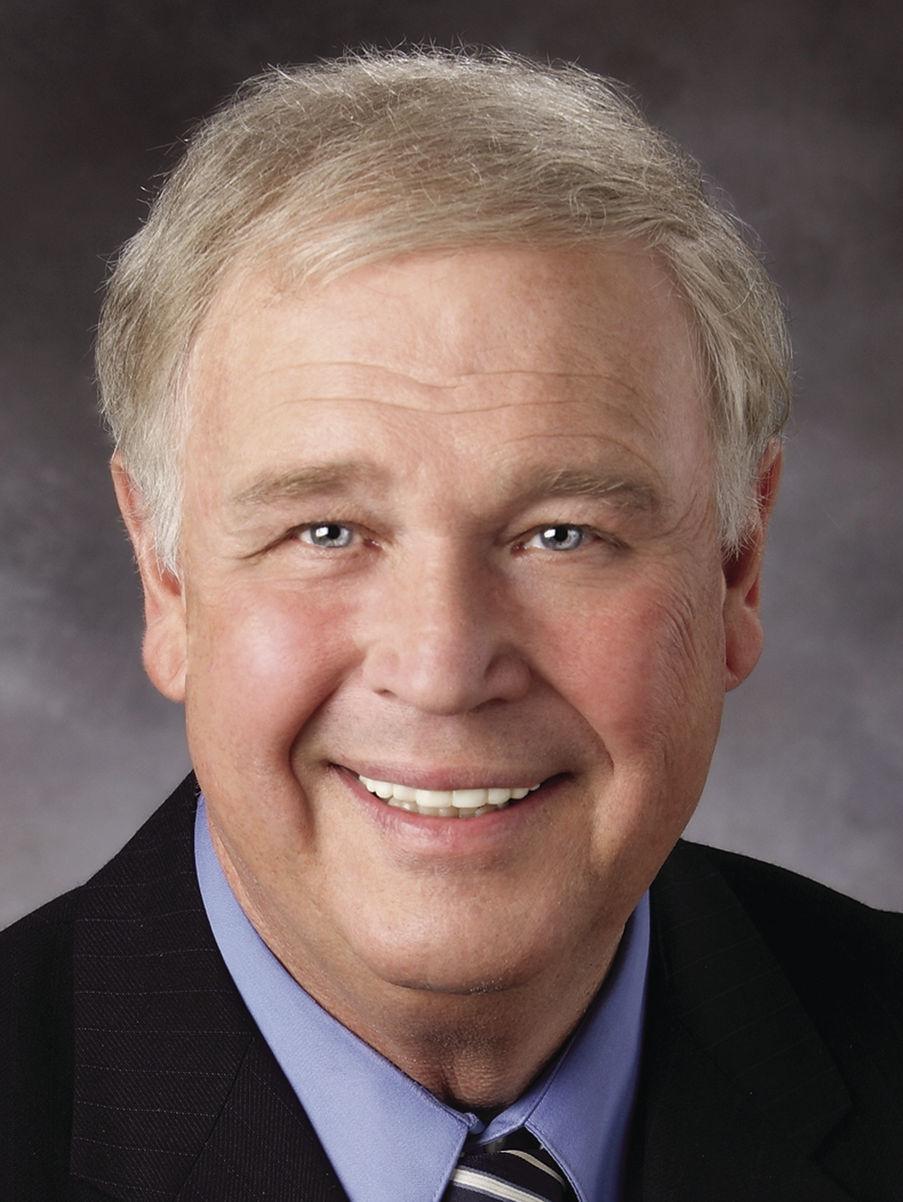
Rep. Dean Urdahl
Jeff Niedenthal
The focus of social studies taught in Minnesota schools will be decided during the next year as the Department of Education reviews and establishes social studies benchmarks and standards.
Jeff Niedenthal is among a relatively small but determined group who believe parents and others ought to be paying closer attention to the once-a-decade process.
The Grove City resident admits a conservative philosophy influences what he thinks should be included, and not included, in the standards. But that’s not all that motivates his interests, he said.
“Hopefully (I can) influence people to get engaged and comment on the process on either side of the political spectrum,” Neidenthal said. “Just get engaged. You don’t have a right to (complain) if you don’t participate in the fight.”
He does worry, however, that right now the process for establishing the standards has been slanted to a more liberal bent.
According to the Minnesota Department of Education’s website, the standards review committee has 44 members, including K-12 teachers, administrators, college faculty, informal educators and community members. Their work has been open via a series of virtual town hall-type meetings, and the Department of Education recently released the committee’s benchmarks. The deadline for commenting on the benchmarks is Dec. 14.
“They’re trying, in my opinion, to phrase and guide the benchmarks, ergo the curriculum, to focus on, to satisfy their political viewpoint, their political end, rather than the broader spectrum of the entire historical context.”
Committee members, however, have said their effort is not based on politics.
“It’s about telling the whole story, not just parts of the story that make us feel good,” Danyika Leonard, policy director at Education Evolving, and a member of the committee, told the St. Paul Pioneer Press after the committee’s second draft was released in August.
Those benchmarks could change significantly the social studies curriculum, the state’s students receive, Niedenthal said. Much of his concern is similar to that expressed by conservatives in regard to what they say is the teaching of Critical Race Theory in classrooms around the country.
State Rep. Dean Urdahl, R-Acton Township, said he has similar concerns, as the standards segment groups into “oppressed or oppressors.”
“I don’t want to use the term tribalization, but that’s essentially what it is, that grouping of segments of society,” Urdahl said. “We have historically been the melting pot, you know, many come in to become Americans. I think the current mood of some folks, I think they’re exemplified in our standards, are to define by group.”
He pointed to one benchmark that would ask students to share a story about an unfair experience that illustrates a power imbalance as an example of the wider issue within the drafted standards. Rather than telling a shared history based in fact, he said, standards such as that seek to divide.
“One of my concerns is that, you follow these standards, they will serve to divide by race, and teach our students that they either are oppressed or oppressors,” Urdahl said. “In essence that’s what Critical Race Theory is. It’s not mentioned by name (in the standards), but you can find it through implication in here.”
A former history teacher, Urdahl also expressed concern that the new standards will make it more difficult for teachers by adding more areas of study without creating more time to learn them.
According to state statute, which mandates standards be revised once a decade, the social studies standards must include “history, geography, economics, and government and citizenship.” If the current standards go into effect, a new strand — ethnic studies — will be added without expanding the credits, or class time available, for social studies.
According to an explanatory document from the Department of Education that addressed ethnic studies: “The committee has articulated the need to make the standards and supporting benchmarks more meaningful by attending to the race, ethnicity, identity, and lived experience of young people in relation to civic life and acknowledging voices and experiences of marginalized youth.”
For his part, Urdahl thinks the effort goes too far.
“It’s certainly important to know about diversity in our country,” he said. “I’m not saying that we shouldn’t. But they did not increase the number of credits. They’re just adding something to it. And already, as I found out and tried to get civics education reform, it’s already hard to squeeze something more into this.
“A whole new course, without expanding the credits, I think, is problematic,” said Urdahl, who worked for several years to have civics education added to the social studies curriculum, an effort opposed by the Minnesota School Board Association and some administrators because there wasn’t enough time for it.
Urdahl said he doesn’t have problems with the standards as they relate to civics education, although he wishes it would it was taught to high school juniors and seniors, rather than at the elementary school level.
In addition, he thinks the timing of history education is important, as well as basis in fact.
“Let’s tell both sides,” he said. “I believe in teaching the truth in history, and there are certainly warts in our history, and they shouldn’t be ignored. But I’m concerned that history be taught in a truthful manner, and not in an opinionated manner.”
Niedenthal said he’s seen the standards evolve through three drafts, much of it he believes because of the thousands of comments lodged by people like him who have been paying attention to the process. But in his opinion, there’s still quite a bit of work to do.
He’s made an effort to keep the subject in the forefront during the past year, appearing at area school board meetings, including Litchfield and Atwater-Cosmos-Grove City, to provide updates after each standards revision.
“I want people to be aware that there’s a looming deadline for people who are concerned,” Niedenthal said. “I want people to know and engage with their governmental process.”