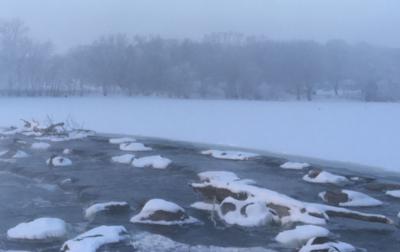
Anglers in Minnesota have begun making their first onto hard water, but ice conditions statewide — and even on the same body of water — remain extremely variable. Safety officials with the Minnesota Department of Natural Resources remind people to stay off the ice until there’s at least 4 inches of new, clear ice. And they should be vigilant about safety and check conditions at least every 150 feet whenever they’re on the ice.
“No fish is worth the risk of going through thin ice,” said DNR conservation officer Adam Block. “At this point, it is going to take several consecutive days of below-freezing temperatures before enough solid ice has formed to support foot traffic, and even longer before ATVs and snowmobiles should be on the ice.”
Of the six ice fatalities in 2017, five occurred during the early ice season of late November and early December, and all involved an ATV or snowmobile. In addition to early ice, there are water bodies that still have open water accessible to late-season anglers, boaters and paddlers.
“Air temperatures might be relatively mild, but don’t let that deceive you,” said Lisa Dugan, DNR recreation safety outreach coordinator. “Water temperatures are dangerously cold across the entire state, which means it’s more important than ever to wear that life jacket. A fall into extremely cold water can incapacitate you within seconds.”
State statistics show one-third of boating fatalities typically occur during the “cold water season.” Of the 14 reported boating fatalities in 2018, all victims were male and all but one was found without a life jacket.
No ice can ever be considered “safe ice,” but the DNR recommends these guidelines to help minimize risk:
- Always wear a life jacket or float coat on the ice (except when in a vehicle).
- Carry ice picks, rope, an ice chisel and tape measure.
- Check ice thickness at regular intervals as conditions can change quickly.
- Bring a cell phone or personal locator beacon.
- Don’t go out alone and let someone know about trip plans and expected return time.
- Before heading out, inquire about conditions and known hazards with local experts.
The minimum ice thickness guidelines for new, clear ice are:
- 4 inches for ice fishing or other activities on foot,
- 5 to 7 inches for a snowmobile or ATV,
- 8 to 12 inches for a car or small pickup,
- 12 to 15 inches for a medium truck, and
- Double these minimums for white or snow-covered ice.
For more information, visit mndnr.gov/icesafety and mndnr.gov/boatingsafety.