
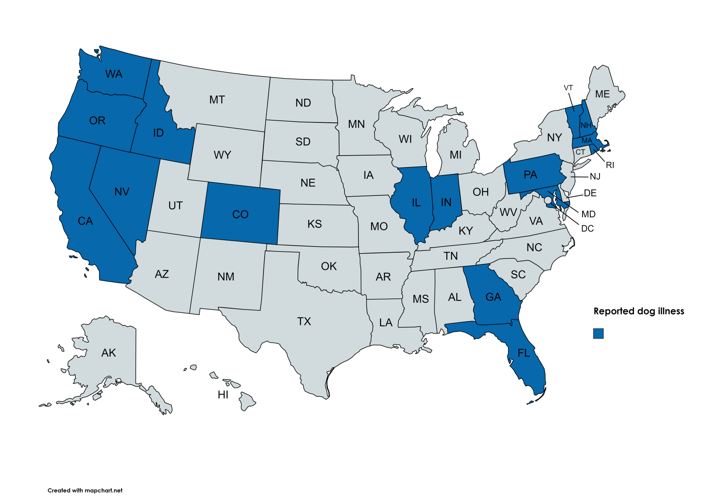

A mysterious canine respiratory illness has swept across the United States targeting hundreds of dogs in 16 states.
Various breeds of dogs have been impacted by this illness, displaying symptoms similar to Canine Infectious Respiratory Disease Complex, commonly known as kennel cough — a highly contagious respiratory disease affecting the breathing passages and lungs. While kennel cough typically resolves on its own, the recent infections have led to pneumonia and in some cases death.
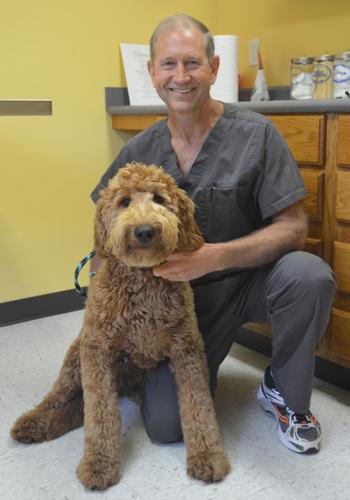
Hutchinson veterinarian Dr. John Froning sat down with the Hutchinson Leader to talk about the illness.
What is this? Is it an illness or disease?
Dr. Froning: That’s the problem is nobody knows for sure. There definitely is an uptick on some upper respiratory stuff, and it sounds like there’s probably some bug out there that’s showing some resistance (to antibiotics). But I don’t know if there’s actually enough diagnostics and collaboration being done to say exactly what it is. Some of the diagnostics are at least suggesting that it might be a mutated bacteria because they’re finding some of the causative organisms to not respond to the typical antibiotics that we’d use for upper respiratory conditions. It sounds like there might be a little bit of a resistant bacteria out there.
Is there a test?
Dr. Froning: There is an upper respiratory screening panel, but they do have to be done kind of early, within two to four days. There are some really good ones out there. They’re on the pricey side. They end up being, between $275 to $300 or maybe a little bit more.
What are the challenges and obstacles for diagnosing this in dogs?
Dr. Froning: Of course, every dog that comes in coughing doesn’t get tested unless they have severe difficulties or have tried some medications, and it hasn’t improved. So the full diagnostics aren’t always being done. I think that kind of makes it difficult. And then the collaboration between all the different state organizations and the testing companies … there’s sometimes not a real good collaboration unless you start seeing a real trend on something.
What signs or symptoms in a dog would indicate to the owner that there is an underlying issue or health concern?
Dr. Froning: So coughing is going to be by far the most common clinical sign. And quite often a lot of dogs do cough with the more typical bugs that we see. Those dogs are usually quite often still eating and doing ok, but they’re just coughing. The next step if a dog is not only coughing but also experiencing a persistent cough and a decrease in appetite, these are more concerning signs. Sometimes nasal discharge. I think that owners should be probably more aware of is if they got a coughing dog, runny eyes, snotty nose being really lethargic and breathing difficulties and not eating those things would give me more concern.
If your dog is experiencing these symptoms, is it necessary to take immediate action to seek care, or is it ok to schedule an appointment for a later date?
Dr. Froning: I believe it’s more urgent if a dog is not eating; I wouldn’t want to delay seeking care, especially if it persists for more than a day. Any condition that interferes with a dog’s normal eating habits, particularly for a dog that typically has a good appetite, raises concerns.
Have you or other local vets encountered this in the area, or are you just keeping an eye out for it?
Dr. Froning: That’s what we’re doing now. I don’t know that we’ve really had anything real serious. Our Board of Animal Health is getting a lot of reports now because of all the press on this, but to date, I don’t think they necessarily feel that we have it in Minnesota to any significant degree anyway. But I suppose that’s a little bit one of those hard things to answer too, because most of the cases of upper respiratory that they are seeing are responding to typical treatments and not getting this real sickness that might progress to pneumonia.
Is there anything a dog owner can do to protect their dog?
Dr. Froning: You definitely want to vaccinate against those things that are more common out there. Like kennel cough. The Canine Distemper vaccine is a real common vaccine that, and it’s part of the core vaccines that we try to get into puppies and dogs to protect them. That has some upper respiratory protections in it. The canine influenza vaccine, we personally haven’t used very much. We had a couple clients that requested who travel a lot and feel like they’re going into conditions where they might see more of it. It’s again that time of year where people are still hitting the dog parks and everything. I don’t know if I’d be terribly concerned about our local area here, but if somebody was traveling, I’d say out of state. I wouldn’t send my dog off to go nose to nose with other dogs in a dog park. I’d avoid those situations.
Is there anything else you want to mention?
Dr. Froning: I would say generally if I saw what was going to be some kind of pandemic out there, I would, I’d notify clients directly. But I think this is one where I don’t think locally here, we need to get too excited about it. At this point. I think all the clinics are monitoring it. Definitely from my standpoint, I get into a case where I can’t get a dog to respond, and it’s not eating, but has all the symptoms, fever, cough, running eyes, nasal discharge. I mean, I guess that’s something I would probably take seriously any day of the year forever. But those kind of cases, I think probably at this point in time require additional testing upfront rather than taking a wait and see approach.


