

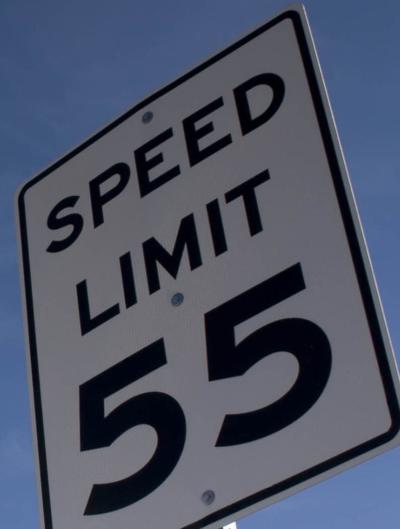
The Minnesota Department of Transportation is increasing speed limits on 5,240 miles of state highways, affecting several that cross through McLeod and Meeker counties.
The changes will represent an increase of 5 mph, from 55 mph to 60 mph. The decision was made following a five-year, $1.2 million study of all two-lane, two-way highways with speed limits of 55 mph.
According to the study published Jan. 15, the speed limit changes will affect 77 percent of the state's approximately 7,000 miles of highway that were studied. Once all new speed limits are implemented, 81 percent of two-lane, two-way highways in Minnesota will have 60 mph speed limits. In some cases, the changes have already been implemented.
The following highways in McLeod County are affected:
- State Highway 22 from Glencoe to Biscay and Biscay to Hutchinson
- State Highway 15 from Winthrop to Hutchinson and Hutchinson to Dassel
- U.S. Highway 212 from Buffalo Lake to Stewart and Stewart to State Highway 22 near Glencoe
The following highways in Meeker County are affected:
- State Highway 4 from Hector to Cosmos, Cosmos to Grove City and Grove City to State Highway 55
- State Highway 22 from Cedar Mills to Litchfield and Litchfield to Eden Valley
- U.S. Highway 12 from Atwater to Grove City, Grove City to Litchfield, Litchfield to the end of the two-lane highway east of Litchfield, Beginning of two-lane highway west of Darwin to Darwin, and Darwin to Dassel
- State Highway 15 from Hutchinson to Dassel and Dassel to Kimball
- State Highway 55 from Paynesville to Eden Valley, Eden Valley to Watkins and Watkins to Kimball
MnDOT used different factors to determine if increasing speed limits to 60 mph would create more uniform travel speeds for all vehicles. Using data from speeds gathered at 68 random locations throughout the state, 46 in which the speed limit was changed to 60 mph and 22 in which the speed limit remained 55 mph, MnDOT assessed the impact of raising speed limits.
The study suggested that before the speed limit was changed from 55 mph at the 46 sites, the average speed of travel for a vehicle was 59 mph with a deviation of plus or minus 6 mph. After the speed limit change to 60 mph, the recorded average vehicle speed was 60 mph.
"After speed limits increased, travel speeds at the locations sampled were slightly more consistent between each vehicle," said Nathan Drews, engineering specialist in the Office of Traffic Engineering. "In other words, more drivers traveled at a similar speed after speed limits increased. This is a desirable outcome, but this change is very slight and may not impact the frequency or severity of crashes."
Each of the roadways evaluated in the study had a speed study done to determine if the speed limit should increase or stay the same, taking into account how the road was driven. MnDOT looked at several factors during the study, such as shoulder width, access points and crash history, when taking considering a recommendation for each roadway. Some of the roadways evaluated, about 33 percent, did not have recommendations for speed increases.
The MnDOT district traffic engineer reviewed all data collected from the various sites and made final recommendations for an appropriate speed limit. The MnDOT Office of Traffic Engineering reviewed and approved the recommended speed limit increases. The new speed limits are effective once new speed limit signs are erected.
"It is important to remember that raising a posted speed limit is not inherently making a road 'less safe,'" the study suggests. "A properly selected speed limit can increase the safety of the roadway by creating uniform travel speeds for all vehicles and by setting realistic driver expectations of those trying to cross or enter the roadway."
According to MnDOT, this is the largest systematic change of speed limit increases since President Richard Nixon's Emergency Highway Conservation Act bill passed in 1974. To see the complete study and list of highways affected, visit tinyurl.com/ycyf265o.
With the completion of this study, MnDOT plans to analyze the effects of the speed limit changes over the next several years to ensure these roadways continue to operate safely.


