

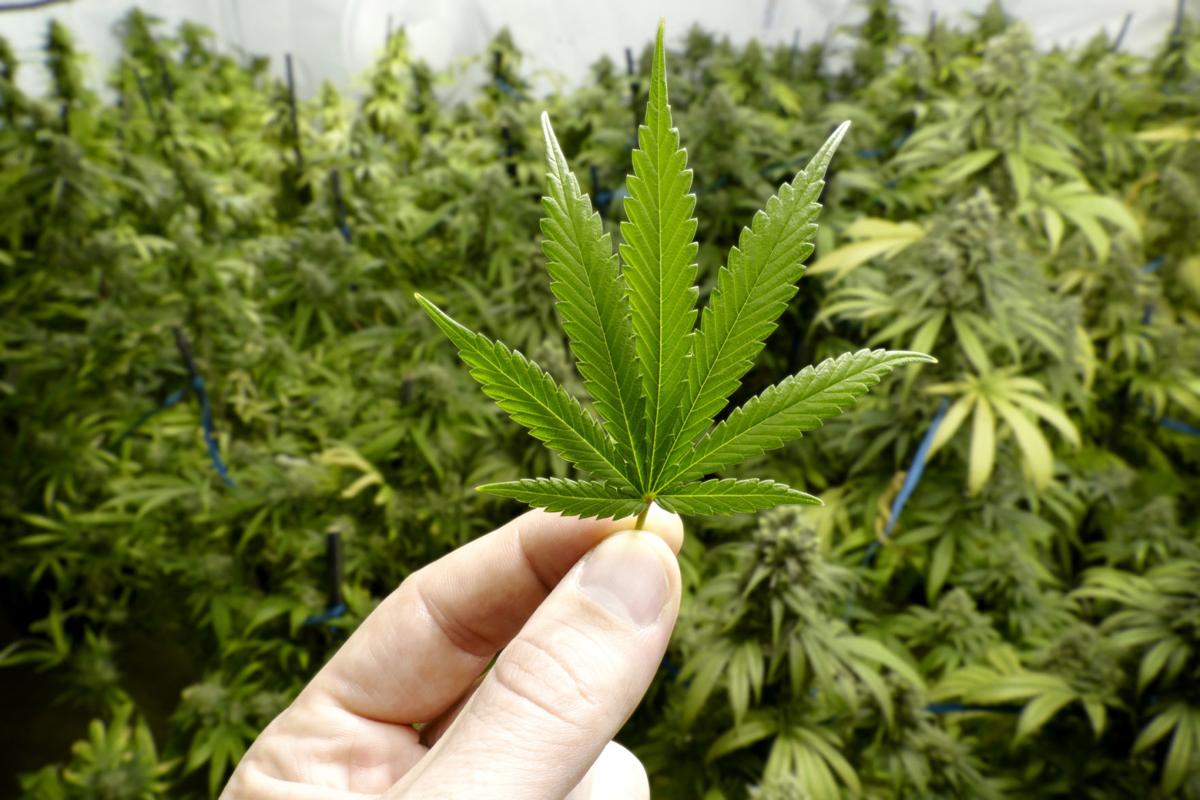
More Americans than ever — including, for the first time, a majority of Republicans — say marijuana should be legalized for recreational use.
A Gallup Poll released Oct. 25 shows 64 percent of Americans favor such a move. Similar public support was expressed in an unscientific poll conducted by the Minnesota House of Representatives at the 2017 State Fair — representing a sea change in opinion from the last time the question was posed two years earlier.
Even on the Leader’s online poll this past week, 60 percent of respondents favored legalization in Minnesota.
The two of us who write these editorials are scratching our heads. Did we miss something?
While eight states have made pot legal during the past six years, we’re confused as to how Americans’ position on this issue has evolved. To us, marijuana is a drug that shouldn’t be legalized for anything other than medical use.
Are we the only ones out of step with the mainstream? For the answer, we visited with Carmen Morrow, Hutchinson Public Schools’ chemical health intervention specialist.
Ms. Morrow is also dead-set against legalization. In fact, the prospect of Minnesota joining those eight other states frightens her.
“It does scare me that we’ll have another (legal) drug available for us to use for any quick fix or simply to escape,” she said.
Ms. Morrow’s opinions on the issue have evolved, too, but not the same as most Americans.
“I initially thought (legalization) would be a good thing,” she said. “We could control it. But now I changed my mind.”
Government control of growth and sales apparently is one big reason why most Americans support legalization. If we control sales, minors will have a harder time getting it, the argument goes. And the government can tax it to support services. In Minnesota, a legislative proposal calling for legalization would direct that tax revenue toward schools.
In our minds, that would be morally corrupt.
Supporters also argue that controlling sales would eliminate the black market, which today is the only way to buy recreational pot in Minnesota. Yet in Colorado, where pot became legal in 2012, the black market has exploded, according to a November 2016 “60 Minutes” report.
With more states working toward legalization, more young people are confused by two messages our nation is sending about marijuana, Ms. Morrow said.
One message is that this is the same marijuana that baby boomers smoked decades ago. Not so. It’s far more potent.
The other message is that legalization would be akin to legalizing over-the-counter sales of medical marijuana. Another falsehood. Medical marijuana has a high cannabidiol content — which offers medicinal relief — but not as high tetrahydrocannabinol (better known as THC) content, which provides users with a “high.” So these two types of marijuana are vastly different.
A third, more fuzzy message is that marijuana is a gateway drug. Well, that’s open for debate. The National Institutes of Health reports marijuana is linked to other substance-use disorders including nicotine addiction. “However,” NIH contends, “the majority of people who use marijuana do not go on to use other harder substances.”
So why should we oppose legalization?
Because it does more harm than good. The bottom line is that American society — where record numbers of people are feeling distressed and disconnected — needs more constructive ways to cope with its maladies.
Our state’s mental health units are already at capacity. People need to acquire skills to deal with their problems — by talking about them or escaping through exercise or reading — instead of using yet another drug for temporary release.
Today, one in eight Americans use marijuana on a regular basis. That’s twice the rate of 10 years ago, before it was legal in any state. According to the NIH, 9- to 17-percent of people who use marijuana become dependent.
A parallel can be found in opiate use, which is climbing fastest in places such as the Rust Belt where people are trying to cope with their psychological pain.
Adolescents and adults who experience this pain, according to Ms. Morrow, are “self-medicating” themselves when they turn to marijuana, alcohol and other substances for relief.
“They don’t know how to cope, they don’t know how to talk about their anxieties,” Ms. Morrow said. “We need to be sharing with them ways to adjust to a stressful world.”
Teach coping skills. Don’t legalize marijuana.
Together, those two steps will make Minnesota stronger and healthier.

