


In March 2020, all schools in Minnesota — including parochial schools — transitioned to e-learning due to the governor’s proclamation related to the unknown fear of COVID-19.
Everyone felt it was the right thing to do at the time. Some students and their families acclimated easily to the new way of learning while others floundered. The many problems remote learning presented made it clear that it wasn’t a long-term substitute for in-person education.
Public schools either remained closed or opened up to hybrid situations in the fall of 2020, based on the governor’s Minnesota Safe Learning Plan.
Parochial schools, following guidance of their religious leadership, chose to return to in-person classes, taking precautions, following health protocols such as spacing desks, hand sanitizing and wearing masks. Many parochial schools — including those in the Hutchinson and Litchfield area — saw enrollment increase as families who struggled with the public school protocols, or didn’t like the instability it presented, sought the private in-person option.
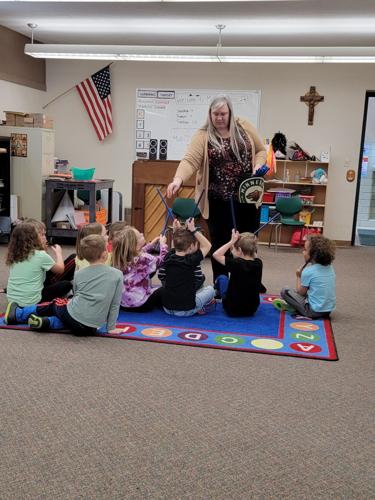
Northwoods Elementary School in Hutchinson has preschool through eighth grades. It is part of the Seventh-day Adventist school system, a nationally recognized Christian education organization, second to Catholic schools. Its curriculum is determined by the national group with high standards and a Christian foundation.
In March of 2020, Northwoods had an enrollment in the upper 50s. In the fall of 2020, they offered in-person learning. To accommodate the distancing needed in the classroom, the school converted a multipurpose room into a classroom and hired another teacher in anticipation of more new families. That year, the school’s enrollment increased to the lower 60s.
The following year, 2021-22, the school dropped the mask mandate, making it a choice for students and families, and enrollment rose to 70 students.
“Families were looking for less regulations and a Christian-based environment,” Principal Jamie Madden said. “We added the staff to handle the growth.”
Among the reasons he credited for increased enrollment was the school’s small class size.
“Our class size is manageable — 17 students per classroom,” Madden said. “It’s a more one-on-one experience for the student. They or their parent can stop in and talk to teachers. It has a family-oriented feel.”
St. Anastasia Catholic School in Hutchinson, and the School of St. Philip in Litchfield both saw increases in enrollment during the COVID-19 pandemic. Both accredited through the Diocese of New Ulm, with teachers who are also licensed with the state of Minnesota, the schools offer a faith-based education with a focus on academic excellence, moral and social development and a sense of community. St Anastasia has grades kindergarten through sixth grade and Kids Depot preschool, while St. Philip’s has preschool through fifth grade.
St. Anastasia opened to in-person learning in the fall of 2020-21. Since then, it has seen a steady increase in enrollment.
“As the pandemic diminished, we had several more new families enroll in the lower grades that brought upper grade siblings,” Principal Betty Jodzio said.
Principal Jenna Scheevel at St. Philip’s in Litchfield reported pre-pandemic enrollment of 51. In the 2020-21 year, it rose to 53, and in 2021-22, the school had 57 students.
Immanuel Lutheran School, west of Hutchinson along State Highway 22, has preschool through eighth grade. It is a joint mission of two congregations —Immanuel Lutheran Church and Grace Lutheran Church, both of Hutchinson. The two churches belong to the Wisconsin Evangelical Lutheran Synod, or WELS, which has one of the largest Lutheran school systems in the country. Immanuel’s teachers are also licensed by the state.
The school experienced similar enrollment results as other area parochial schools during the pandemic. Students numbers have especially grown in the preschool and kindergarten programs.
When all schools — including public — opened without COVID protocols in 2022, the parochial schools retained their families. Families who came during COVID were satisfied with where their children were enrolled, according to leadership at the schools, as the only students lost were those who graduated.
“Since COVID-19 restrictions lessened, our enrollment has stayed consistent,” Scheeval said.
The four schools have gained new students, too. While the pandemic might be over, other issues being pushed by legislators at the state and federal level concern many parents, who say they want their children’s educational content to be less partisan. Most are looking for a Christian environment that reinforces the parents’ values.
FROM A PARENT’S VIEWPOINT
Josh and Kristan Koehnen moved to Hutchinson five years ago. They attended Grace Lutheran Church’s block party where they learned about Immanuel Lutheran School and Children of Grace preschool. Their oldest was already registered at West Elementary for kindergarten and they left it that way.
When COVID hit, their daughter struggled with the online option. Kristin chose to home school their children the following year. That lasted two years as their family grew, and it became difficult to do. The family remembered Immanuel and thought about enrolling their children there. They attended the Sports Camp the school offers during the summer and their oldest, especially, enjoyed it. She was excited to start at Immanuel that fall and see her new friends.
“We are really happy at Immanuel (and Children of Grace),” said mom, Kristen Koehnen. “Our oldest daughter struggled with anxiety and was overwhelmed at the public school. She’s excited about school and hasn’t missed a day. We love the smaller class size and the Christian aspect. The public school system is getting more questionable.”
“I like the values Immanuel School is teaching,” Josh Koehnen added, while reninforcing his wife’s enthusiasm about the class size. He also appreciates that the teachers communicate well.
“If they see you when you pick up your child at school, they stop and talk to you — about your child, about an activity,” he said. “They get to know your kids really well. They let you know milestones they’ve achieved.”
“Another perk is that parents get to hang out together and get to know one another,” Josh Koehnen continued. “All the kids do the same extra-curricular activities through the school, so you get to see the same people regularly. It helps that you know the parents for sleep overs and things like that.”
Jack and Molly Daggett also are excited with their experience at St. Anastasia in Hutchinson. Their children were enrolled at Kids Depot. When the children turned 5, the Daggetts enrolled them in the public school for a couple years, but felt something was missing. They kept hearing from friends about the positive opportunities they were having at St Anastasia. Jack and Molly decided to try the school this year. They’ve been thrilled.
“We had very good experiences at the public school,“ Molly Daggett prefaces. “We just wanted the Christian values and faith-based education.”
The Daggetts aren’t Catholic but have felt welcomed at the school. They liked the small class size, and the family interaction.
“They had family night at the indoor pool and the place was packed!” Molly cheerfully said. “They also had a campfire night, where the older kids were coming up to my younger ones, giving them great big hugs.”
“That’s something special we learned to appreciate as we’ve been at the school — the interaction of the older kids with the younger ones,” Jack Daggett added. “The school has activities they do formally to encourage this — like older students come in and read to the younger ones, serving as mentors and role models.”
The Daggetts appreciate the weekly Mass the school offers. Each week a different grade is responsible for leading it.
“The kids look forward to it. What impressed me is the public speaking skills they are learning through this experience,“ Jack said. “I never got that until later.”
Not all families started with the public system. One family moved to Hutchinson from Bemidji. The mother had been homeschooling her children but when they moved to the community, she heard about Northwoods, and the family decided to enroll. She was nervous at first, but saw many positive aspects — supportive teachers, a fair principal and wholesome kids. She felt the school had enhanced her children’s abilities since starting at Northwoods. She also appreciated how the school allowed parents to make choices for their children.
The parochial schools in the area have strong populations and are looking positively to the future. In 2023-24, St Anastasia will add seventh grade and in 2024-25, eighth grade. This spring, Immanuel Lutheran School and Children of Grace will be breaking ground for a new building as the current school’s capacity of 70 has been reached.
“I believe there are two main influences ... the first is the positivity of our close-knit school community ... the second main influence is our Christian education curriculum. Our students hear about God and their Savior every day in the classroom,” Principal Brian Gephardt of Immanuel Lutheran said of what brings families to the school.
Like public schools, parochial schools provide quality education. The difference between the two educational systems is that the religious component is central for parochial schools. The most important aspect to families, though, is having a place where their children are in learning environments where they can thrive.


