


Everybody loves a good walk, especially this time of year. The fresh air, birds singing, warm sunshine, and the smells of spring make June a splendid time for a walk.
Few things in life allow a person to lose themselves in quiet thought such as a nice long walk. It’s great for your health, and it’s good for the soul. Put simply, we walk for fun, so much, that specialized clothing and footwear is designed with pleasure walking in mind. In the past, however, a long walk wasn’t always something seen as a recreational activity. In fact, if you were to travel back 150 years, walking was not necessarily something to be enjoyed, but a key mode of transportation.
Few know the arduous task of a long walk as the pioneers did. At a time when railroads had yet to stretch across the continent, a great many immigrants walked across the country to find new homes. Much of the walking was done in the wilderness, over rough terrain, where roads were nonexistent. One such pioneer who trekked across the countryside on foot, was an old Glencoe settler named Henry F. Beneke.
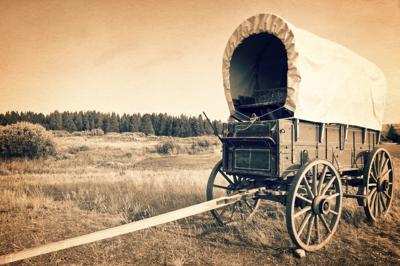
The year was 1858, and Beneke was a boy of 11 years. He was born in Hanover, Germany, in 1847 and came to America with his father and two sisters in 1857. They initially lived in Illinois, but his family headed to Minnesota, leaving Henry and one sister behind until they were sent for. In 1858, they were called upon to join the rest of the family. They went on with a party of settlers traveling north that spring. In the party were 11 settlers with three prairie schooners pulled by oxen. As the crow flies, it was a journey of about 375 miles. Henry and his sister walked the entire trip.
“We spent eight weeks on the road,” Henry said, “losing several days waiting for bridges that had been washed out to be repaired. We camped out most of the time, and I certainly enjoyed it, although I did get tired of walking sometimes. We crossed the Mississippi at Dubuque and came up overland to Carver. I found my father, stepmother and younger sister, who had arrived the year before, nicely settled in a cabin on father’s claim.”
Henry’s experience as a walker did not end once he reached Minnesota. In fact, if one were to calculate how much travel Henry did on foot, the results would be staggering. On his father’s claim, Henry spent endless days walking behind an ox that was pulling a plow, walking into the settlement for supplies, and walking alongside oxen as he made supply runs to and from Minneapolis. He figured that he had, at a minimum and maybe with a bit of exaggeration, walked such a great distance that would have equaled a person walking 10 times around the world.
Henry would eventually move off his father’s claim and begin a life of his own in Glencoe Township. He married Gertrude Kloempken in 1873, and the couple had six children. In 1884, Gertrude died, leaving Henry to raise the children on his own. In 1929, at the age of 82 years old, Henry died. A year prior, he gave an interview with the now defunct Glencoe Enterprise where he reminisced not only about his trip to Minnesota as a child, but all the walking he’d done in his life.
“That was a good many years ago,” the old pioneer proclaimed, “and I have done a great deal of walking since. If some of those young fellows who are now trying to beat each other (on foot) in the race across the country had to follow me during the last 70 years, they wouldn’t be doing much walking now.”
I sure hope Henry had a good pair of shoes!

