


The Eastern Front, February, 1917
The First World War had been raging for nearly three years. The battles were horrific. A combination of modern weaponry and antiquated tactics turned the fighting into a veritable bloodbath. In an attempt to take as few casualties as possible, leaders ordered their armies to “dig-in”, and the Great War’s era of trench warfare began.
Two main fronts opened up during the war, the western front where Allied powers were holding off an invasion of France, and the eastern front where Allied and Central powers clashed. For the most part, the war was a stalemate with neither Allied nor Central powers gaining any real advance.
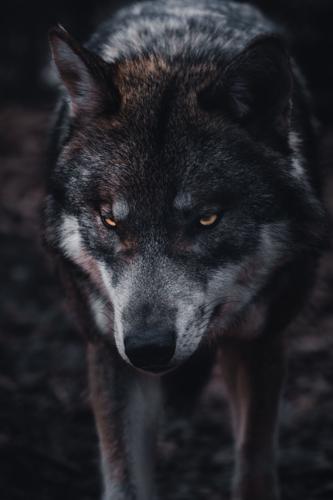
According to legend, and backed up by newspaper stories at the time, there was a period during the winter of 1917 when a new foe entered the battlefield, one so heinous and frightening that German and Russian troops briefly held a cease fire so they could deal with this new adversary. The enemy wasn’t the weather, nor was it soldiers from a foreign nation. Amazingly, this new enemy was an army of wolves.
Sighting a wolf near the battlefield wasn’t too uncommon during the First World War. The aftermath of battle often left the ground littered with corpses, and scavengers were usually not too far behind. Wolves, being opportunist, carnivorous scavengers, would certainly have found their way to the frontline. What differed in 1917, however, was the sheer volume of the packs as well as their increasing boldness.
In February of that year, dispatches from Berlin noted several large packs of wolves moving into populated areas from the countryside. It was hypothesized that these animals were displaced from the fighting in the forests of Lithuania and Volhynia.
As the story goes, these wolves began roving around villages, attacking livestock, and posing a threat to humans. The issue became even more visible, however, when these large packs of wolves began infiltrating the battlefield.
It was reported in a 1917 Oklahoma Times article that “Parties of Russian and German scouts met recently and were hotly engaged in a skirmish when a large pack of wolves dashed on the scene and attacked the wounded. Hostilities were at once suspended and Germans and Russians instinctively attacked the pack, killing about 50 wolves.”
Another 1917 article appeared in the New York Times, claiming that, “Poison, rifle fire, hand grenades, and even machine guns were successively tried in attempts to eradicate the nuisance. The wolves — nowhere to be found quite so large and powerful as in Russia — were desperate in their hunger and regardless of danger. As a last resort, the two adversaries, with the consent of their commanders, entered into negotiations for an armistice and joined forces to overcome the wolf plague.”
In the following weeks, the story appeared in two more publications, The Hopkinsville Kentuckian and The Bridgeport Evening Farmer.
Some historians dispute the claim, saying that the news publications did not cite any source, nor did any Russian news sources report on the incident — the latter possibly because Russia was on the verge of revolution at the time and reporting revolved around social/political unrest.
Today, the story of the “Wolf Truce” is one that is somewhat unknown outside of WWI history buffs. Whether the story is true or not remains somewhat of a mystery. Either way, there is no denying that sometimes the most entertaining of historic tales are the ones where the lines between fact and fiction are somewhat blurred.


