
125 YEARS AGO: 1898
There will be a total eclipse of the moon, visible in this locality Dec. 27. The eclipse will begin at 4:28 p.m. and last until 6:27 p.m.
The Leader takes pleasure in offering the readers, particularly for the benefit of the children, a handsome illustrated Christmas supplement.
The “Beau Nots” will entertain the “Why Nots” and outside friends at a mask ball. The party promises to be one of the jolliest events of the season. About 150 invitations will be issued.
100 YEARS AGO: 1923
There will be no mail delivery by rural carriers on Christmas Day this year. A new order has been issued by the post office department that allows the rural carriers a holiday on Christmas, although it has been the custom for rural carriers to deliver in years past.
The annual New Year’s Ball of the Hutchinson Fire Department has become one of the events of the Christmas holidays that no one in Hutchinson misses. This year, following their custom for many years, the dance will take place at city hall on the evening of Jan. 1.
Radio broadcasting station WFAN, operated for the Hutchinson Electric Service Co. by Eben Dennis, has been heard in at least 23 states, including the District of Columbia and four Canadian provinces.
Christmas carries with it the spirit of giving and Hutchinson merchants carry the spirit of Christmas in their stores for the convenience of Christmas shoppers. They are making efforts to give the best service possible during the last-minute rush of Christmas shopping and many of them are giving special bargains during he Christmas shopping season.
75 YEARS AGO: 1948
Harried husbands who haven’t gotten around yet to buying a present for their wife still have until 5:30 this evening (Dec. 24, 1948) to do their shopping. With goods available in quantities and qualities unheard of since before the war, most local merchants were able to build up fully ample stocks in good variety and quality.
It’s the night before Christmas and tucked in their beds, the college kids slumber no exams in their heads. They’re home for the holidays and dreaming with ease, with no thoughts of studies just “Santa bring me ... please.”
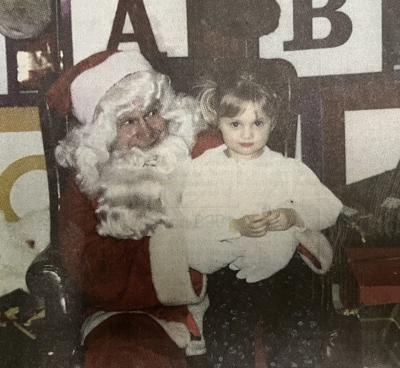
More than 1,200 children, many accompanied by parents or big brothers and sisters, crowded into the street in front of the public square to talk things over with their old friend Santa Claus. So many children came, in fact, that Santa ran out of presents for them ... but he promises to bring more next year.
50 YEARS AGO: 1973
It’s be dark bus stops for children coming January when the clocks move ahead an hour but for most other Hutchinson residents the difference will be slight.
Although it’s too soon to have figures, the voluntary energy conservation practices put into use by people in the city of Hutchinson appear to have lowered consumption of electricity and natural gas.
25 YEARS AGO: 1998
Being able to put Christmas lights up earlier this month in shirt sleeves must have encouraged Hutchinson residents to go all out this year. There are reports that some lights, especially icicle lights, were sold out at local stores.
A severance package for the police dispatchers who will be displaced by the closing of the Hutchinson Communications Center could cost the city $26,519, plus an additional $3,504 for extended health and dental insurance coverage. These were the figures give to the Hutchinson City Council by Personnel Director Brenda Ewing. The council balked at giving approval tot he plan when Jan Brown, supervisor for the Hutchinson Police Department’s communication specialists, expressed concern with some of the provisions of the settlement.
In an increasingly cruel twist of fate, farmers who raised hogs that go into our morning bacon and sausage, our pepperoni pizzas for dinner and our holiday hams may soon be unable to purchase those food products made from the raw material they grow. After bottoming out at about $8 per hundred pounds, the price farmers receive for hogs sent to slaughter have made a small comeback to about $14, a price probably not seen by pork producers since the Depression of the 1930s. But even with that little piece of good news, many farmers are losing an estimated $30 to $50 on every hog sent to slaughter, and the nation is threatened with losing a large portion of its small, independent hog producers.


