


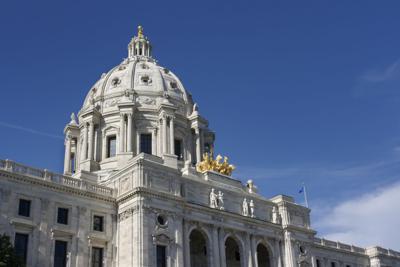
Minnesota’s 2022 legislative session saw billions of dollars up for grabs while lawmakers used ambitious language, but as it came to a close on May 22, that optimism appeared to have died.
A chief issue heading into the session was the fate of a $9 billion state budget surplus with the Legislature split between Republicans controlling the Senate and the Democratic-Farmer-Labor Party controlling the House. A $4 billion package of major tax breaks and a $1.5 billion collection of public works projects were dubbed “the grand bargain.” While it appeared lawmakers were close to bringing it all together, when the Sunday deadline came it seemed they had run out of time before a final deal could be struck. So, what happened?
Two of the usual suspects were at play: How much to spend and how to spend it. One fault line was debate over how to improve, reform or bolster law enforcement. Another was $1 billion in school spending. One issue — a sticking point for Hutchinson legislator Scott Newman, a Republican senator who chairs the transportation committee — was the sales tax on auto parts. The proceeds are currently split between the general fund and a trust fund for state highways.
“Dedicating 100% of the existing revenue from the sale of auto parts to roads and bridges would have been a windfall for our transportation system,” Newman said. “It would have secured us literally billions in federal funding that we could have used to build a world-class transportation system.”
In statements and press releases Sunday and the days that followed, numerous politicians across the state assigned blame and called for action. DFL Gov. Tim Walz said negotiations should continue, and that when a solution had been found he would call a special session. DFL House Speaker Melissa Hortman said, “we just need a little more time.”
Local legislators Newman, Rep. Dean Urdahl, R-Acton Township, and Rep. Glenn Gruenhagen, R-Glencoe all weighed in.
“It’s really unfortunate tax relief was not approved this session, especially since people are feeling the pinch of price increases at a time the state has piles of excess revenue,” Urdahl said in a statement. “In the end, there were unrealistic, potentially damaging things the House majority insisted we do and that’s what caused progress to stall. It is good that earlier this month we approved legislation to prevent Minnesota employers from suffering a tax increase on unemployment insurance, but the opportunity was there to do much more this session by providing permanent, meaningful tax cuts.”
He pointed a finger at the DFL for blocking increased penalties for criminals, such as a bill intending to crack down on fentanyl.
“We had a good opportunity to support law enforcement with more funding to help get a handle on the rise in violent crime but, instead, people continue pushing to spend more taxpayer dollars on unproven and unaccountable nonprofit groups,” he said.
Urdahl, the ranking Republican on the House capital investment committee, characterized lengthy negotiations as “to the cusp of a vote taking place.”
“It’s too bad a bonding bill was not done, but the House majority let the perfect get in the way of the possible,” Urdahl said. “You need a super majority to approve bonding bills, which means broad, bipartisan support is required. There were some non-starters the majority demanded be included in the bill and, ultimately, that eroded support and was too much to overcome.”
Newman said the DFL was held back from successful negotiation by “their slavish desire to appease their Education Minnesota allies.” Urdahl characterized the split as caused by the DFL demanding billions in new spending in exchange for tax cuts.
“Minnesota received nearly $80 billion in COVID relief funding from the federal government during the pandemic,” Gruenhagen said in a press release. “With this backdrop in mind, it makes sense that the deal fell apart after Democrats and Gov. Walz demanded billions in new spending.”
He said tax relief is particularly important in light of high gas prices and rising inflation.
“Hopefully, a compromise can still be reached and a special session called,” Gruenhagen said.
The session wasn’t all gloom. An omnibus mental health bill with $92.7 million in spending over three years cleared the House and Senate, as did legislation targeting improvements to agriculture, broadband and drought relief. Frontline worker bonus checks were approved, as was funding for three veterans homes.
There is no threat of a state government shutdown as has been the case during past gridlock. A two-year, $52 billion budget was approved in 2021.


