



Talent development and Main Street revitalization were the key themes of Economic Development Authority Director Miles Seppelt's annual report to Hutchinson City Council last week.
"We just don't have enough people, period," he told council members of the labor shortages primarily seen in Hutchinson's manufacturing sector and elsewhere.
The median age of workers in the McLeod County is 41.5 (38.3 for the state as a whole) with trends showing younger and middle-aged populations declining from 2000 to 2020 estimates, and older populations growing. In 1990-2000, the job market was gaining 233 new workers per year. That dropped to one per year in 2001-2010, and from 2011 to 2020 it has been a decline of 120 workers per year.
"One of the more scary things is that our manufacturers, you go out on the shop floor, a lot of those folks are in the 55-64 age cohort," Seppelt said. "They're looking at retirement sooner rather than later. This is a significant problem. We've got some things to think about."
He shared a projection that estimated there will be 19,029 workers in the labor force in 2023, and 17,415 in 2033. Data shared for McLeod, Meeker, Kandiyohi and Renville counties showed that in 2011, there were 4.7 job seekers per vacancy. In 2021, there were 0.7 job seekers per vacancy.
"This all gets worse," Seppelt said. "We keep going down for the next 10 years, then we hit the bottom and then we start climbing out. So workforce is going to be No. 1 on a lot of people's list for a long time."
An informal poll conducted by the EDA found there were 155 manufacturing jobs open in Hutchinson. It did not account for other fields with numerous openings such as the building trades, medical field and retail.
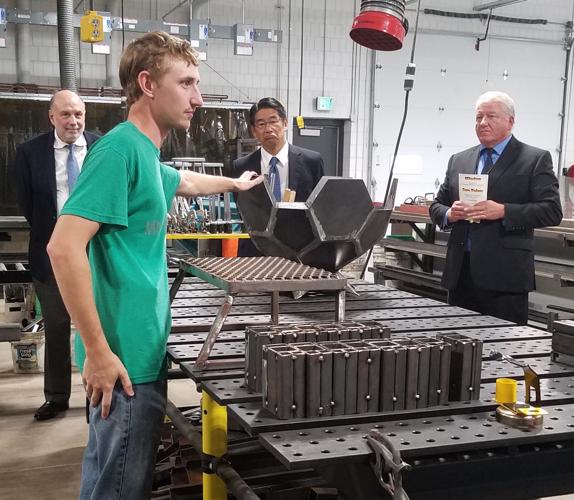
The EDA is keying to two major areas of focus to try and fill jobs: the development of youth talent and attracting young families. It already works closely with Hutchinson Public Schools and Ridgewater College to support their technical programs. At Hutchinson High School, the TigerPath program has been built to help connect students with opportunities to learn about future job fields, and that includes manufacturing opportunities. Enrollment in career and technical education classes has roughly doubled since the 2015-2016 school year, rising from 377 to 710 class enrollments.
Part of the process, Seppelt said, is making sure families know the old advice of always pushing for a four-year degree after high school is outdated.
"In Minnesota only 25% of all the jobs in the whole state require a four-year degree or higher," he said.
But Hutchinson and McLeod County also have an opportunity to attract more workers, or encourage families who live in the county to work in the county instead of commuting elsewhere. Seppelt shared 2019 data that shows:
- 7,177 workers live and work in McLeod County
- 6,010 workers live outside the county but work in it
- 8,064 live in the county but work outside of it
He said encouraging commuting workers to stay may be an opportunity for Hutchinson. But so should marketing the community as a destination for the limited pool of young families.
"People have choices," Seppelt said. "They can live anywhere they want. They can work anywhere they want. Why would they choose Hutchinson?"
DOWNTOWN
Seppelt also touched on ongoing work in downtown Hutchinson. Main Street revitalization as well as several new and ongoing projects has brought a lot of focus to the sector.
"The reality is downtown is the largest concentration of taxable market value in the whole community and as the downtown grows the whole community grows," Seppelt said.
The EDA provided nine Sign and Awning Grants (up to $2,000 each) to downtown businesses. The Facade Improvement Program, which requires a dollar-for-dollar match from applicants and provides up to $7,500 to applicants who want to upgrade their "curb appeal" had four participants. The Commercial Rehabilitation Loan Program pitched in $78,310 to three businesses seeking low interest loans for substantial improvements to downtown buildings.
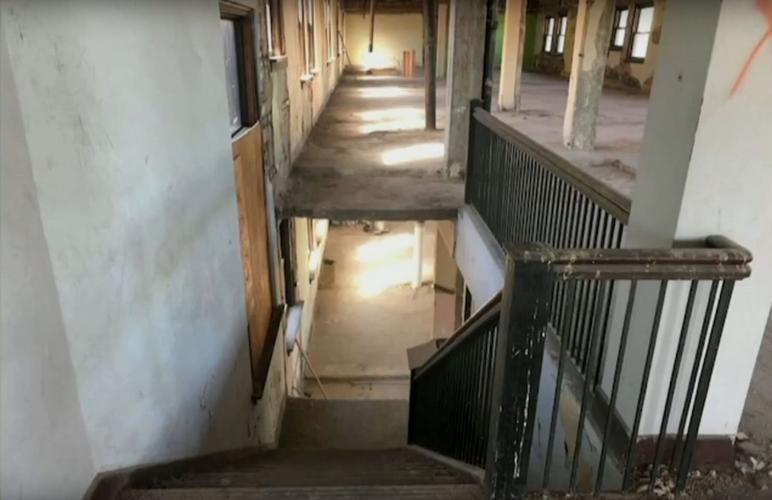
Meanwhile, the Jorgensen Hotel has been targeted for renovations. Brian Forcier and Titanium Partners of Duluth has proposed a redevelopment project for the 1916 building, which would turn it into a high-end 24-room hotel. Nystrom and Associates, a mental health care provider, worked with EDA staff to find an office space. They signed a lease with Cornerstone Commons for 4,000 square feet on the top floor of the building, bringing occupancy to near 100%. The EDA and city partnered to acquire the former CENEX fertilizer plant site on Third Avenue Northwest in 2007. It may be the site for a planned community splash pad.
In order to address storefront vacancies in Main Street, the EDA launched JumpStart Downtown in 2021. The business plan contest provided a prize package from contributors such as Vivid Image, KDUZ/KARP, the Hutchinson Leader, the Hutchinson Area Chamber of Commerce and Tourism and Crow River Signs. EDA pitched in $15,000 of working capital for the top prize, and a $2,000 Sign and Awning Grant. Three winners were chosen from 13 proposals: Flank Stakehouse, which opened a fine dining steak restaurant in the former Zella's location, Gold Coin, which plans to modernize the Gold Coin restaurant on Main Street and serve authentic Thai food, and Sweet Rolls and Boba, which will offer made-to-order rolled ice cream and Boba tea.


