
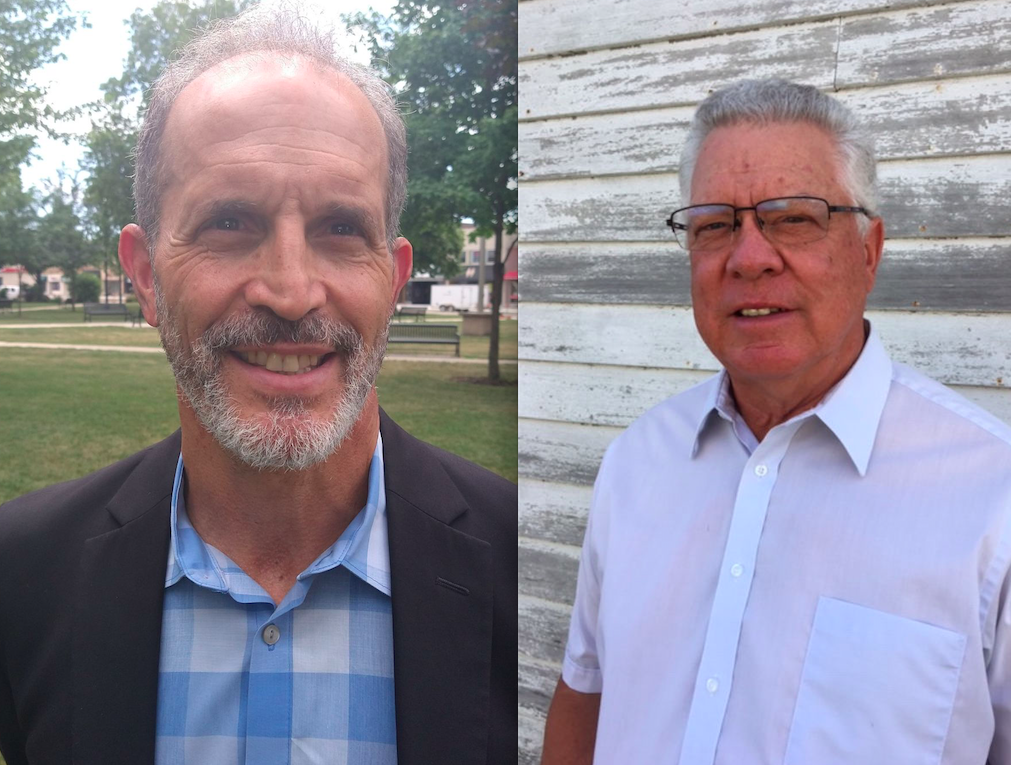
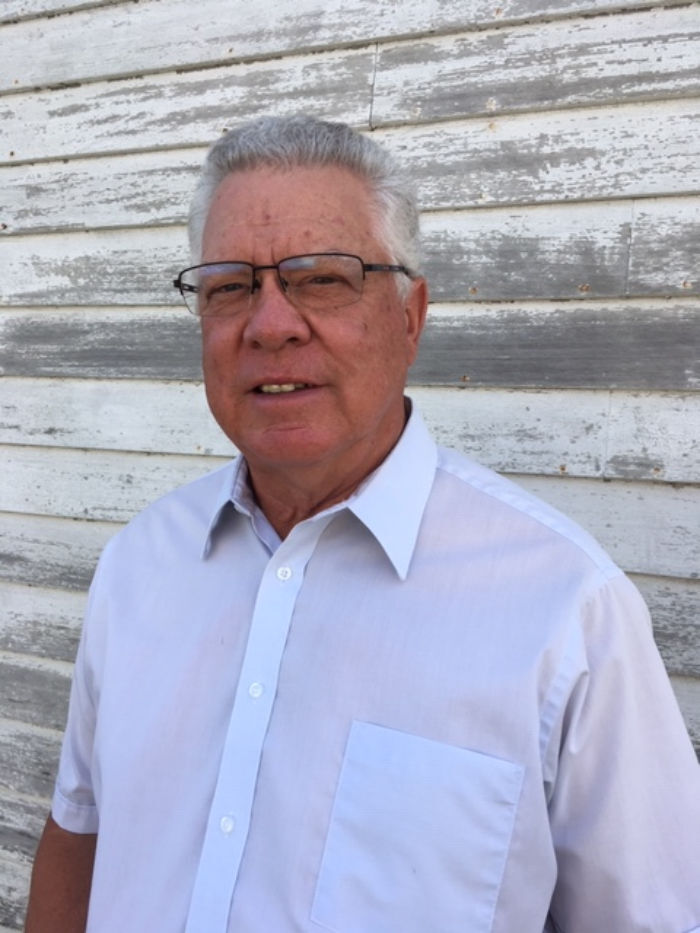
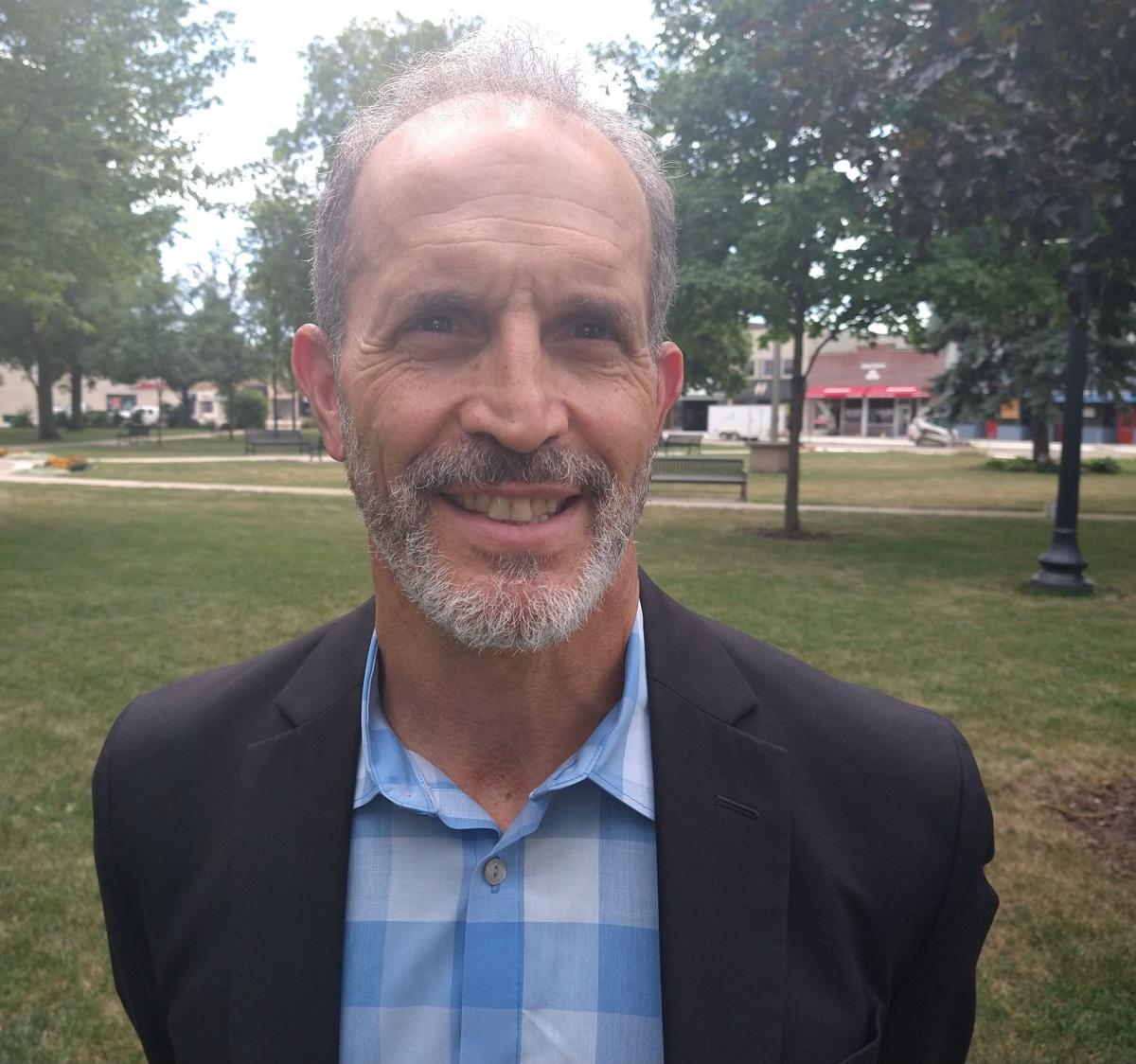


With the retirement of McLeod County Commissioner Ron Shimanski at the end of this year, candidates Nathan Schmalz of Winsted Township and José Luciano of rural Lester Prairie are seeking election to represent McLeod County District 1 for the next four years.
District 1 includes Silver Lake, Winsted, Lester Prairie, Hale Township, Winsted Township and Bergen Township.
Each candidate introduced himself and fielded questions submitted by county residents during a publicly broadcast candidate forum hosted by the Leader this past Thursday. The full forum video can be found at tinyurl.com/yyqutz6q.
Although the two men agreed in several areas, they also diverged on some key issues.
Luciano said his top priority if elected is the county’s response to COVID-19.
“We need to step up behind and alongside our businesses and help them in this time of crisis,” he said.
Schmalz said he was amazed at the lack of communication between townships, cities and the county, and he would like to see that improved.
“It’s going to be easy for me to really improve upon that and have our county be part of the discussion when it comes to county and city governments,” he said.
On issues where the candidates agreed, both men support the $12 million investment to renovate the former Jungclaus building in Glencoe into a government center, saying the long-term benefits outweigh the current cost. They also agreed Trailblazer Transit was a valuable service to residents, especially considering the financial support Traiblazer receives through the Minnesota Department of Transportation, greatly reducing the financial burden on county taxpayers.
On the question of developing the Dakota Rail Regional Trail, both men feel the trail is an asset in need of development, but any work, paved or unpaved, would require a plan for future maintenance.
“I’m not saying that we need to pave it,” Schmalz said. “We need to clean it up. We need to get a use started for it. I think we need to maintain it as a corridor.”
“Maintenance is critical,” Luciano said, “so there must be a plan in motion to keep that going year after year.”
The issue of allowing refugee resettlement in McLeod County was another where the two candidates seemed to meet eye to eye.
Luciano, himself a refugee of Cuba, said it was right to leave the question of accepting refugees up to county leaders, but that he supports giving others the same opportunity given to his family.
“My parents came to work,” he said. “Many of the folks I know in McLeod County, their grandparents came to work. We should let Americans do that.”
Schmalz said the first step for him would be determining the cost of accepting refugees to the citizens of McLeod County, but he too left open the possibility of acceptance.
“Should we allow people to come into our country? Yes. Just as José was allowed and his family, as my family was 160 years ago.”
One area where the two men were not in complete agreement was the issue of drop-off recycling services in townships. While Schmalz felt townships do not need the same level of service as cities, Luciano believes “there needs to be equity.”
“How can you pull it away from the township and just allow it in the city?” Luciano said.
Schmalz noted, however, that recycling is an important service to all members of the county, and he pointed to a recent effort he led following removal of District 1 recycling sites more than a year ago.
“I wrote a resolution and forwarded it to the (County Board) back in January, with the support of all three of our townships, that we restore recycling opportunities,” Schmalz said. “It was a modest request, and thanks to the county, we now do have a drop-off location in our district.”
Finally, when asked to describe what they believe to be the job description of county commissioners, both defined it as a resource and representative of their constituents, as well as a steward of the taxpayers’ money.
“McLeod County has an annual budget that is approaching, I believe around $25 million now,” Schmalz said. “So it’s a commissioner’s responsibility to assess how those dollars are spent in our county. We need to be attentive to the constituents we represent, and also our neighbors in other districts and towns and cities in our county.”
“The commissioners come in there, and they help and listen to the taxpayers when there are issues that they might be butting heads with staff here in the county,” Luciano said. “The commissioners can be that buffer that causes a little more cohesion within the county. And that’s what I hope to do.”

