

Remember school lunch? Thoughts of olive-colored canned peas, overcooked spaghetti noodles with a runny, bland tomato sauce on top, and apple sauce for dessert might come to mind for many.
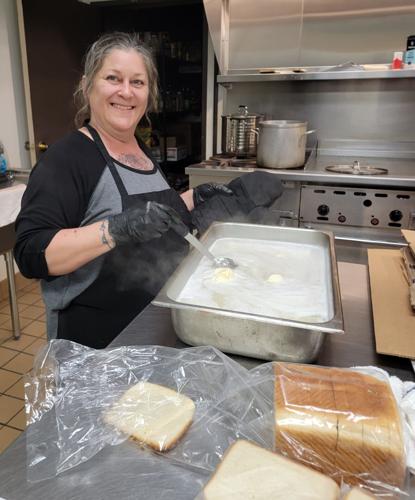
But not for today’s students — especially not at New Century Academy in Hutchinson, where students enjoy home-cooked-like meals served by highly regarded “lunch lady” Mona Theisen.
Theisen started working at NCA as a paraprofessional. When the person in charge of the meals at the school left in 2019, Theisen — who has a background in food service — volunteered to take over until someone else was hired. Theisen fell in love with the job and has stayed since.
“I look at it as a happy accident,” she said with a laugh.
At first, Theisen looked at what other schools were doing. She became familiar with the paperwork involved and the requirements, along with what wasn’t allowed. She developed subcategories and asked around what the kids liked and didn’t. She eventually developed her own plan, moving away from the “cut and dump” pre-made model to the “made-from-scratch” one, using her own recipes.
“I put my heart into it,” Theisen said about creating the menu and cooking the meals.
Like situations at home, Theisen will repurpose food, if possible. The menu on a recent day at New Century was chicken fajita rice bowls and roasted vegetables.
“If the rice is left over, I can make a hotdish with it another day,” Theisen said.
Her ability to repurpose leftovers also helps the school budget, which Principal Jason Becker appreciates.
“Mona is very good at staying within the school food budget,” he said. “We found through a lunch audit that the pre-made lunches were more expensive than the scratch cooking. There is a significant cost savings.
“Mona is also very conscientious. She looks for cheap options, yet makes the food taste good,” Becker added.
SPECIAL MEALS
Another strength of the food service at NCA is that Theisen can provide students with special meals if they need it. One student has the same meal every day — though sometimes Theisen will slip in a piece a fruit now and then. Theisen also makes sure there is enough variety for the vegan student or staff, too.
Paraprofessional Joann Van den Langerberg appreciates Theisen’s willingness to accommodate students with food issues.
“Mona is very understanding and accommodating with the special needs of autistic and texture sensitive students,” Van den Langerberg said. “She goes out of her way to make sure there is something they will eat. Her food is healthy and nutritious, too.”
Theisen said she tries to educate students about healthy foods. One of those efforts is the display of posters that explain why eating an apple a day is good for them, or the benefits of eating broccoli. Like a good mother figure, she encourages students to try something.
“Take a bite,” she will tell them. “You’ll never know unless you try it.”
Theisen is the only one who prepares and serves the food. There are times when students or staff help out, but Theisen is still in there doing everything, too.
“I got this,” she tells Becker when they discuss staffing and special events.
So what do the students think about the food? A recent visit to the lunchroom found the line was long at 11 a.m. when lunch was served and many students were filling their plates with salad besides the rice bowls.
“The food is amazing!” several students said, a sentiment echoed by staff members.
NEW STATE FUNDING
Both Becker and Theisen are hopeful that the universal school meal funding approved during the recently adjourned legislative session will ensure nutritional needs of students are met — which they think could improve academic performance as well.
The legislation passed and signed into law by Gov. Tim Walz in March will cost the state nearly $400 million in the first two years and is expected to increase over time. It covers the cost of meals, but not “seconds” or a la carte items offered by many schools.
The law, which will provide meals for all students, is similar to a program launched during the COVID-19 pandemic, and was discontinued at the end of last school year.
“During COVID, when there was the emergency funding for schools to provide food to all the students, more kids ate,” Theisen said. “I noticed then, more kids were focused. After COVID, when we went back to more kids paying, not as many were buying lunch anymore and there was less focus.”
“I am excited about the new bill,” Theisen says.
Becker is, too.
The school has 60%-70% of the students receiving reduced-fee lunch, however, Becker believes a lot of families don’t fill out the paperwork to qualify.
“It would actually benefit the school if every family filled out the paperwork, “ he said. “It’s actually been our goal. It’s a relief that we won’t have to deal with that anymore (under the new legislation).”
Currently, Becker said, funding for the school breakfast and lunch programs comes out of the school’s general fund.
“That takes away from what we can do on the educational side of things,” Becker said. “With the new legislation, meals will be reimbursed separately. The only transferring of funds from the general budget will be for the food service staff salary. That will not be covered under the bill.
“I believe meals are part of the educational experience,” Becker continued. “I think it should be something for all kids. We have them for six (to) eight hours. Feeding them should be part of it. We feed them knowledge — we should feed them food, too.”


