



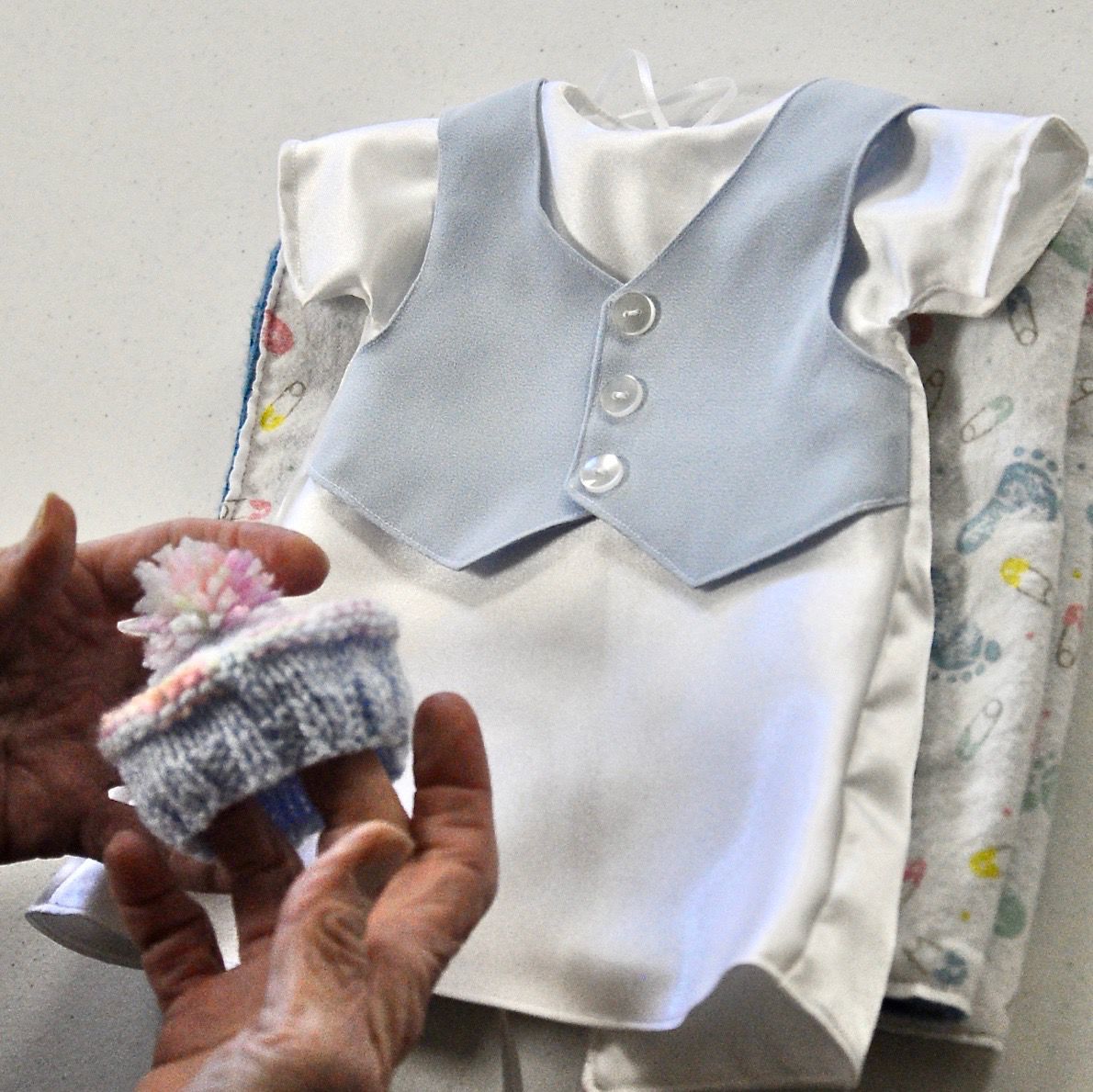

It’s difficult to describe the work done by a small group of volunteers each month at All Saints Lutheran Church in Darwin.
Incredibly rewarding, and yet, unbelievably sad.
“It is difficult sometimes,” said LaVonne Nelson, one of the earliest volunteers for the Angel Dresses ministry at the church. “But I think all of us feel so blessed to be part of this project. It makes you feel good to do something really worthwhile. It’s such a unique thing.”
During the past two or three years — no one seems to remember exactly when they started — the dedicated group of women has sewed more than 2,000 miniature dresses, all of them donated to hospitals throughout Minnesota, intended as the final outfits worn by infants who have died.
“I had never heard of anything like this,” Lorraine Terlinden, an Arlington resident with a home on Lake Erie in Meeker County, said. “I’m happy that I can help with it though.”
Angel Dresses was inspired by Patty Hauer, administrator at All Saints Lutheran. In an earlier career, Hauer was a coroner and paramedic.
It was in that job that she was struck by the deaths of babies, those miscarried or who died in childbirth, and the overwhelming grief that enveloped the parents and other family members.
“You would see these babies … that had nothing,” Hauer recalled. “And I felt so bad. Even the coroner’s office only had ratty old blankets to wrap them in.”
She wasn’t the only one affected by this. She remembered another woman who worked in the coroner’s office who painted the fingernails and toenails of infant girls, just to give them something.
“I thought, it’s just so said,” Hauer said. “And you can’t afford to buy stuff for them all the time — there’s a lot more babies (who die) than people realize.
“So, it was always in the back of my mind,” she added. “What could I do?”
The answer arrived one day as she was “surfing through Pinterest, like half the world,” and found a pattern for infant dresses. She printed the pattern and brought it to church, where she gave it to Nelson, who sewed the first prototype. After receiving feedback, Hauer tinkered with the pattern to make it easier to sew.
Soon, they had a pattern that could be shared and taught to others to sew.
And the project began to take off. It has grown from a small group of women at All Saints Lutheran to include about 50 volunteers from Meeker and McLeod counties, the Twin Cities, Wisconsin and even Florida.
“They just hear by accident,” Hauer said. “We have about 10 members from the church. The rest … come other ways, directions, whatever it takes.”
Those volunteers are much appreciated, and many more are needed, Hauer said, to keep up with the demand. The original goal of the ministry — to provide angel dresses to hospitals throughout the region — has grown to providing the dresses to every hospital in Minnesota. And if the volunteers can be found, perhaps expanding to other areas of the country.
“I need more sewers,” Hauer said with a smile. “They can just call the church.”
Each angel dress is accompanied by a blanket and tiny hat. And it isn’t just dresses. The women also sew outfits for little boys, some that include vests and bowties. Every package also includes a poem, a Bible verse and a calling card with contact information for hospitals to request additional angel dresses.
Most of the outfits are created from wedding dresses, though early on in the ministry, volunteers found other material.
“We were using fancy antique doilies, pillowcases, whatever we could,” Hauer said.
They received an enormous boost — borne out of sadness — about a year ago. A Richmond, Minnesota, couple’s twins had died. Nurses at the hospital clothed the twins in angel dresses created by All Saints Lutheran sewers before bringing them to the family.
The mother was so moved by the gesture, she shared her story on social media, and people responded by donating more than 200 wedding dresses, money and gift cards.
Those dresses have methodically been turned into angel dresses ever since, though there are still about 50 dresses in storage, awaiting more sewers to join the project, Hauer said.
And they receive more dresses all the time. As volunteers gathered recently to package angel dresses and prepare them for shipping to hospitals in the Twin Cities, many shared stories about receiving anonymous dress donations — some wedding dresses, some prom dresses.
“I swear, every week someone is calling (and saying), ‘I have a dress for you,’” said Terry Suess, a Biscay resident and one of Hauer’s three nieces who volunteer for the ministry.
One found a wedding dress left outside her front door. Another found an unfinished wedding dress left in her husband’s room at a memory care facility with a note simply saying, “Maybe you can use this.” Another received dresses from an entire wedding party, donated after the wedding was called off.
“You can’t tell them no,” said Gayle Maurer of Stewart, another of Hauer’s nieces. “You have to take them.”
Some donors make one request — that they might get a picture of the angel dress created from their donated dress.
In addition to dresses, the group also receives — and welcomes — cash and other material donations.
“People have been so generous with their donations,” Nelson said. “And that’s really what has allowed us to keep going. It’s been wonderful.”
To help fund their work, volunteers also sew other items then donate them to be sold at craft fairs, such as one coming up in early November at 3M in Hutchinson.
And as much as the project is about providing dignity and love to babies who have died, creating angel dresses seems, in some ways, a therapeutic reward for the participants.
Carol Smith of Hutchinson said she learned about the Angel Dresses ministry through “a little blurb in the church bulletin.”
“It was the perfect time in my life, because I had just moved and my husband is in memory care, and I’m home alone a lot,” Smith said. “And I love to sew.”
Dianne Cannon, a Grove City resident, said before joining the Angel Dresses group, she had been a longtime knitter. She knits caps and sews blankets for the packages, seeing it as a way to honor her mother, who suffered two miscarriages in the 1940s.
“They didn’t do anything like this back then,” Cannon said. “Mom’s gone, but (this is) kind of a tribute to her. I think she must know.”


